
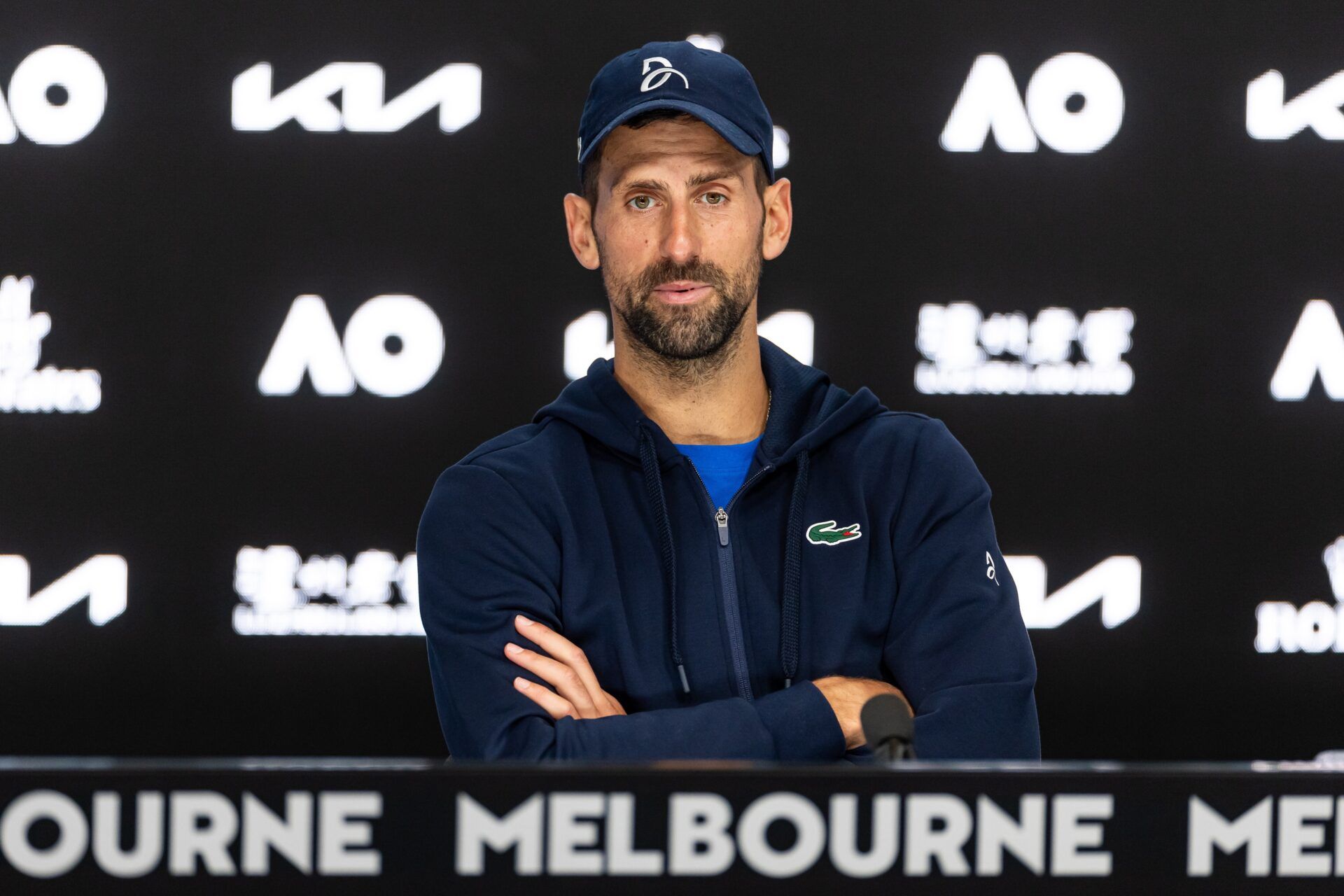
Novak Djokovic spoke about the ongoing debate over the packed tennis calendar, offering his perspective amid growing concerns from top players. The former World No. 1 acknowledged that while the season’s intensity is complex, he empathizes with players struggling to balance performance and recovery.
Djokovic emphasized that players have choices but highlighted the need for unity and active participation in shaping the sport’s schedule.
Why Are Top Players Like Carlos Alcaraz, Jannik Sinner, and Coco Gauff Expressing Frustration Over the Tennis Calendar?
The conversation around tennis scheduling has intensified recently, with Coco Gauff, Iga Świątek, Jannik Sinner, and Carlos Alcaraz openly expressing frustration. Świątek described the WTA season as “crazy” during the Asian swing and suggested she may skip mandatory tournaments to preserve her well-being.
She criticized the requirement to compete in four Grand Slams, 10 WTA 1000 events, and several 500-level tournaments, arguing that it leaves players little room for recovery late in the season.
Alcaraz, after his Japan Open victory and subsequent withdrawal from the Shanghai Masters, called the ATP calendar “too tight” and highlighted the physical limits even elite athletes must manage. Gauff added that while mandatory events make business sense, they are often unrealistic for players striving to maintain peak performance year-round.
Sinner also weighed in, acknowledging that players sometimes need to skip tournaments to manage their workload, emphasizing that while events may be labeled mandatory, athletes ultimately have the choice to decide which ones to play to perform at their best.
Addressing these criticisms in Shanghai, Djokovic recalled his opposition to extending the duration of Masters 1000 events. “From one perspective you could say, I mean, for me at my age right now, to have the days between the tournaments is good. But I think overall for most of the players it just takes away the days in the schedule, in the calendar. Personally, I’m not supportive of that,” he said.
Djokovic emphasized that while there are benefits to these tournaments, he has never fully embraced the current structure. “I understand that there is upside to the tournaments and so forth, but as a player I never liked that. So I do empathize or sympathize with players who are against that,” he added.
What Challenges Does Novak Djokovic See in Player Unity and Engagement?
The Serb also reflected on the broader challenges facing the sport. He noted that players ultimately have choices despite rules and bonuses tied to mandatory events: “You can miss the bonus, but it’s the choice you are willing to make if you want to play less. But then there are exhibitions as well that players are signing up for, so it’s a little bit contradictory.”
He criticized the lack of unity among players, stating, “In the end, as a player and someone that has been playing on the highest level for more than 20 years, I can say that the players are not united enough. Players are not participating enough when they should be. So they make the comments and they complain, and then they go away.”
Djokovic urged top players to take a hands-on approach rather than relying solely on media commentary. “You have to invest the time, you have to invest energy yourself, not your agent, not your team, not your parents, not anybody, yourself, to dedicate yourself to understanding how the system works,” he explained.
He stressed that meaningful improvements require engagement with the governing bodies and the complexities of the calendar. “Going out in the media and talking about this and that, okay, it might stir up some energy or some attention. But in the end of the day it’s not going to change, nothing is going to change, you know? I know it from my personal experience, trust me,” Djokovic said.
The four-time Shanghai champion is seeded fourth this year. The Serb received a bye into the second round, where he will take on Marin Čilić.
