
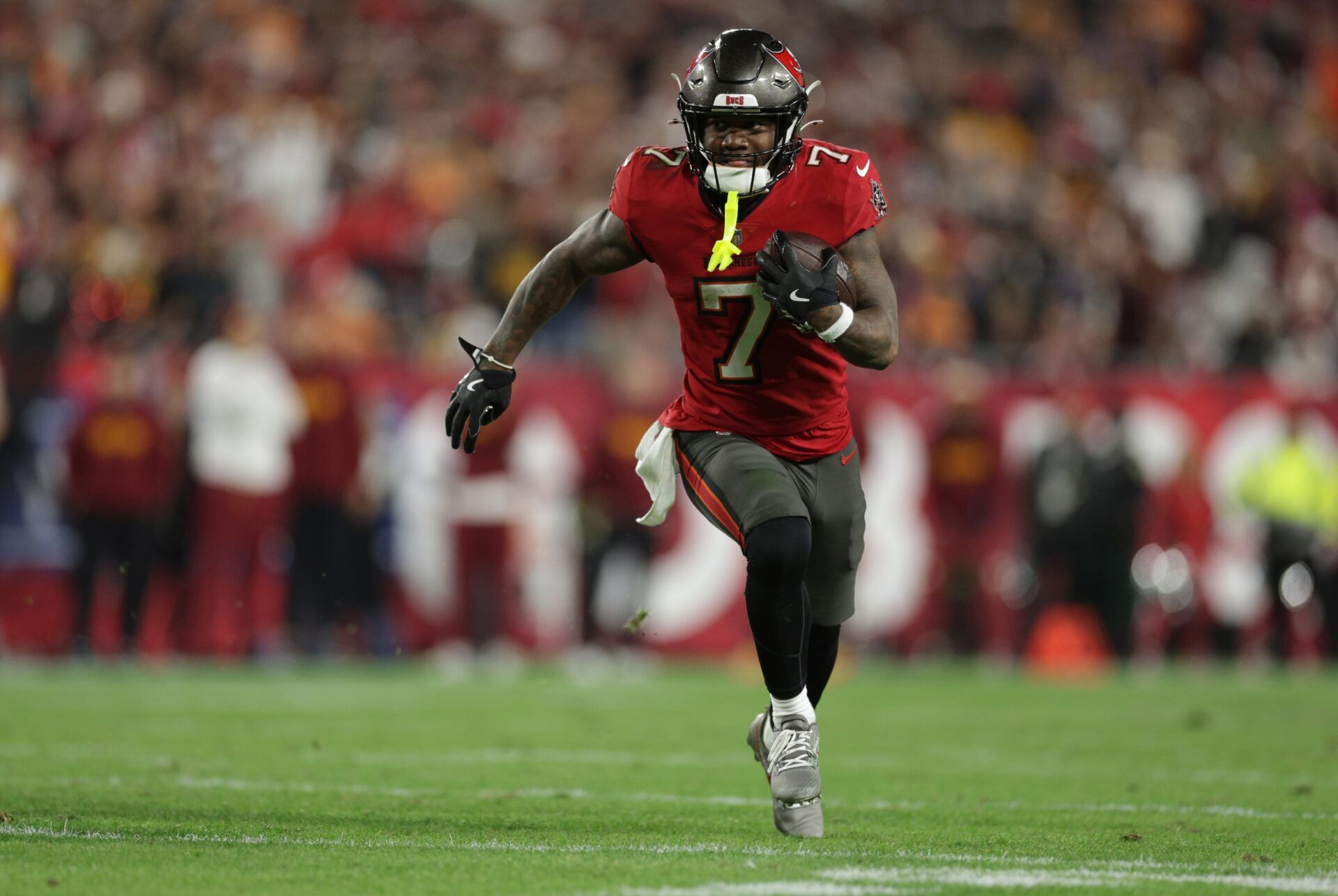
After a stellar rookie campaign that saw Bucky Irving emerge as the Tampa Bay Buccaneers’ primary rushing threat, PFSN users are pumping the brakes on acquisition deals in the Fantasy Football Trade Analyzer, dropping from 55% to 46.6% in July alone. This shift reflects growing skepticism about whether Irving’s breakout performance was sustainable or simply lightning in a bottle.
The Regression Reality Check
Irving’s 2024 season looked almost too good to be true in several key areas. His 90.7% catch rate on targets far exceeded typical running back efficiency, creating significant PPR value that fantasy managers devoured. However, this elite pass-catching efficiency exceeds historical norms and screams regression candidate.
The underlying concern centers on role definition within Tampa Bay’s backfield. Rachaad White’s shift toward a pass-catching specialist role initially seemed to benefit Irving, but this dynamic creates vulnerability. Irving’s target share could evaporate quickly if White reclaims rushing opportunities or Tampa Bay’s offensive philosophy changes.
Meanwhile, Irving’s rushing success story intertwines with factors beyond his control. His league-leading performance in yards after contact among qualified running backs demonstrated impressive vision and power, but even elite runners struggle when blocking deteriorates. The Buccaneers’ offensive line earned top grades after ranking 23rd in 2023, representing a massive year-over-year improvement that may not repeat.
The Perfect Storm That May Not Return for the Tampa Bay Buccaneers
Tampa Bay’s offensive line transformation established Irving’s breakout season. Moving from below-average to elite run blocking doesn’t happen often, and maintaining that standard requires sustained health and performance across five positions. History suggests offensive line play fluctuates significantly year-to-year, making Irving’s rushing floor less secure than his 2024 numbers indicate.
The rookie’s ability to maximize opportunities deserves credit, but context matters enormously. Irving inherited a backfield situation where injuries and ineffectiveness from other options cleared his path to prominence. Tom Brady’s departure initially created uncertainty about Tampa Bay’s offensive identity, but the eventual commitment to a ground-heavy attack suited Irving’s skill set.
Bucky Irving in his 5 games with MORE than 10 Rushing Attempts is averaging:
➖20.8 PPG
➖128.4 YPG
➖0.8 TD’sHis 17 Game Pace:
➖353.6 Fantasy Points
➖2,183 Total Yards
➖14 TD’sIrving ranks top 5 in the NFL in Yards Per Touch (6.0), Juke Rate (31.2%), & Catch Rate (95%). pic.twitter.com/bzvWmN53zH
— Austin Abbott (@AustinAbbottFF) December 17, 2024
However, offensive coordinators rarely maintain identical approaches across multiple seasons. Defensive adjustments, personnel changes, and evolving team strengths often force scheme modifications that could impact Irving’s usage patterns. The Buccaneers’ willingness to feed Irving heavy workloads may diminish if other offensive weapons demand more attention.
Bucky Irving’s ADP Trap and Market Dynamics
Current ADP reflects Irving’s 2024 production without adequately pricing in regression risk. Fantasy managers often fall into the trap of projecting rookie breakouts linearly, assuming similar or improved performance in Year 2. Irving’s situation presents multiple regression opportunities that make meeting elevated expectations challenging.
The decline in PFSN acquisition rates suggests fantasy players recognize these warning signs. Early July typically represents peak trade season as managers finalize rosters before the season, making this trend particularly telling. Smart money appears to be fading Irving at current prices, preferring to capitalize on his name recognition rather than betting on repeat performance.
KEEP READING: Emeka Egbuka and Defensive Firepower: Grading the Tampa Bay Buccaneers’ 2025 NFL Draft Class
This market behavior creates opportunities for both buyers and sellers. Managers holding Irving face a critical decision: cash out while perceived value remains high, or double down on a player who demonstrated elite skills in favorable circumstances. The data suggests the former approach carries less risk.
Irving’s fluctuating trade interest reminds us that fantasy football success often depends on timing, situation, and luck. While his talent remains undeniable, the perfect storm of circumstances that fueled his rookie success may never align again. Sometimes, the smartest play is recognizing when the stars are aligned just right rather than expecting them to stay that way forever.