
The Pro Football Hall of Fame likes to present itself as timeless — marble pillars, gold jackets, eternal truths. But every winter, when the voting wraps and the names are revealed, the illusion cracks just enough to remind fans that immortality is still decided by people in a room.
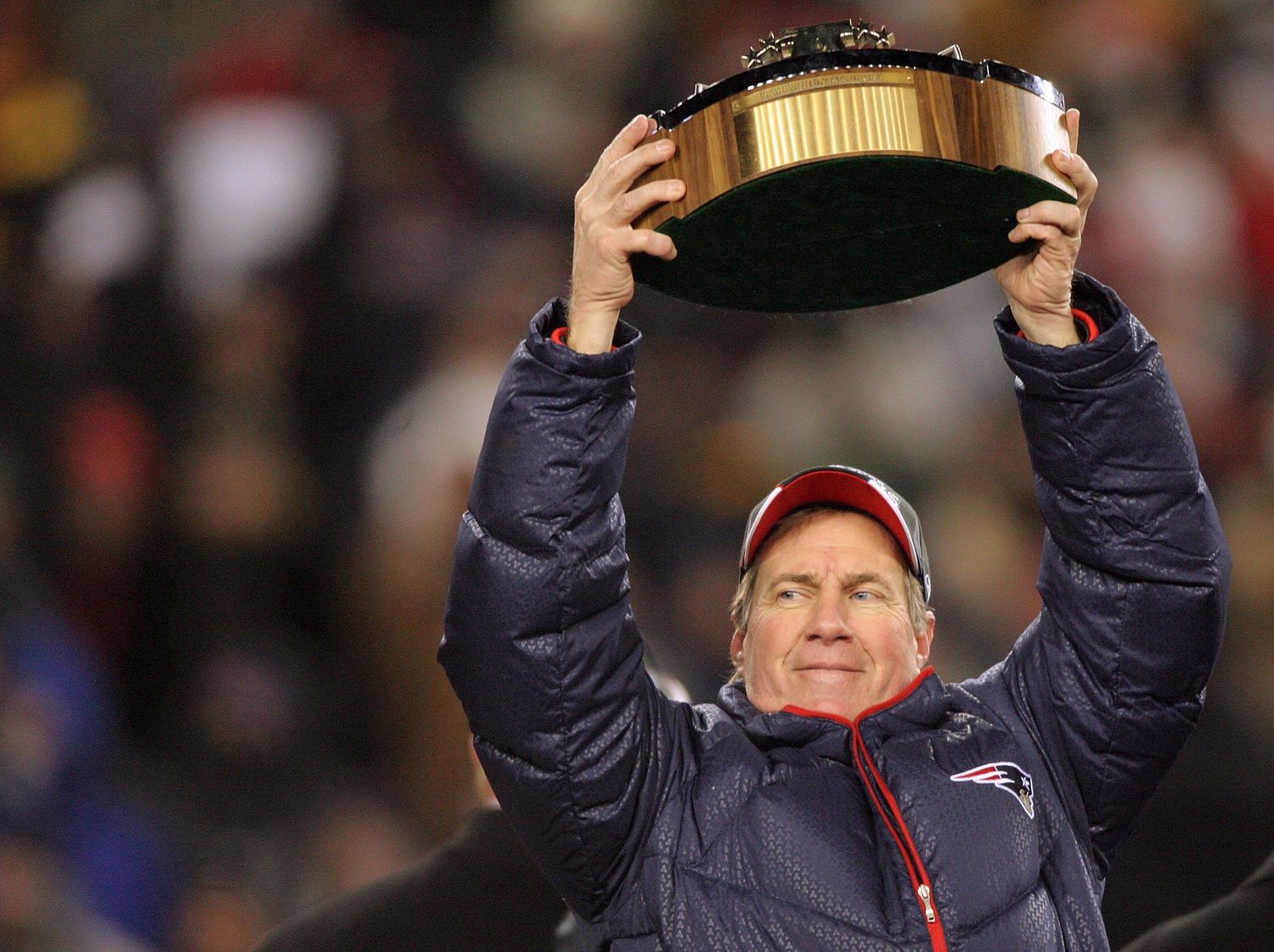
Bill Belichick, the most decorated coach in NFL history, did not receive enough votes to be a first-ballot Hall of Famer. Eli Manning, twice a Super Bowl MVP and forever linked to two of the most shocking upsets the sport has ever seen, will also have to wait. Again.
The Hall of Fame class of 2026, however, is not defined solely by its omissions. It is one of the most loaded and nuanced ballots in recent memory, with 15 modern-era players — each carrying a different version of greatness — competing for a handful of spots.

Hall of Fame Finalists for 2026
The modern-era finalists were taken from an original list of 128 nominees. By the time the list was trimmed to 15, the margins had already grown impossibly thin. Several candidates come with Hall of Fame Monitor scores north of 100, a statistical shorthand for players who historically tend to get in. That group includes:
- Larry Fitzegerald (WR) – 142.09
- Drew Brees (QB) – 141.58
- Luke Kuechly (LB) 120.45
- Reggie Wayne (WR) – 112.14
- Torry Holt (WR) 110.22
- Frank Gore (RB) – 101.05
- Jason Witten (TE) – 105.72
- Jahri Evans (G) – 98.75
- Kevin Williams (DT) – 106.03
Then some finalists complicate the conversation:
- Adam Vinatieri (K) – 94.70
- Willie Anderson (OT) – 63.03
- Terrell Suggs (EDGE) – 96.30
- Marshal Yanda (G/T) 84.65
- Darren Woodson (S) – 68.33
- Eli Manning (QB) – 87.01 (Out)
Only three to five of these players will be selected.
Separate from the modern-era players, another vote will determine additional inductees. That group includes coach Belichick, an eight-time Super Bowl champion and six-time title-winning head coach; contributor finalist Robert Kraft, the owner who helped turn the New England Patriots into a sports empire; and senior category finalists Ken Anderson, Roger Craig, and L.C. Greenwood, whose careers helped shape entire eras.
The finalists will learn their fate in early February, when the official inductees are revealed during the NFL Honors broadcast on Feb. 5. The ceremony is scheduled for Aug. 8 in Canton, Ohio.
Most Likely To Win
At the top of the modern-era ballot are five players whose production has pushed them ahead of others.
Wide receiver Larry Fitzgerald finished his 17-season career with 1,432 receptions for 17,492 yards and 121 touchdowns, all with Arizona. His totals rank second all-time behind only Jerry Rice. He topped 1,000 receiving yards nine times, caught more than 100 passes in five seasons, and remained a constant in an offense that changed around him. In the 2008 postseason alone, Fitzgerald added 30 catches for 546 yards and seven touchdowns, a four-game stretch that carried the Cardinals to their lone Super Bowl appearance.
Quarterback Drew Brees is in his first year of eligibility. Across 20 seasons and 287 games, he threw for 80,358 yards and 571 touchdowns, both second in NFL history. He led the league in passing yards seven times and topped the NFL in completion percentage six times, turning precision into a calling card. A 13-time Pro Bowler and two-time AP Offensive Player of the Year, Brees capped his career with a Super Bowl 44 MVP, delivering New Orleans its first championship
Linebacker Luke Kuechly represents a different kind of Hall of Fame case, one built on peak performance rather than longevity. In eight seasons, he totaled nearly 1,100 tackles, intercepted 18 passes, and was selected as an All-Pro five times. He won Defensive Rookie of the Year in 2012 and followed it with Defensive Player of the Year honors in 2013. Kuechly had more than 100 tackles in all eight of his seasons.
Wide receiver Reggie Wayne spent 14 seasons as a fixture in Indianapolis, compiling 1,070 receptions for 14,345 yards and 82 touchdowns while helping the Colts reach the postseason 11 times. He recorded eight 1,000-yard seasons, caught 100 or more passes four times, and led the NFL in receiving yards in 2007, when he set a career high with 1,510 yards. Wayne started in four AFC Championship Games and two Super Bowls, including a win in Super Bowl 41.
Wide receiver Torry Holt has waited longer than most. He recorded eight consecutive 1,000-yard seasons, finishing with 920 receptions, 13,382 yards, and 74 touchdowns. He led the league in receiving yards twice during the Rams’ peak offensive era, including a Super Bowl 34 win.