The 2024 NFL Draft is right around the corner. It seems as if the excitement surrounding the draft increases with each successive year.
While fans eagerly await to see where the next wave of talent will land, the harsh truth remains: every draft brings its share of mistakes. Year after year, teams swing and miss — sometimes badly — in the first round. So today, we’re taking a walk down memory lane to revisit the worst first-round picks each team has made since the start of the century.
Worst First-Round Picks Since 2000
Arizona Cardinals: Josh Rosen (2018)
Few draft picks have unraveled as quickly as Josh Rosen. Selected 10th overall by the Arizona Cardinals in the 2018 NFL Draft, Rosen was expected to be the franchise’s long-term answer at quarterback. Instead, he became a symbol of how quickly things can go wrong when a team misfires on the most important position in the game.
Rosen didn’t start the season but was inserted into the lineup by Week 3, replacing Sam Bradford. He would go on to start 13 games, completing just 55% of his passes with 11 touchdowns and 14 interceptions, including a forgettable four-game stretch late in the season where he failed to throw a single touchdown pass. He finished the season with a lackluster -0.29 EPA per dropback. The offense sputtered, and so did Rosen’s development.
The Cardinals pivoted just one year later, selecting Kyler Murray first overall in 2019 and trading Rosen to the Miami Dolphins for a second-round pick — a rare and telling admission of failure. Rosen started only three games for Miami and was out of the league entirely by 2020, outside of a short-lived stint with the Falcons in 2021. He hasn’t played a snap since.
Despite Arizona salvaging some value in return, the Rosen pick remains a cautionary tale: missing on a quarterback that high can derail a franchise, even if only briefly — and Rosen’s rapid fall from top-10 pick to out of the league makes him one of the most infamous busts in modern NFL history.
Robert Nkemdiche had injury and character concerns, falling to the end of the first round. He produced just 4.5 sacks for Arizona and was drafted before Kansas City Chiefs defensive tackle Chris Jones and Dolphins cornerback Xavien Howard. Nkemdiche flamed out despite being an intriguing prospect in college.
Runner-up: Robert Nkemdiche (2016)
Atlanta Falcons: Peria Jerry (2009)
Atlanta’s track record of early-round picks is impressively strong. They haven’t completely whiffed on a first-round pick to the point where the player was worthless and out of the league before the end of their first contract. They’re one of the very few teams capable of claiming that.
Their search for a primary pass rusher has been rough, though. Their 2009 first-rounder Peria Jerry barely played through his first four seasons, totaling just 64 tackles before his career-best season in 2013. Jerry was 25 as a rookie but was nowhere near ready to help a team making a playoff push.
Takkarist McKinley showed early promise, recording 13 sacks by the end of his third season, but his career declined just as quickly as it began. While he didn’t live up to first-round expectations, he wasn’t a total dud compared to some of the more notable draft busts.
Runner-up: Takkarist McKinley (2017)
Baltimore Ravens: Kyle Boller (2003)
The Baltimore Ravens are widely regarded as one of the NFL’s most successful teams when it comes to the draft, with a front office that consistently earns praise from fans and analysts. But even the best can miss from time to time.
Over the last two decades, the Ravens have been fortunate at the quarterback position. From Joe Flacco’s arrival in 2008 to Lamar Jackson taking over in 2018, Baltimore has managed to avoid the kind of quarterback struggles that have plagued many other franchises.
Before selecting Flacco in the first round, the Ravens took a shot on another first-round QB in 2003 — Kyle Boller. He lasted five seasons in Baltimore, completing only 56.9% of his passes and producing only one more touchdown than interceptions in that time. Perhaps nothing encapsulates Boller better than this short clip of him warming up on the sidelines.
Coming in a distant, but still strong, second place is 2015’s Breshad Perriman. The speedy receiver was the latest in a long line of burners who were “just fast” and couldn’t really do anything else.
Runner-up: Breshad Perriman (2015)
Buffalo Bills: EJ Manuel (2013)
The 2013 QB class is widely considered one of if not the worst of all time. No quarterback was projected to go in the first round. That made the Bills announcing EJ Manuel as their first-round selection all the more shocking.
Scouts and media members alike were far from impressed with Manuel’s lack of arm talent and polish while at the 2013 Senior Bowl, let alone middling film work. The Bills quickly found out what others had known about his talent level.
Manuel started 10 games as a rookie and just eight more over the course of four seasons. They had seen enough to essentially give up on him after his first 10 games, where he completed 58% of his passes for a measly 1,972 yards, 11 touchdowns, and nine interceptions. He’s one of the biggest whiffs of the last two decades.
The Bills have seen their share of first-round hiccups since 2000, and there were a few contenders for the runner-up spot. Both Sammy Watkins in 2014 and C.J. Spiller in 2010 were strong candidates for consideration. However, when it comes to importance, the quarterback position reigns supreme. Unfortunately, in 2004, J.P. Losman proved not to be the solution they needed at the helm.
Runner-up: J.P. Losman (2004)
Carolina Panthers: Rashard Anderson (2000)
Carolina benefitted from having the same regime in place for much of the last decade, and they did relatively well with their early picks. Many produced at least one quality season, even if guys like Devin Funchess and Kelvin Benjamin failed to be stars. There was one clear big miss on their résumé with Rashard Anderson.
Anderson, the seventh first-round pick in franchise history, failed to make any meaningful impact. Over 27 games, he recorded just 75 tackles and a single interception. His career was cut short after being suspended for two seasons due to multiple violations of the NFL’s substance abuse policy, effectively ending his time in the league.
Despite having quality defensive tackle depth and the overall value of the position being low, the Panthers spent a first-rounder on Vernon Butler. His tape was never too impressive, but his Combine numbers tricked teams into thinking he could be more than a gap-eater. He simply wasn’t someone who moved the needle.
Runner-up: Vernon Butler (2016)
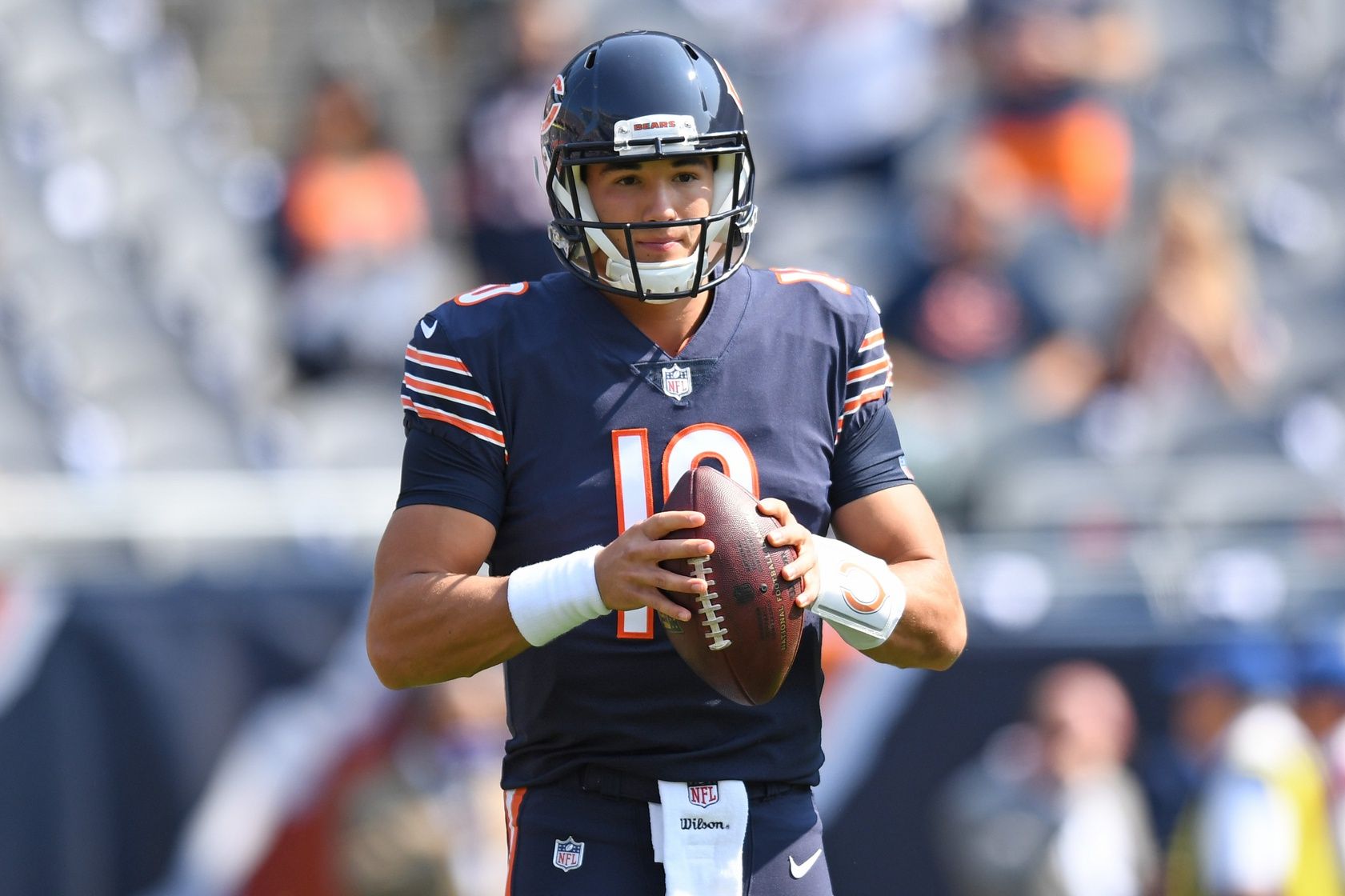
Chicago Bears: Mitch Trubisky (2017)
It’s been a rough existence for Chicago Bears fans over the past two decades. They had a particularly damaging stretch from 2008 through 2012 where they missed on their 2008 (Chris Williams), 2011 (Gabe Carimi), and 2012 (Shea McClellin) picks and traded their 2009 and 2010 selections for Jay Cutler.
Amid all the first-round failures, no one is more prominent than Mitch Trubisky. It’s one thing to miss on a quarterback at No. 2 overall — it’s another thing to trade up one spot to take him. It’s a completely different plane of existence to do both of those things while passing on the best quarterback in NFL history who went eight picks later.
Trubisky lasted four years with the Bears before the team moved on. He spent 2021 as Josh Allen’s backup in Buffalo before latching on with the Pittsburgh Steelers in 2022. After failing in his opportunity to start with the Steelers, Trubisky was released following the 2023 season and is now once again Allen’s backup.
Just a year before selecting Mitch Trubisky, the Bears used the No. 5 overall pick on one of the most notable wide receiver draft busts in recent memory: Kevin White. Already considered an injury concern coming into the league, White managed to appear in only five games during his first two seasons. His final appearance for Chicago came in 2018, and he’s since fallen out of the league entirely.
Runner-up: Kevin White (2016)
Cincinnati Bengals: John Ross (2017)
Believe it or not, John Ross is not the worst player the Cincinnati Bengals have selected in the first round. But the fact that they took him No. 9 overall pushes him to the top of the list.
The 2017 draft was one of the most talent-rich in recent memory, and while the Bengals’ desire for a game-breaking speed threat was understandable, Ross proved to be the wrong choice. Similar to Kevin White and Breshad Perriman in previous years, Ross brought elite speed but little else. He lacked the all-around game needed to thrive at the next level.
To make matters worse, Cincinnati passed on stars like Patrick Mahomes, Deshaun Watson, Marshon Lattimore, Marlon Humphrey, and T.J. Watt to take Ross. The Bengals are in better shape now, but taking Ross set them back a bit.
There are several other notable misses for the Bengals over the last 22 years, with Chris Perry, Peter Warrick, Cedric Ogbuehi, and Dre Kirkpatrick landing somewhere on the bust spectrum. However, David Pollack played just two seasons before retiring after an awful neck injury that included six broken cervical vertebrae. It’s no one’s fault Pollack was injured, but in terms of production, the selection didn’t work out.
Runner-up: David Pollack (2005)
Cleveland Browns: Brandon Weeden (2012)
This one was quite challenging. The Cleveland Browns set the standard for awful drafting. They have not one but two quarterbacks worthy of appearing on this list. What makes them so impressive is the fact that their two worst first-round picks occurred in the same year.
Some might argue Johnny Manziel deserves a spot — and they’d be correct — but Manziel at least brought something to the franchise. He brought a level of hype they hadn’t experienced in years. Plus, Manziel’s issue wasn’t talent — it was focus.
As he revealed in his recent documentary, Manziel just wasn’t interested in playing professional football.
Drafting Brandon Weeden in the first round was a baffling misstep by the Browns. It’s hard to understand the logic behind using such a premium pick on a 28-year-old rookie quarterback.
Weeden lasted only two seasons in Cleveland before the team swung and missed again with Johnny Manziel in 2014. During his time with the Browns, he completed under 55% of his passes and threw more interceptions than touchdowns. He went on to brief stints with the Texans and Cowboys, but his final NFL pass came in 2015.
The only reason Weeden takes the top spot over the guy that went ahead of him is because the Browns managed to get the first-round pick they lit on fire by taking Trent Richardson back when the Indianapolis Colts somehow decided to trade a first-rounder for him the following season.
Beyond Richardson, some other candidates were Phil Taylor (2011), Barkevious Mingo (2013), Danny Shelton and Cameron Erving (2015), and Corey Coleman (2016). Thankfully, the franchise has moved past these blunders.
Runner-up: Trent Richardson (2012)
Dallas Cowboys: Taco Charlton (2017)
There are plenty of picks the Cowboys have mishandled over the years, but this franchise has made its money in the early rounds of the draft. Their first-round picks are rarely disappointments, and they’ve built solid depth on Day 2. But this one is completely indefensible
It’s bad enough that Taco Charlton lasted just two years with the Cowboys and is now out of the league. But that’s not what makes this pick such a disaster — it was that the Cowboys passed on T.J. Watt, who went two picks later to the Pittsburgh Steelers.
A distant second is 2012’s Morris Claiborne. While he wasn’t a total bust, he fell well short of expectations after being selected sixth overall out of LSU. Billed as a future lockdown corner, Claiborne never reached that level. Instead, he played more like a rotational defender who held a starting spot largely because of where he was drafted.
Runner-up: Morris Claiborne (2012)
Denver Broncos: Tim Tebow (2010)
Few draft mistakes are more damaging than misjudging a quarterback, especially with the financial commitment of a rookie contract and the time investment required to develop the position. Ahead of the 2010 NFL Draft, many analysts questioned whether Tim Tebow should even be drafted at all.
Tebow’s passing struggles were glaring. With a career completion rate of just 48%, he remains statistically one of the least efficient passers the league has ever seen. Despite a brief flash of magic — dubbed “Tebow Time” — and a surprising playoff win, his overall performance left much to be desired. His release was painfully slow, and his mechanics never translated to the pro level.
What’s most shocking is not just that the Broncos selected him, but that they used a first-round pick to do it. Fortunately for Denver, they swiftly course-corrected by signing Peyton Manning, a move that led to two Super Bowl appearances and one Lombardi Trophy.
After Manning retired following the 2015 season, the Broncos drafted their quarterback of the future in 2016 … or so they thought. It didn’t take much time to figure out that Paxton Lynch didn’t have the mental makeup to be a star, though, with the former Memphis gunslinger being done after only 128 passes in two seasons.
No one else even rolled the dice on the athletic passer after his short stint, and he’s been bouncing around the various spring leagues that have popped up. The nadir of Lynch’s career was getting benched in the XFL.
Runner-up: Paxton Lynch (2016)
Detroit Lions: Charles Rogers (2003)
Despite their on-field struggles, the Lions have actually done a decent job of avoiding complete draft busts. Since the early 2010s, their biggest challenge has been finding true stars beyond the likes of Calvin Johnson, Matthew Stafford, and Ndamukong Suh. That said, their draft history before that era includes more than a few unfortunate stories.
Both the two biggest first-round Lions busts had personal and professional tragedies affect the outcome of their career. Charles Rogers and Jahvid Best were incredibly explosive talents who were worth their investments in terms of ability.
Unfortunately, Rogers played only two seasons in Detroit before an addiction to pain pills derailed his career, and Best retired after two years due to multiple concussions. To this day, I’ve never seen a scarier concussion than the one Best suffered after scoring a touchdown at Cal.
Joey Harrington certainly could earn a nod here as well. He had only one year in six career seasons with more touchdowns than interceptions. Detroit gave him almost four full seasons before cutting bait.
Runner-up: Jahvid Best (2010)
Green Bay Packers: Justin Harrell (2007)
Green Bay has long been considered a model franchise when it comes to building through the draft, consistently finding both depth and quality talent. While their reluctance to spend in free agency may occasionally limit their ceiling, their draft track record is solid overall. Even the few misses they’ve had are generally understandable.
Ironically, QB Jordan Love was a candidate for this list just one year ago. In the modern NFL, it’s quite indefensible to spend a first-round pick on a three-year backup quarterback.
With Love finally getting a chance to start and more than proving himself, there are two glaring immediate misses from the last 22 years: Justin Harrell and Jamal Reynolds. The two combined for 45 tackles across six seasons played.
It’s hard to find any team that saw such a poor return from any two first-round picks within the same timeframe since these two simply never saw the field.
Runner-up: Jamal Reynolds (2001)
Houston Texans: David Carr (2002)
The Texans haven’t had a ton of early draft picks due to trades, but the previous regime under GM Rick Smith consistently drafted well enough. Guys like Jadeveon Clowney, Kevin Johnson, and Will Fuller didn’t fulfill their potential but were productive and solid when on the field. Injuries robbed each of them of impact, and Houston couldn’t have accounted for that with each. Regardless, they did enough to avoid being total misses.
David Carr may have had potential, but he never stood a chance behind one of the worst offensive lines in NFL history. He spent five seasons in Houston, finishing with 59 touchdown passes and 65 interceptions.
What makes it sting more is knowing the Texans passed on future stars like Julius Peppers and Dwight Freeney. That said, as an expansion team, targeting a quarterback with the first pick was understandable — they simply bet on the wrong one.
Defensive tackles Travis Johnson and Amobi Okoye are close to each other for second place despite each being somewhat serviceable, even if not massive difference-makers.
Runner-up: Travis Johnson (2005)
Indianapolis Colts: Björn Werner (2013)
The Colts had a near-unbeatable stretch of first-round drafting that began with Marshall Faulk in 1994 and went through 2003. Their hits were fantastic, but their misses were quite painful. After trading their 2014, 2019, 2020, and 2022 firsts, though, we’re parsing through some great picks for misses.
The most obvious blunder came with the selection of Florida State edge rusher Björn Werner. Lacking fluidity and high-end athleticism, Werner leaned heavily on his power to overpower smaller college linemen — a method that didn’t translate to the NFL. He was out of the league just three years later. Making matters worse, players like Xavier Rhodes, DeAndre Hopkins, and Darius Slay were drafted shortly after.
Second place was a close call between Phillip Dorsett and Anthony Gonzalez. Dorsett was out of Indianapolis after only two years due to poor play, whereas Gonzalez enjoyed a promising first two seasons before injuries limited him to 11 games between 2009-2011.
Runner-up: Phillip Dorsett (2015)
Jacksonville Jaguars: Blaine Gabbert (2011)
It’s actually impressive that Luke Joeckel, who the Jaguars took No. 2 overall in 2013, can’t make this list. That’s because in 2011 and 2014 the Jaguars took two quarterbacks that flopped very badly.
While they were justified in addressing the position, they passed on multiple Hall of Fame-level contributors to reach for two well-below-average quarterbacks. Neither had especially good physical traits or accuracy.
J.J. Watt, Cameron Jordan, and Andy Dalton were selected right after Blaine Gabbert, while Khalil Mack, Mike Evans, Aaron Donald, and Odell Beckham Jr. were drafted shortly after Blake Bortles. It’s hard to imagine what the Jaguars could have become if they had chosen one of these stars instead of an uninspiring quarterback.
Runner-up: Blake Bortles (2014)
Kansas City Chiefs: Jonathan Baldwin (2011)
Winning a Super Bowl and competing year in and year out requires strong drafting over an extended period of time. The Chiefs have consistently found quality players despite missing the occasional first-round pick. Their biggest misses were far and away the lone early picks who didn’t offer any impact at all in their time with the franchise.
Jonathan Baldwin hauled in just 41 passes for 579 yards and two touchdowns before being traded to the 49ers. He was slow and struggled to create separation, making it surprising that the team was able to get anything in return for him.
Runner-up: Ryan Sims (2002)
Las Vegas Raiders: JaMarcus Russell (2007)
Coming up with a runner-up for the Raiders is impossible. There are too many great candidates with all of the first-round misses they’ve had over the years. Las Vegas was a disaster under Mike Mayock and Jon Gruden.
Their picks show a complete misunderstanding of value relative to the rest of the league. They valued old-school players with premium picks instead of high-impact talent.
That being said, their worst pick in franchise history also stands as the worst draft selection in the history of professional football. This occurred long before the Mayock/Gruden era. In 2007, the Raiders used the No. 1 overall pick on quarterback JaMarcus Russell.
After holding out for the entire training camp and preseason, Russell didn’t even see the field in Week 1 of his rookie year. He spent just three seasons in Oakland, completing only 52% of his passes while throwing 18 touchdowns and 23 interceptions. He was out of the league after just three years.
Of their last 25 first-round picks, 16 could be considered an outright bust. Their most recent run since 2013 has given the team very little help.
In terms of production returned, no two players were less productive than Damon Arnette and Alex Leatherwood. Arnette was released after playing in only 13 games after he made a death threat in a video. Leatherwood was traded after one season to Chicago.
Runners-up: Damon Arnette (2020) and Alex Leatherwood (2021)
Los Angeles Chargers: Craig Davis (2007)
Injuries aside, the Chargers are arguably one of the strongest first-round-drafting teams of the last two decades. The franchise has been snake-bitten by the injury bug, though, costing wins and careers along the way. A rough three-year stretch from 2007 through 2009 helped give us an answer.
Former LSU wide receiver Craig “Buster” Davis couldn’t have predicted how fitting his nickname would turn out to be. This “Bust”-er totaled just 588 yards over four seasons, largely sidelined by injuries or failing to break into the rotation.
Despite other disappointments like Larry English, Antoine Cason, and Jerry Tillery, there’s no real contender to Davis for the title of the team’s biggest draft failure.
Runner-up: Larry English (2009)
Los Angeles Rams: Greg Robinson (2014)
The 2014 draft class was filled with legendary talent, yet the top picks were remarkably mishandled in hindsight. While the Rams secured the best player in Aaron Donald, their earlier first-round selection turned out to be one of the biggest busts.
Robinson was a dominant run blocker at Auburn with great athleticism for his size, but his lack of technique in pass protection doomed him as the league transitioned to a pass-happy attack. Robinson is still around as a depth piece, but the Rams would’ve rather had one of the numerous All-Pros taken after him.
There was a deep host of candidates for runner-up, including 2000’s Trung Canidate and 2013’s Tavon Austin, but Jason Smith at No. 2 was another example of a missed opportunity to add a Pro Bowl talent with a premium asset.
Runner-up: Jason Smith (2009)
Miami Dolphins: Dion Jordan (2013)
The 2013 class was bad for half the league, but Miami’s trade-up for Jordan was one of the more egregious misses. Jordan flamed out of Miami after two lackluster years, a season-long suspension, and a knee injury. It also hurts he was picked right before Lane Johnson and Ezekiel Ansah.
Miami has a few other contenders for second place. Ted Ginn (2007) spent just three seasons with the Dolphins before going on to have a long, though unremarkable, career.
Charles Harris stands out as another disappointment, recording only 3.5 sacks over three seasons. Harris relied on his ability to time the snap and beat blockers off the line, but his lack of elite physical traits was quickly exposed in the NFL.
Runner-up: Charles Harris (2017)
Minnesota Vikings: Christian Ponder (2011)
The Vikings had a strong run of drafts from 2001 to 2014, but they’ve faced more challenges since 2015. While they’ve consistently found reliable players and have occasionally landed true stars, like most teams, their busts have become evident sooner rather than later.
While Sharrif Floyd is very much in the running, he pales in comparison to Christian Ponder in 2011 and Laquon Treadwell in 2016. Neither lasted long as starters despite their billing and résumés. Ponder had a noodle arm and barely had more touchdowns (38) than interceptions (36) over his four-year career. Like Manuel, it was stunning to hear his name called so early after seeing his physical limitations in college.
The selection of Treadwell was particularly egregious given how obvious of a bust candidate he was. Perhaps his devastating 2014 broken leg is to blame, but after watching him play in 2015, there was just no way any team should’ve taken him in the first three rounds, let alone in the first.
Runner-up: Laquon Treadwell (2016)
New England Patriots: Mac Jones (2021)
It goes without saying that N’Keal Harry was also a massive bust. However, he went with the last pick in the first round of the 2019 NFL Draft. The Patriots spent the No. 15 pick on Mac Jones in 2021.
Jones spent just three seasons with the Patriots, during which he was benched multiple times in favor of Bailey Zappe. After one season in Jacksonville, he’s now serving as a backup to Brock Purdy in San Francisco. Jones has a career 84.9 passer rating and -0.05 EPA per dropback.
Runner-up: Dominique Easley (2014)
New Orleans Saints: Johnathan Sullivan (2003)
More recently known for their current cap situation and strange infatuation with Taysom Hill, the Saints built their foundation in the draft over the last two decades. This roster has continued to be filled with quality on both sides of the ball because they generally hit on a few picks each year. We had to go way back to find two clear first-round busts.
Despite showing promise as a productive player and a good athlete for his size, Johnathan Sullivan recorded just 1.5 sacks and 78 tackles over three seasons before being released. The team traded the 17th and 18th overall picks to move up to the sixth spot and select Sullivan, but he immediately faced struggles with his weight, ballooning to 350 pounds after weighing 313 at the Combine.
Instead, they could have drafted future stars like Troy Polamalu, Terrell Suggs, or Kevin Williams.
Runner-up: Stephone Anthony (2015)
New York Giants: Deandre Baker (2019)
In general, the New York Giants’ drafts have brought back either a solid player or a non-contributor over the last 22 years.
The worst two picks by the franchise were significant misses, even considering their track record. Baker played poorly as a rookie due to limited athleticism, had off-field issues, and then had a gruesome non-contact knee injury. He was the first player drafted in the top 64 released from his class.
The Giants’ 2012 first-round pick, David Wilson, was undeniably talented, but a severe neck injury cut his career short after just two seasons at the age of 22.
That said, selecting a running back over players like Mitchell Schwartz, Janoris Jenkins, and Alshon Jeffery wasn’t the most optimal decision.
Runner-up: David Wilson (2012)
New York Jets: Vernon Gholston (2008)
If there were a Mount Rushmore of the worst draft picks from the last couple of decades, Vernon Gholston, the New York Jets’ 2006 first-round selection, would undoubtedly be on it.
The former Ohio State standout, with his 6’4″, 258-pound build and impressive explosiveness, seemed like an ideal prospect. However, instead of becoming a franchise cornerstone, he finished his career with zero sacks over three seasons, cementing his status as one of the biggest draft busts ever.
The hype surrounding Gholston was unreal, which helped him edge out the position I usually give the advantage to in draft busts — quarterback. Zach Wilson has never once resembled an NFL starting QB. He’s been benched five separate times in his career already. This most recent one will likely end up being his last.
Runner-up: Zach Wilson (2021)
Philadelphia Eagles: Danny Watkins (2011)
One reason scouts look for players who love the game of football with vigor is the story of Danny Watkins. Although Watkins had phenomenal film in college, it’s easy to dominate players several years younger than you. The Eagles should have known better than to take a 27-year-old in the first round. Additionally, the talented athlete knew he was meant to be a firefighter and his lack of desire to be an NFL star led to a short-lived NFL stint.
Marcus Smith stands out as another major misstep for the Eagles over the past two decades, but he doesn’t quite claim the runner-up spot, which goes to Jalen Reagor. In a notorious move in 2020, the Eagles selected Reagor one pick ahead of the Vikings, who took Justin Jefferson. Now, one of these players is arguably the best wide receiver in the NFL, while the other ends up on a new team every season.
Runner-up: Jalen Reagor (2020)
Pittsburgh Steelers: Jarvis Jones (2013)
The 2013 draft class is considered one of the weakest in recent years, and the Steelers were among the teams that made a costly mistake by over-drafting a player with limited upside.
Jarvis Jones was a stiff, one-dimensional edge rusher who never had the skill set to be anything more than a rotational player in the NFL. His success at Georgia was primarily due to physicality and scheme, yet the Steelers still chose him 17th overall, passing on players like Kyle Long, Desmond Trufant, and Xavier Rhodes.
The Steelers switched their strategy to get more athletic players shortly after the Jones debacle, but their 2019 pick of Devin Bush overcorrected. Bush has posted a few decent tackle totals, including his rookie total of 109, but doesn’t impact the game at all.
Runner-up: Devin Bush (2019)
San Francisco 49ers: Solomon Thomas (2017)
The 49ers, much like the Bears, will certainly look back with regret on their decision to pass on Patrick Mahomes in the 2017 draft. While the Bears at least targeted a key position, the 49ers took a gamble on an unpolished pass rusher.
Unfortunately for them, Solomon Thomas, the third overall pick, has not lived up to expectations, amassing only 212 tackles and 18.5 sacks over eight seasons.
We have to go back to 2012 to find the next huge miss from San Francisco with A.J. Jenkins. The former Illinois receiver lasted only one year after being targeted just once with the franchise before being dealt to Kansas City. He’s the second-least productive first-round pick of the entire decade, making him an easy choice for one of the worst picks since 2000.
Runner-up: A.J. Jenkins (2012)
Seattle Seahawks: Aaron Curry (2009)
The last two decades have been good to Seattle fans, but that doesn’t mean they’ve grown to expect home runs on draft day. From 2004 through 2012, the team hit on Earl Thomas and Russell Okung but also missed on Aaron Curry, James Carpenter, Kelly Jennings, and Lawrence Jackson. The picks were either great or unable to help at all.
Curry is often regarded as a significant draft bust. He, much like Vernon Gholston, possessed the potential but struggled to harness that talent effectively. Selecting him fourth overall, especially when considering the Pro Bowlers who came after him, is a decision that still resonates painfully today.
Runner-up: L.J. Collier (2019)
Tampa Bay Buccaneers: Gaines Adams (2007)
The Buccaneers have established themselves as one of the more proficient drafting teams over the past two decades, often taking bold risks that lead to success. However, not all of these high-stakes gambles have turned out well. Since 2000, the misses on players like Gaines Adams, Josh Freeman, Vernon Hargreaves III, and O.J. Howard have been quite surprising.
Adams and Howard had very little NFL success despite being fantastic athletes at positions that require them to be a difference-maker. Adams, who was traded in his third season to Chicago, did produce 12.5 sacks over his first two years. But he tragically passed away shortly after the 2010 season ended due to a heart attack.
Runner-up: O.J. Howard (2017)
Tennessee Titans: Isaiah Wilson (2020)
The last decade has brought some success for the Titans, but their early-round picks have largely been bad decisions. The franchise should stay away from players with character concerns considering their track record. No player embodied that more than Isaiah Wilson.
He’s already out of the league after playing in a victory formation in one game as a rookie. Miami traded a seventh-round pick for him but subsequently released him. Nonetheless, he’s the worst first-round pick of the last decade and one of the worst of all time.
Jake Locker is another name that stands out. He had the athletic traits, yet he struggled with accuracy when it came to connecting with open receivers. Despite the potential, he never made the strides necessary to rise above being just a journeyman in the league. His early retirement left many wondering if he had untapped potential that went unfulfilled.
Runner-up: Jake Locker (2011)
Washington Commanders: Dwayne Haskins (2019)
You never want to speak ill of the dead. Dwayne Haskins may have been a horrible QB prospect and an even worse pro, but that doesn’t make what happened to him any less tragic. It’s very sad what happened to Haskins in April 2022.
Before his untimely passing, Haskins faced significant challenges in his NFL career. He played only two seasons with Washington before the team decided to part ways. Although he had a short stint with the Steelers, he never took to the field again in the NFL.
Missing on a quarterback always stands out above everything else. Unfortunately, Washington badly whiffed twice. Nearly 20 years before Haskins, Washington invested heavily in Patrick Ramsey in 2002. Due to being a quarterback, Ramsey wins the runner-up role, despite 2016’s Josh Doctson being a very strong candidate. Ramsey completed just 55.7% of passes for 34 touchdowns and 29 interceptions over four seasons.
Runner-up: Patrick Ramsey (2002)