
Among major sports leagues, the NBA has one of the starkest contrasts between its regular season and playoffs. Load management and busy travel schedules give way to high-intensity minutes and focused game plans against single opponents.
That means we can’t simply rely on regular-season results and seeding to predict what should be a wide-open postseason. Diving deeper into each matchup, here are PFSN’s projections to win each first-round series.
Unless otherwise stated, all stats are courtesy NBA.com/stats.
(1) Oklahoma City Thunder vs. (8) Memphis Grizzlies
Burning Question
What does the Thunder’s secondary scoring look like? Oklahoma City almost certainly won’t be threatened in this series, giving the Thunder a chance to tune up for what should be a very difficult playoff path the rest of the way.
Shai Gilgeous-Alexander is a lock to produce his usual high-efficiency offense, but the Thunder will need more than SGA to win a title. Jalen Williams had a middling first playoff run last year, averaging 18.7 points per game on 46.9% shooting. Those are solid figures, but not enough for the second-best player on a championship team.
Williams’ ability to raise his game when teams sell out to stop SGA is one of the most glaring spotlights facing any player this postseason. Memphis serves as a strong initial test. Williams averaged 19.8 PPG vs. the Grizzlies this year, his second-lowest against any Western Conference foe (19.7 vs. the Warriors).
Keys to the Series
Turnover Battle: You can pretty much copy-and-paste this into any series preview involving the Thunder this postseason. Oklahoma City ranked first in steals per game (10.3), points off turnovers per game (21.8), and points off turnovers allowed per game (12.7).
The Grizzlies’ ability to stay in this series depends on their ability to mitigate the Thunder’s automatic nine-point advantage in points off turnovers. This was a huge weakness for Memphis, which allowed the third-most points off turnovers per game behind only the Wizards and Jazz.
SGA in the Paint: No player is better at getting to the hoop than Gilgeous-Alexander. The MVP favorite averages the most drives (20.6) and points off drives (15.5) per game this season. SGA’s creation on these plays extends to his teammates too. The Thunder have the highest FG percentage on catch-and-shoot opportunities (40.7%) this season.
The Grizzlies were roughly league-average in FG percentage allowed at the rim, ranking 14th (66%). However, with Brandon Clarke and Jaylen Wells unavailable for this series, that removes size and Memphis’ best on-ball perimeter defender.
Ja’s Mobility: Ja Morant suffered an ugly-looking ankle injury in the Grizzlies’ first play-in game. While it didn’t keep him out of the final play-in with Memphis’ season on the line, he had an inefficient 7-24 (29.2%) shooting game and lost steam as the game went on.
Morant leans on his explosiveness more than any All-Star-level player, which is both the key to manufacturing the Grizzlies’ offense and a major reason why he’s always battling health issues. His 10.7 points per game off drives ranked fifth in the NBA, and are also part of the reason why Memphis ranked sixth in catch-and-shoot threes made per game (11.0). If Morant can’t play his usual brand of offense, Memphis will have to manufacture its usual looks a different way.
Series Prediction
The Thunder piled up 68 wins because they didn’t take any opponent lightly. The Grizzlies’ lack of success against quality opposition is telling. Memphis went 14-25 against teams above .500 this season, including an 0-4 record against OKC.
Everything points to the Thunder making quick work in this series, particularly with a massive rest advantage ahead of Game 1. Dropping Game 3 or 4 on the road wouldn’t be shocking, but this is the likeliest series to end in a sweep.
Pick: Thunder in 4
(2) Houston Rockets vs. (7) Golden State Warriors
Burning Question
Which offensive style wins out? This series is one of contrasts. The Houston Rockets lack playoff experience but thrived during the regular season with physicality and defense, while the Golden State Warriors have the most playoff experience of any team and play with a unique brand of ball movement that no team has quite emulated.
That extends to how each team wants to execute on offense. The Warriors shoot threes at the second-highest rate, while the Rockets do so at the fourth-lowest rate. Golden State has assisted on a league-high 71% of its field goals, while Houston has done so at a league-low 55% of its own makes.
The way the Rockets generate a lot of their offense is one of the keys to the series below, but in general, the team that gets to impose its style of play upon the other is likelier to advance.
Keys to the Series
Offensive Rebounding: Second-chance points became the Rockets’ signature this season. Houston had an incredible offensive rebounding rate of 36.3%, which led to a league-high 18.1 second chance points per game. The gap in offensive rebounding rate between the Rockets and second-place Trail Blazers was larger than the gap between the Blazers and 12th-place Magic.
However, the Warriors were a strong rebounding team themselves. Golden State ranked eighth in defensive rebounding rate and fourth in offensive rebounding rate. The Warriors managed to outrebound the Rockets in two of the team’s five matchups this year, losing the battle by only three total rebounds over the course of the regular season series.
Bothering Curry: There’s never been a true answer for Stephen Curry, and there never will be one apart from Father Time. However, Amen Thompson comes pretty close, and did a tremendous job on Curry during the team’s most recent matchup.
Thompson held Curry to 2-8 shooting this season, with most of his matchups coming in Houston’s April 6 win at Golden State. And while one game doesn’t prove anything, Thompson’s quickness and length give him a better chance of impeding Curry than most. On the season, Thompson held opponents to 40.7% when contesting their shots, which ranked first among 229 players to contest 500+ FGA.
Playoff Jimmy’s Impact: After missing last year’s playoffs with a knee injury suffered during the play-in, Jimmy Butler is making up for lost time. Butler’s two highest scoring games with the Warriors have come in their last two games – 30 points in the regular season finale vs. the Clippers, and 38 in the play-in victory over the Grizzlies.
Butler’s arrival has morphed Golden State from the worst team at drawing fouls to one of the best. That skill will become especially critical this series against the Rockets’ physicality. Houston is a below-average team at keeping teams off the charity stripe, ranking 19th in opponents’ free throw percentage. Generating easy points allows Butler to get into a rhythm and mitigates the impact of Houston’s excellent halfcourt defense.
Series Prediction
Two years ago, the Warriors were in a similar spot as the lower seed in the first round against an upstart team, the Sacramento Kings. The Rockets are polar opposites from those offense-first Kings, but it’s easy to imagine this series becoming as chippy and contentious as that one was.
When Houston plays games on its terms, the Rockets are incredibly difficult to beat. Houston is 32-7 when forcing 15 or more turnovers. Golden State’s turnover problems were more controlled this year compared to prior seasons, but the Warriors still hit that 15+ turnover mark 36 times. Two of their six worst turnover games this season came against the Rockets, both losses.
And yet, the Warriors are far more dangerous than just about any seven seed in recent memory, particularly since they are close to full strength. Buying some extended rest after winning the first play-in game was key, as Curry and Butler can both rest minor injuries picked up at the end of the regular season. Ultimately, while the Rockets’ defense and rebounding will feel overwhelming at times, the Warriors are fully capable of replicating what they did in the first round two years ago.
Pick: Warriors in 7
(3) Los Angeles Lakers vs. (6) Minnesota Timberwolves
Burning Question
Does anyone on the Wolves have an answer for Luka? Based on last year’s West Finals, the answer is a resounding no. Luka Doncic averaged 32.4 points per game, 9.6 rebounds per game, and 8.2 assists per game in leading the Mavericks to a five-game win over the Minnesota Timberwolves a year ago.
Doncic has been tamer this regular season against Minnesota, but one of those games includes the Christmas Day matchup where he injured his calf (and unwittingly punched his ticket out of Dallas). Realistically, the Timberwolves don’t have a great matchup for Doncic. Jaden McDaniels was their preferred option on him in last year’s postseason, but Doncic still shot 18-39 (46.2%), including 5-12 (41.7%) from three.
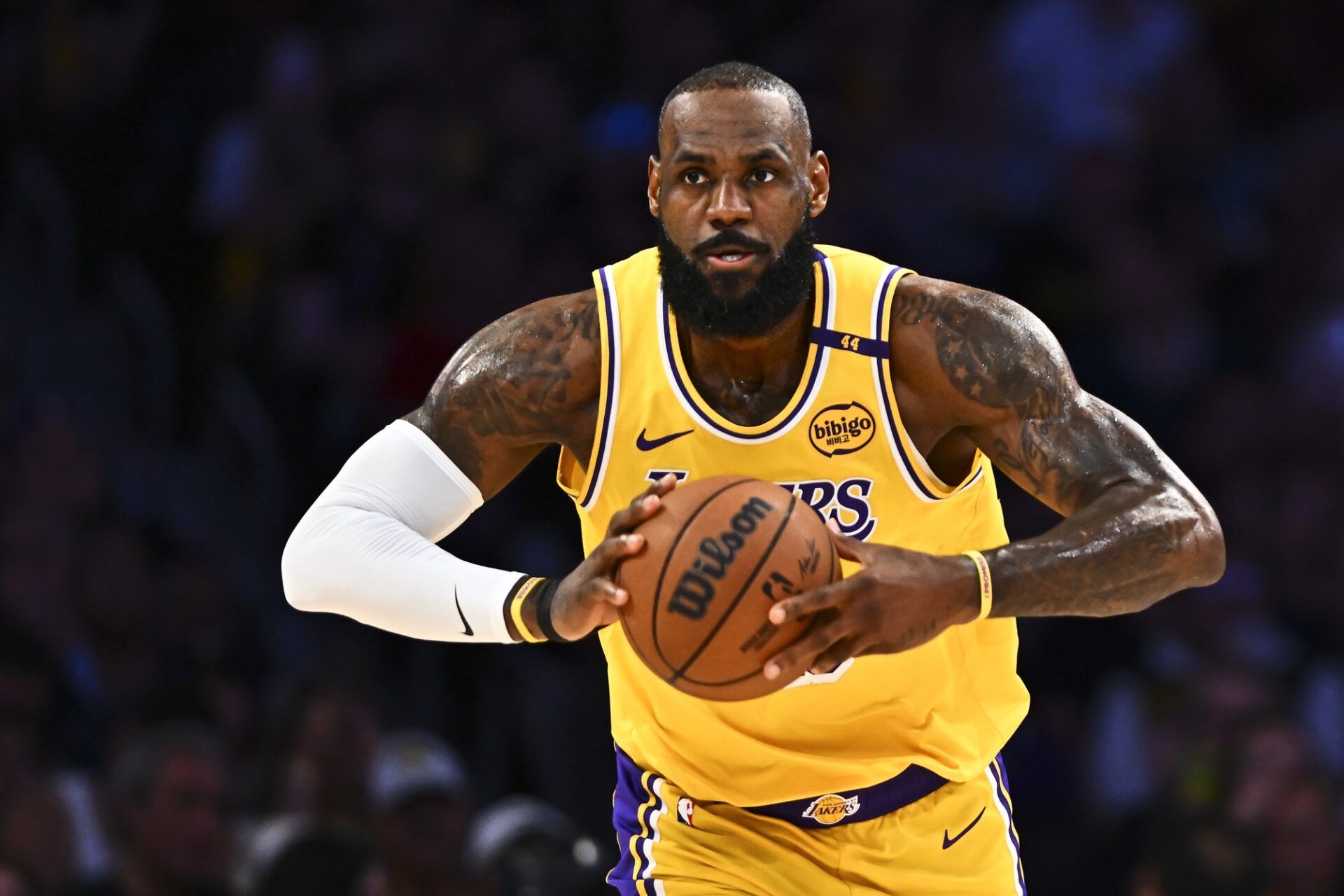
Now on the Lakers, Doncic has LeBron James and Austin Reaves as overqualified secondary scorers and ballhandlers to further stress the Wolves defense. The teams met once after the Doncic trade, a 111-102 Lakers win on Feb. 27 (though both Julius Randle and Rudy Gobert were out for Minnesota).
Keys to the Series
Lakers’ 3-point shooting: The Lakers were a middling three-point shooting team over the entirety of the regular season, both from a volume and efficiency standpoint. If you look at just since Doncic made his team debut on Feb. 10, however, the Lakers rank third in percent of shots from three (47%) and seventh in three-point percentage (37.7%).
Doncic’s arrival has transformed Los Angeles from a below-average three-point shooting offense into one that is both efficient and shoots at a high volume. The Timberwolves defense did a great job suppressing threes in the regular season, which will be put to the test this series. Minnesota ranked sixth in opponent three-point percentage (35.3%) and allowed the seventh-lowest three-point frequency (40.9% of opponent FGA).
Anthony Edwards avoiding hero ball: The Timberwolves superstar will need a few superhero moments this series. However, that doesn’t mean Edwards should try to carry the offense on his own, which he has a tendency to do at times. Edwards used isolations at the ninth-highest rate in the NBA this season (19.6% of possessions), but ranked 34th in efficiency (0.91 points per possession) out of 54 players with 100+ isos.
In contrast, when Edwards had the patience to dissect defenses out of the two-man game, he was lethal. He averaged 1.02 points per possession as the pick-and-roll ballhandler, which ranked 11th out of 69 players with 200+ plays. The Timberwolves’ depth is their strength, and Edwards’ ability to trust his teammates is a crucial factor for their chances of advancing.
LeBron allowing the Lakers to stay small: No series preview with LeBron James involved would be complete without mentioning the King. The contrast in size between the Timberwolves and Lakers is enormous, which could tilt in either direction. It’s easy to imagine scenarios where Minnesota gobbles up rebounds and overwhelms Los Angeles on the interior, as well as others where the Lakers torture Gobert in space and force Minnesota to play smaller than desired.
James ability to dictate play on both ends of court will help determine which way that battle tilts. The Lakers were outscored by 22 points in LeBron’s 103 minutes vs. the Wolves in the regular season, even though he missed one of the losses (Dec. 13). He’ll need to be far more effective for Los Angeles to win this series.
Series Prediction
On paper, the Timberwolves are a sleeping giant. Minnesota finished fourth in net rating, behind only the Big Three of the Thunder, Celtics, and Cavaliers that dominated the regular season. Had the Timberwolves drawn the Nuggets or Clippers (both teams they swept), Minnesota would be shaping up as a popular Finals pick.
However, the Luka-LeBron Lakers are a different animal, one much more unfamiliar to the Timberwolves. Doncic has been Minnesota’s kryptonite throughout the years as the one offensive player they don’t have an ideal matchup for on defense. The Wolves will look like the better team at times in this series with their superior depth and size, but it’s difficult to pick against LA’s superstars in what should be a tight series.
Pick: Lakers in 7
(4) Denver Nuggets vs. (5) Los Angeles Clippers
Burning Question
Is recent form all that matters for these teams? The Denver Nuggets and Los Angeles Clippers finished with identical 50-32 records in the regular season. But based on how they’ve played since the All-Star Break, the Clippers look like the far superior team.
After the All-Star Break, the Clippers had the fourth-best net rating in the NBA (+8.3) and went 19-9. By contrast, the Nuggets had a negative net rating (-0.2) and stumbled to a 14-13 finish, firing Michael Malone in the process.
The teams split the season series 2-2, and that’s with Kawhi Leonard playing in none of those games (all of which came on Jan. 8 or earlier). That makes the regular season series virtually meaningless, as neither team has seen the other in its current form.
Keys to the Series
Battle of the Bigs: Ivica Zubac’s evolution into an All-NBA caliber big gives the Clippers a real chance to bother Nikola Jokic. This season, Jokic shot just 15-34 (44.1%) when matched up against Zubac, far below his 57.6% overall average.
Their battle should extend to the boards as well. No team is better at cleaning up defensive rebounds than the Clippers. LA cleaned up 73.4% of opponent misses, the best rate in the NBA. On the flip side, the Nuggets ranked fifth in offensive rebounding rate (31.1%) and will likely need the second-chance opportunities against the Clippers’ stingy defense.
Jamal Murray’s Production: In four regular-season games vs. the Clippers this year, Murray averaged 20.3 points per game on very efficient 52.7% shooting. The Nuggets will need a similar level of “Playoff Murray,” except on greater volume, to ensure Jokic has enough support.
However, he’ll have an extremely difficult challenge. Los Angeles has a bevy of ferocious on-ball defenders, with Kris Dunn likely to see the most time on him. In 59 possessions with Dunn guarding Murray this season, the Nuggets averaged an atrocious 79.7 points per 100 possessions.
Kawhi Leonard vs. Aaron Gordon: On the other side, the Clippers’ main offensive star will see plenty of time against Aaron Gordon. The Nuggets power forward has been one of Leonard’s most common defenders throughout the years, with mixed results. Here’s how Leonard has shot with Gordon as his matchup since the latter joined Denver in 2020-21 (note that Kawhi missed the 2021-22 season):
- 2023-24: 3-9 (33.3%)
- 2022-23: 7-13 (53.8%)
- 2020-21: 8-17 (47.1%)
The Clippers have as much potential as they’ve had since making the West Finals in 2021, but that’s only true if Leonard can stay healthy this time. After playing just two playoff games each of the past two seasons, the two-time champ has a real chance to cement his playoff legacy with a third franchise this summer.
Series Prediction
One number not mentioned above was this one: -19.8. That’s the difference in the Nuggets’ net rating with Jokic on the court (+10.5) vs. off the court (-9.3) during the regular season.
Denver’s formula is typically to pile up a massive advantage during Jokic’s minutes, and minimize the inevitable onslaught that occurs when the fulcrum of their offense disappears. The issue is that the Clippers’ star power and depth makes it difficult to imagine the Nuggets thoroughly dominating the minutes where Leonard, James Harden, and Norman Powell are on the floor. That trio produced a +15.5 net rating themselves when sharing the court.
Any series where Jokic has homecourt advantage makes him an extremely difficult propositon to pick against. But with how these teams have diverged in recent weeks, the Clippers feel like a team headed for a titanic clash against the top-seeded Thunder – provided they stay healthy.
Pick: Clippers in 6
(1) Cleveland Cavaliers vs. (8) Miami Heat
Burning Question
Is Donovan Mitchell ok? While the Miami Heat have been dangerous as underdogs in recent years, the Cleveland Cavaliers are unlikely to be pushed too far this series. And while teams rarely hold back on stars in the postseason, the Cavs could probably afford to be cautious with Mitchell, who missed the final four games of the regular season with an ankle injury suffered on April 6.
Those absences were likely precautionary. Still, Mitchell shot just 41.7% from the floor and 30.2% from three after the All-Star Break, well below his 45.4% FG percentage and 39.1% three-point percentage from before the break. Prior to the ankle sprain, he also missed time in March with a groin injury.
Mitchell has delivered plenty of playoff bonanzas over the years despite never reaching the Conference Finals. Cleveland won’t need him to be a superstar to advance past the Heat, but a couple games where Mitchell looks more like the MVP-caliber player he was earlier in the season would be reassuring.
Keys to the Series
Pick-and-Roll: The Cavaliers ran the pick-and-roll at the highest rate of any offense this regular season, and were wildly efficient at it. Only the Knicks averaged more points per possession on pick-and-rolls, with Mitchell (1.01) and Darius Garland (1.02) both ranking in the top 12 in points per possession by ballhandlers.
On the flip side, the Cavaliers were also the 10th-best defense against pick-and-rolls, with Evan Mobley anchoring Cleveland on that side of the court. The Heat were a below-average team on both ends of the floor, ranking 19th on offense and 18th on defense.
Heat’s 3-Point Quality: Miami was a below-average offense during the regular season, ranking 21st in offensive efficiency. Despite that, the Heat were an above-average three-point shooting team. The Heat ranked 12th in both three-point rate and three-point field goal percentage this season. Part of that was because Miami was so good at taking advantage of great looks, ranking third in field goal percentage on wide open threes (41.1%), defined as 6+ feet of separation.
The Cavaliers were an above-average team at preventing these premium looks. Cleveland allowed wide-open threes at the 10th-lowest rate of any defense in the regular season. Preventing Tyler Herro and the Heat’s potpourri of wings and guards from getting hot is the Cavs’ best bet to prevent an upset bid.
Fourth Quarter Finishes: If the Heat are able to hang with the Cavs, then the fun is just beginning. Cleveland was the best team this season in clutch time, defined as the score within five points in the final five minutes. The Cavs won a league-high 26 clutch time games and posted the second-best offensive efficiency (124.2) in those situations.
On the other hand, the Heat lost a league-high 28 clutch-time games, with their .333 win percentage in that situation ranking third-worst ahead of only the Jazz and Raptors. Tyler Herro had some big buckets in the play-in win over the Hawks, but shot an abysmal 32-104 (30.8%) in clutch time during the regular season. That was the worst FG percentage among 30 players to take 50+ shots in the clutch during the regular season.
Series Prediction
Cleveland downshifted to end the regular season after pacing for around 70 wins for much of the year. Still, this is the deepest team in the East (if not the whole NBA), and the Cavaliers will have a massive depth advantage over whoever earns the eight seed.
The Cavs went 2-1 against the Heat in the regular season, with the loss coming in a game where Jimmy Butler played for Miami. The Heat have been tough to quash under Erik Spoelstra, whose vast playoff experience usually allows even his most undermanned teams to compete in a series. Regardless, this feels like more of a stretch for the Cavs to experiment with tightening their rotation and honing preferred closing lineups for when the competition stiffens.
Pick: Cavaliers in 5
(2) Boston Celtics vs. (7) Orlando Magic
Burning Question
Do the Magic really have the formula to beat the Celtics? Over the last three seasons, the Boston Celtics have accumulated a 209-76 record (including playoffs). And yet, the Orlando Magic have piled up a 6-4 record against the Celtics in that span, including a 2-1 record this year.
Granted, the C’s haven’t been at full strength in all those matchups. Jayson Tatum missed both of the Celtics’ losses to the Magic this year, while all six of Boston’s top rotation players sat out the April 9 loss. When the Celtics did have most of their rotation available on Jan. 17, they rolled to a 121-94 win.
That said, Orlando’s elite defense has thrown a wrench into the Celtics’ offense at times. Boston has been held below its season average in offensive efficiency in seven of the 10 matchups over the last three seasons, with four of its 12 worst games in that span coming against Orlando.
Keys to the Series
The 3-point gap: Calling this difference a “gap” is kind. The difference between the Celtics’ and Magic’s three-point shooting is more like a Grand Canyon-sized chasm. Boston took and made more three-pointers than any team in NBA history this season, while the Magic had the worst three-point percentage since the 2015-16 Lakers. Orlando ranked 18th in percentage of attempts from deep as well.
The Celtics will almost certainly hit more threes every game this series. How large that difference is will determine how competitive the Magic can be. Orlando was the best defense at suppressing three-point attempts, with a league-low 38.5% of opponent FGA coming from long range. But when teams did get those shots off, the Magic weren’t particularly effective at defending them, ranking 23rd in opponent three-point percentage (36.5%).
Turnovers: While taking care of the ball is key in every game, it’s particularly important in this series. Boston was excellent at taking care of the ball, posting the second-lowest turnover rate (12.2%). The Magic excellent at taking the ball away, forcing the second-highest turnover rate (16.8%).
Orlando depended on these takeaways to goose an ineffective halfcourt offense. The Magic averaged the sixth-most points off turnovers per game in the regular season. However, the Celtics gave up the second-fewest points off turnovers and have been the NBA’s best transition defense for years. Boston gave up a league-low 1.05 points per possession in transition this season, the C’s third straight year leading the NBA in that category
Get Paolo going: For the Magic to have any chance of scaring the champs, Paolo Banchero must be at his best. After a 34-game absence with an oblique injury, Banchero caught fire after the All-Star Break and averaged 29 PPG. Prior to the break, he was averaging 22.5 points per game.
However, Banchero was stifled in two games vs. Boston this year, averaging 18 points per game on 37.8% shooting. It was his third-lowest scoring average against any team he faced multiple times this season. Overall, Orlando went 5-12 when Banchero scored 22 points or fewer in the regular season.
Series Prediction
The Magic’s success against the Celtics the past few years shouldn’t be dismissed. It’s fairly easy to imagine Orlando’s path to victory: reliable scoring from Banchero and/or Franz Wagner, hot shooting from a role player or two, and stifling on-ball pressure that limits the Celtics’ volume of open threes.
The issue for Orlando is that the above scenario might be its only path to victory. Even with Jaylen Brown battling a bone bruise in his knee to end the season, the Celtics have plenty of firepower to stress the Magic with or without him. Despite rarely playing with their full rotation, Boston ripped off a 25-5 finish, tied with the Thunder for the best 30-game finish by any team.
Now the Celtics will have their full arsenal of weapons, with Brown set to play after sitting out the last three regular-season games. At full strength, Boston is the most versatile team in the NBA and will beat a one-dimensional team the vast majority of the time. Orlando’s defense can squeeze out one win, but any more than that would be surprising.
Pick: Celtics in 5
(3) New York Knicks vs. (6) Detroit Pistons
Burning Question
Does the experience gap matter more than the regular-season series? The Detroit Pistons aren’t totally devoid of playoff experience after signing several key vets last offseason. But three of their primary starters – Cade Cunningham, Jalen Duren, and Ausar Thompson – will be making their playoff debuts against a far more experienced New York Knicks team.
That’s the biggest X-factor preventing many from predicting a Pistons upset. Detroit won the regular-season series 3-1 over the Knicks, including a meeting after Jalen Brunson’s return on April 10. While Karl-Anthony Towns missed one of the Knicks’ losses on Dec. 7, the Pistons were missing Thompson for two of the wins.
Of course, the experience gap against a Knicks team that has advanced in the playoffs two straight years can’t be hand-waved away. Fairly or not, Pistons coach J.B. Bickerstaff also has questions to answer about his playoff viability. His teams have gone 1-3 in playoff series, including a five-game defeat to the Knicks in the first round two years ago when Bickerstaff was the Cavaliers head coach.
Keys to the Series
Cade Cunningham in the pick-and-roll: Cunningham will have an opportunity to punctuate his breakout season against a team he handled in the regular season. The fourth-year pro averaged 30.8 points per game on 56.3% shooting (including 52% from three) in four regular-season games vs. the Knicks this year.
Cunningham was able to hunt Brunson and Towns in the pick-and-roll to achieve that success. That’s been a weakness for New York all season, as the Knicks ranked 21st in points per possession allowed in the pick-and-roll. The extent to which Cunningham dominates his mismatches will play a large factor in Detroit’s upset potential.
Knicks’ free throw rate: Although Brunson has a reputation as a pre-eminent foul-drawer, the Knicks don’t get to the free throw line very often. New York ranked 23rd in free-throw rate (23.2%) during the regular season, even with Brunson ranking fifth with 6.9 free-throw attempts per game.
However, the Pistons’ extremely physical play has drawbacks in this area. Detroit allowed the fourth-highest free throw rate (27.6%), a byproduct of committing the fourth-most fouls per game (20.7). Unfortunately, this feels like a series where the officiating will have a bright spotlight based on how tight the whistle is game to game for the Pistons.
Jalen Brunson’s usage: Brunson returned for four games after his 15-game absence with his ankle sprain. Nothing appeared too out of the ordinary, with the Knicks guard averaging 21 points per game and playing over 34 minutes per game.
Of course, he’ll shoulder a much heavier burden than that in the postseason. Brunson’s usage last postseason was an obscene 35.2%, the highest of anyone who played more than one round. The Knicks have particularly leaned on Brunson in tight games, with his 42.4% usage rate in clutch situations (score within five points in final five minutes) leading the NBA. His ability to carry the Knicks offensively will be critical the whole postseason.
Series Prediction
The Knicks didn’t look great to finish the regular season, going 1-3 after Brunson’s return. Still, New York has all of its top rotation players available. For all the hand-wringing over Tom Thibodeau’s minutes management, the Knicks are an incredibly dangerous team when healthy.
The Knicks’ starting lineup played the most minutes in the NBA (940) and delivered a +3.3 net rating. New York has its full rotation available to begin the postseason, which gives the Knicks as much high-end talent as nearly any team in the NBA. As exciting as the Pistons’ breakthrough has been, expecting this core to advance in its first year on the playoff stage feels ambitious.
Pick: Knicks in 6
(4) Indiana Pacers vs. (5) Milwaukee Bucks
Burning Question
Does Giannis have enough help? Giannis Antetokounmpo is finally healthy in the postseason after missing all of last year’s first-round defeat to the Indiana Pacers. The Greek Freak has dominated Indiana through the years, and averaged 30.0/12.3/7.5 in points, rebounds, and assists per game vs. the Pacers this season.
Of course, the issue isn’t when Giannis is on the floor, but how the Milwaukee Bucks will survive when Antetokounmpo has to rest. The Bucks’ net rating was 11 points higher with Giannis on the court (+7.2) compared to when he sat (-3.8) this season. That difference more than doubled in four games vs. the Pacers this year.
If anything, the Bucks’ success with Giannis on the court against the Pacers might be overstating how things will go this series. The first two matchups came during Indiana’s slow start to the season, while the teams split a pair of meetings in March. The Pacers finished 41-18 after Dec. 6, the fourth-best record in that span behind the Thunder, Cavaliers, and Celtics.
Keys to the Series
Bucks Secondary Scoring: Milwaukee got an unexpected boost when it was reported that Damian Lillard will resume contact workouts after clearing the blood clots in his calf. Lillard, who has been out since March 18 with blood clots in his calf, was ruled out for Game 1, but seems likely to return at some point this series
Milwaukee’s role players have stepped up in his absence, allowing the Bucks to go 10-4 with the fifth-best offensive rating (121.7) since Lillard went out. Bobby Portis’ return from his 25-game suspension helped, as did the emergence of Kevin Porter Jr. With both operating at a high level, the Bucks’ bench has a chance to be far more productive than it was during the regular season (when it ranked 13th in bench points per game).
Tyrese Haliburton’s Aggressiveness: Haliburton’s season has mirrored the Pacers’ campaign as a whole. After a woeful start, Haliburton averaged 19.1 points per game and 9.6 assists per game on 50/42/85 shooting splits during the Pacers’ 41-18 finish. That will likely earn him All-NBA honors for the second straight year.
Haliburton was the NBA’s most efficient pick-and-roll ballhandler during the regular season. Indiana averaged 1.11 points per possession when Haliburton ran the pick-and-roll, best among players with 200+ plays. The Pacers went 15-1 when Haliburton scored at least 25 points, so while his strength lies in creating for others, recalibrating his instincts to shoot a little more might be what Indiana needs to make another deep run.
Pacers Paint Defense: Giannis is the NBA’s most unstoppable paint force. Antetokounmpo led the league with 19.5 points per game in the paint, and his ability to penetrate the paint creates open looks for the Bucks’ shooters. As a result, Milwaukee led the NBA in FG percentage on catch-and-shoot threes (40.2%) in the regular season.
Defending the rim was a weak spot for Indiana’s defense this year. The Pacers ranked 26th in paint PPG allowed (51.8), so stopping Giannis entirely seems unlikely. But if they can make his life difficult enough where he isn’t creating for others, Indiana’s offensive firepower should be enough to carry the series.
Series Prediction
Lillard’s expected return is a nice boost, but it’s an open question how effective he’ll be (or whether he can shoulder significant minutes) after a month-long absence. Milwaukee has had an injured All-Star in four straight postseasons now, with Giannis missing time last year and in 2023 and Khris Middleton suffering an MCL injury in 2022.
The Bucks’ form without Lillard gives Milwaukee hope of pulling an upset. However, as an older team, the Bucks have not dealt particularly well with pace this year. Milwaukee was the fifth-worst team at defending transition (1.16 points per possession allowed), and the worst among the 20 teams to make the playoffs or play-in.
The Pacers don’t play at the same breakneck pace as last year, but still ranked seventh in pace and were the fifth-most efficient transition offense (1.16 points per possession). As lethal as Milwaukee’s offense could be after Lillard’s return, that problem is not necessarily one that Dame would solve. For all the problems Giannis will cause, the Pacers as a team present more problems than Milwaukee’s superstar alone.
Pick: Pacers in 7