
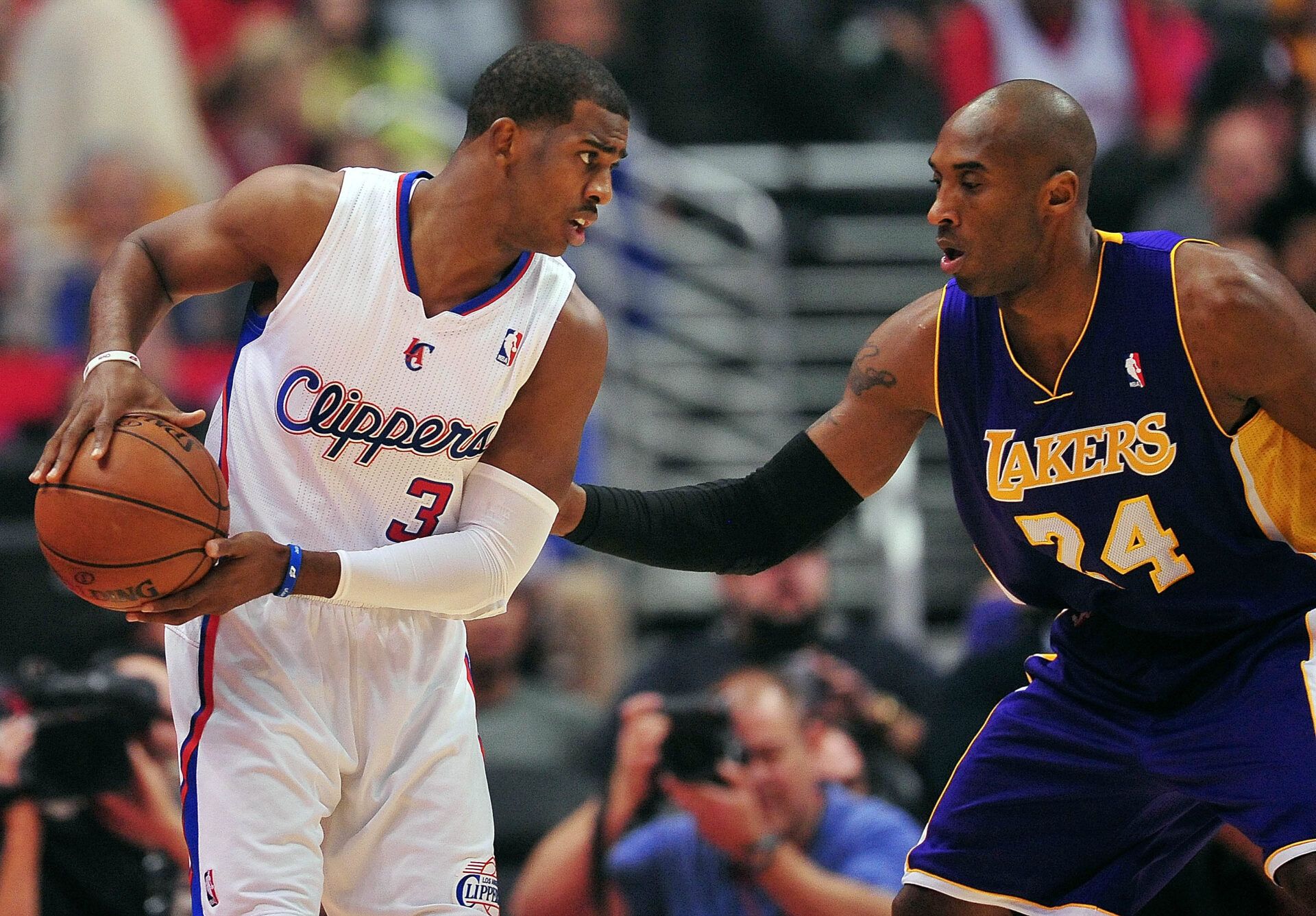
12-time All-Star Chris Paul recently announced his retirement. While his final season with the Los Angeles Clippers ended unceremoniously, Paul has started reflecting on a legendary career that saw him emerge as one of the NBA’s greatest floor generals. Paul recently opened up on one of the key turning points of his career: the infamous failed trade to the Los Angeles Lakers.
Chris Paul Discussed Failed Lakers Move
Paul looked back on the nixed trade to the Lakers during his guest appearance on The Tylil Show. Paul said, “Once the lockout ended and we had to go back to our respective teams, I got traded to the Lakers. I got traded. So at the time, my team was owned by the NBA, right.
“So, New Orleans, when I played for the New Orleans Hornets, the owner from my team ran out of money. So, the NBA took over my team, so the NBA was making the decisions for my team. So we came out of the lockout and the Lakers traded for me and next thing you know, the league rescinded it. The league said nope, ain’t no trade.
“I was excited, but it was crazy because they, when they rescinded it, what they do, they said be ready to play the whole year back here and then it was quiet. What happened was a few of the owners for the other teams, they said we just came out of the lockout, we just did a new CBA and they said it was all about competitive balance. So they said if I would have went to the Lakers, it wasn’t gone be competitive balance.”
Chris Paul shares the story of his trade to the Lakers getting vetoed in 2011
“Once the lockout ended and we went back to our teams, I got traded to the Lakers. At the time my team was owned by the NBA. The owner of my team ran out of money. So the NBA took over my team. The NBA… https://t.co/jL3swwahpr pic.twitter.com/FzyaQvHGJO
— NBA Courtside (@NBA__Courtside) February 18, 2026
Paul had a close view of the 2011 lockout, as he was a member of the National Basketball Players Association Executive Committee, before being selected President in 2013. A major source of tension during the lockout was the owner’s push for a larger share of the revenue split.
As Paul mentioned, the then-Hornets Owner, George Shinn, was facing extreme financial difficulties. Then, NBA Commissioner David Stern stepped in and announced the league had purchased the Hornets to prevent the team from relocating.
By this time, Paul has established himself as one of the NBA’s elite players, winning Rookie of the Year, making four All-Star teams, and having two top-five finishes in MVP voting. The Hornets knew they were unlikely to keep Paul much longer due to the franchise’s uncertainty, so they put him on the trade block.
The trade to the Lakers may have resulted in Paul finally winning a championship, but Stern, acting as Hornets Owner, felt the trade wasn’t in the franchise’s best interest. Nearly a week later, the Los Angeles Clippers completed a trade for Paul, which started Paul’s run as arguably the greatest player in franchise history.
That Stern believed trading Paul to the Lakers wasn’t great for the organization, but quickly allowing Paul to go to Los Angeles anyway, to play for the Clippers instead, certainly puts the issue of competitive balance to the forefront. Stern simply didn’t want Paul to team up with Bryant. Many fans felt robbed, especially considering the chemistry Paul showed with Bryant as teammates during All-Star games and on the Team USA Olympic Team.
The failed trade stands out more as Paul was unable to fill the one hole on his resume, which is a championship, despite the Clippers having a few good chances. As Paul notes, teaming with Bryant and another All-Star would have been viewed much more favorably in recent times, as the last 12 years have been dominated by talks of superteams. Paul joining Bryant on the Lakers will always be a huge what-if moment.
