
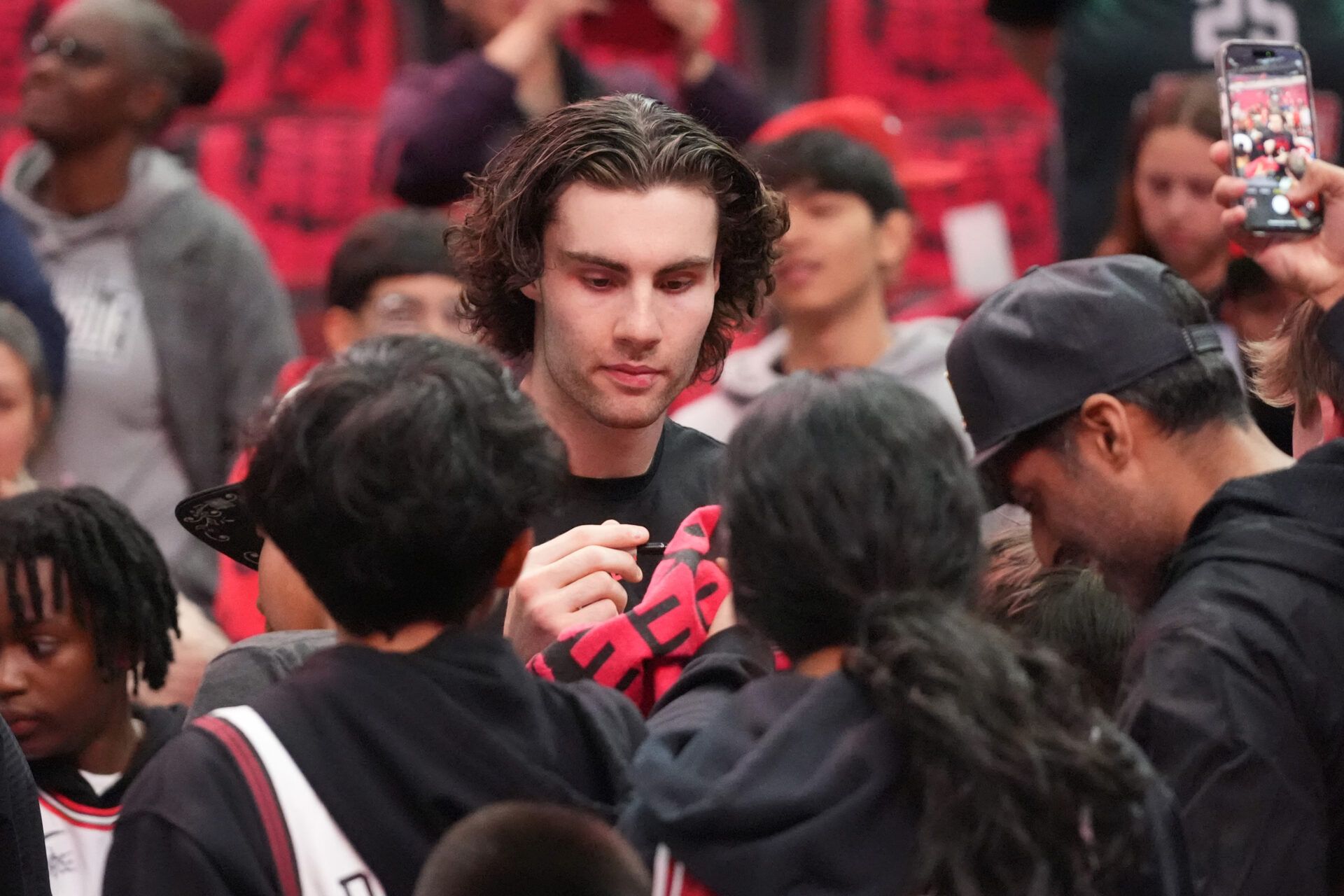
Josh Giddey could be about to make or break the Chicago Bulls’ future. The 22-year-old point guard sits in limbo as his restricted free agency deadline looms on Oct. 1, holding leverage that could reshape Chicago’s roster construction for years.
What started as a straightforward negotiation has become a fascinating case study in team building, salary cap management, and the art of valuing potential versus production.
Bobby Marks Breaks Down the Josh Giddey Situation
ESPN’s Bobby Marks provided a detailed insight into the Giddey situation, noting both the Bulls’ incremental progress in talks and why their strategy is drawing scrutiny from around the league.
“So when you dig around the Josh Giddey situation, who had a terrific year, certainly the last 25 games, he was offered four years, $80 million when free agency started, that number has gone up to four years, $88 million,” Marks explained.
However, Marks pointed out that this figure still sits at the bottom of the range for starting point guards. The real issue centers on Chicago’s recent decision to hand Patrick Williams a five-year, $90 million extension despite a weaker resume.
“If you’re the Bulls and you just committed five years, $90 million to Patrick Williams based on a lesser body of work, now you’re all of a sudden drawing a line in the sand as far as where you are with Josh Giddey here.”
The contradiction couldn’t be clearer. Chicago rewarded potential over proven production with Williams, then turned hesitant when a more established player demanded recognition. That inconsistency has created the stalemate that threatens to drag into training camp.
Why Does Josh Giddey Believe He Deserves More Than Patrick Williams?
Giddey has been vocal about his need to get paid like his peers. A deal in the $30 million per year range would align him with players such as Tyler Herro and Derrick White, less versatile guards who have proven their value on competitive rosters.
The numbers support Giddey’s argument. Last season, he played 70 games in his first year with the Bulls after being acquired from the Oklahoma City Thunder. He averaged 14.6 points, 8.1 rebounds, and 7.2 assists per game on efficient 46.5% shooting.
He elevated his play dramatically down the stretch, averaging near triple-double numbers across the Bulls’ final 25 contests as Chicago went 17-10 in that span.
For Giddey, the argument is simple. He brings versatility, can initiate offense, rebounds effectively, and defends multiple positions. At 22 years old, he has clear room to grow into a legitimate star.
The sticking point lies in the shadow of Williams’ contract. Chicago handed the 24-year-old forward $90 million over five years, even though he produced 9.0 points, 3.8 rebounds, and 2.0 assists on 39.7% shooting in 2024-25. Those numbers matched or fell below career lows across the board.
This disparity makes it difficult for the Bulls to justify a hard stance against Giddey after showing such faith in Williams. The message becomes confusing when you pay a role player like a starter while nickel-and-diming your actual playmaker.
The clock is ticking toward a potential disaster for both sides. If Giddey rejects Chicago’s offer and accepts his $11.1 million qualifying offer, he would sacrifice $11 million in immediate earnings while betting on himself to land a bigger deal in 2026.
That gamble carries significant risk. While roughly ten teams are expected to have cap space next summer, there’s no guarantee any will prioritize Giddey at his desired number. Playing on a one-year deal also exposes him to injury risk that could torpedo his next contract entirely.
Meanwhile, the Bulls would face the uncomfortable reality of having their primary playmaker on a prove-it deal while their role players enjoy long-term security. The optics alone would send a troubling message about organizational priorities.
The resolution of this standoff will define more than just Giddey’s bank account. It will establish whether Chicago’s front office can navigate complex negotiations without undermining their own credibility in future deals.
