
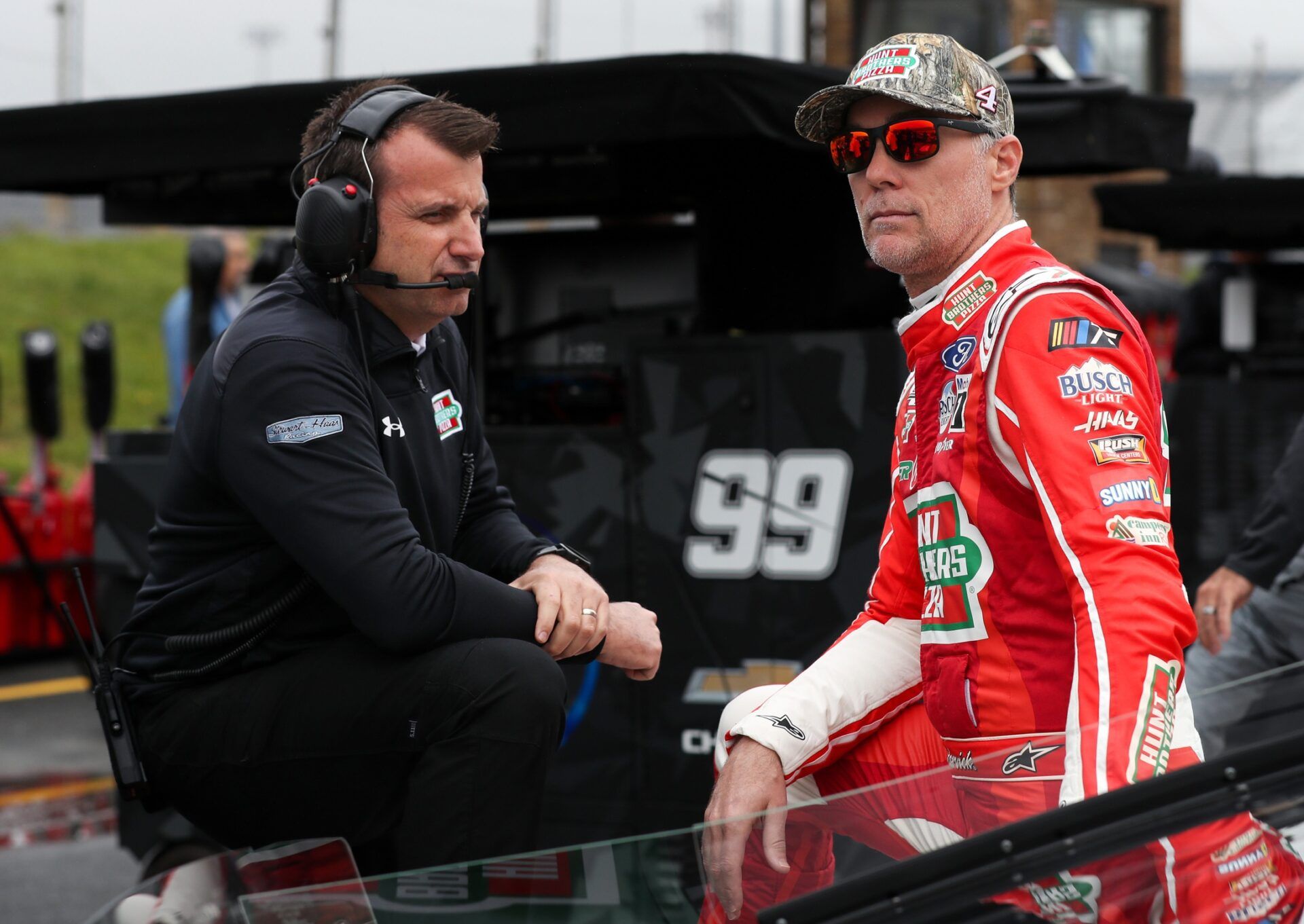
No one in the NASCAR garage was surprised when Stewart-Haas Racing finally shut its doors. Everyone saw the struggles as soon as the next-gen car hit the track in 2022, and the writing was on the wall for co-owners Tony Stewart and Gene Haas. But what actually went wrong? Two people who lived it– Rodney Childers and Kevin Harvick– opened up about the end of an era and what made the next-gen car such a nightmare for their team.
Why Did Stewart-Haas Racing Collapse After the Next-Gen Car Arrived?
When Stewart-Haas Racing first hit the Cup Series in 2009, success came quickly. Tony Stewart, who already had a couple of Cup titles, helped power the team to a championship in just their third year, back in 2011. The vibe in the shop was all about winning, and it paid off fast.
Things only got better when Kevin Harvick joined in 2014. That same year, NASCAR rolled out a new playoff format, and Stewart-Haas Racing took full advantage with another title. Even after Stewart hung up his helmet in 2015, the team kept piling up wins and playoff deep runs.
Think about those monster years: twelve wins in 2018, ten in 2020, and a boatload of championship-four appearances between 2015 and 2021. Harvick led the charge, with Stewart-Haas Racing grabbing runners-up, a streak of third-place finishes, and regular top-five results. At that point, no one doubted they were top of the heap in the Gen-6 era.
But that all changed when the Gen-7, or next-gen, car took over. Suddenly, Stewart-Haas Racing was off the pace. They managed just three wins that first year, and by 2023, they ended up winless. After that tough season, Harvick called it a career, and the team soon announced plans to close up shop in 2024.
Sure, Chase Briscoe managed to sneak into the playoffs by winning the regular season finale, but he didn’t make it out of the first round. Unlike a group like Team Penske, which seemed to thrive and rack up championships, the next-gen car had proven too much for the team.
Rodney Childers, who spent years running the show atop the pit box, didn’t sugarcoat the situation. He said, “It was just the way that different organizations were run like you were saying like Penske was really buttoned up at the time and they were kind of ready for a car like this. The way they operated in the shop and obviously they’ve gone out and won what three championships in a row or whatever. So I felt like they were ready for it from the get-go.”
Meanwhile, Childers pointed out that Stewart-Haas Racing kept doing things the old way, while teams like Joe Gibbs Racing and Hendrick Motorsports had all the latest infrastructure and processes dialed in.
“They had a lot of structure and all those different things, but Stewart-Haas Racing was just a bunch of racers, and we just worked our guts out. And with the new car, you can’t do that. You really can’t just outwork somebody. I mean, you have to have all the pieces and parts and the details figured out, and every single piece and part has got to be pushed to the limit, and some people are able to do that,” Childers added.
Things kept unraveling. For 2025, all that remained was the Haas Factory Team, with Gene Haas keeping one charter. So far, Cole Custer’s been at the wheel, but the results haven’t turned around. He missed the playoffs and has only logged one top-five.
Still, Haas isn’t quitting after 2025. Instead, there’s a big change coming. In 2026, the Haas Factory Team will drop Ford and go back to being a Chevy team, adding a new technical alliance with Hendrick Motorsports– just like the old days when the Stewart-Haas Racing team found its most success with Chevy.
But here’s the thing: In every season since the next-gen car arrived, it’s always been a Ford that’s taken the championship. Whether this shakeup leads to better days for Haas Factory Team remains to be seen. Maybe 2026 brings a turnaround, or maybe the next-gen struggles just keep hanging around.
