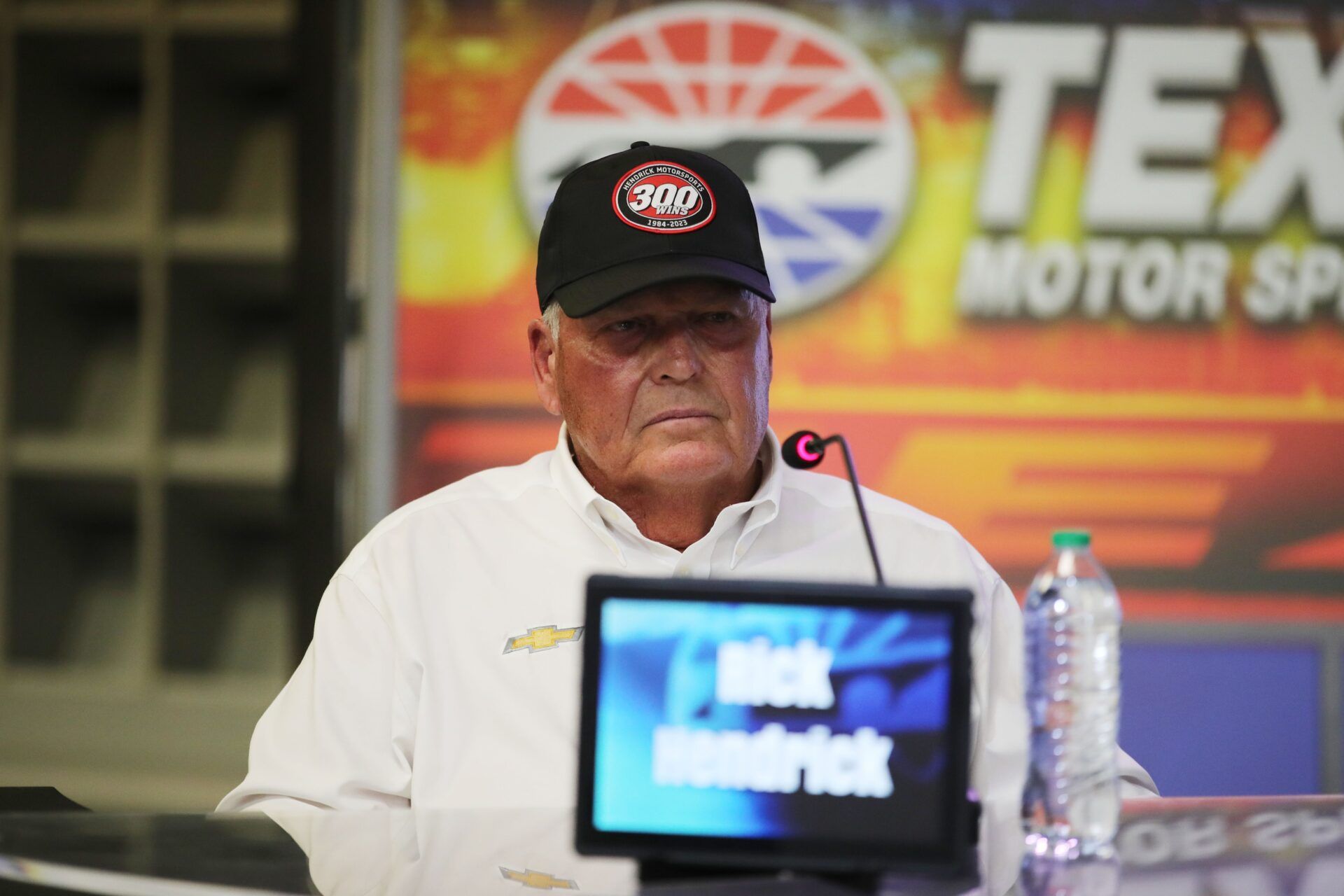
As the antitrust trial involving 23XI Racing, Front Row Motorsports, and NASCAR intensifies, unexpected pressure is mounting on two of the sport’s most powerful team owners, Rick Hendrick and Roger Penske.
With newly revealed letters and private communications from Hendrick, Penske, and Jack Roush now in play, they risk becoming significant liabilities for the sanctioning body. A legal expert warned that new pre-trial disclosures could change their role in the proceedings entirely.
Why NASCAR May Want Rick Hendrick and Roger Penske To Stay off the Stand?
After the latest court session, legal analyst Shannon McMinimee flagged a potentially dramatic shift. She suggested that two of the sport’s most influential voices, Hendrick and Penske, may now not be called to testify, despite earlier expectations that their presence would anchor NASCAR’s defense.
McMinimee pointed out that the calculation has changed since the jury was shown documents reflecting the owners’ private communications with NASCAR leadership and chairman Jim France. She also noted that their “friendships” could now become part of the story in ways that complicate NASCAR’s narrative.
McMinimee explained, “I think it is possible that we don’t see Rick Hendrick or Roger Penske testify now. Their letters (along with Joe Gibbs and Jack Rousch) advocating for evergreen/permanent charters got covered today – Roger even identified that he had a fair formula to offer.”
She added, “It is a risk to call them when their pre-trial views have now been shared with the jury, along with their longstanding friendships with Jim France. The obvious credibility issue is, are they testifying that they are okay with the state of things now only because of their friendships?
“Also, I suspect that there is much more in writing that the Teams have that both could be challenged on in writing, beyond the letters now that we know how much these folks text/email.”
The concern stems from the admission of a set of letters written by Hendrick and Penske in 2024. These documents were not casual exchanges; they were formal appeals sent directly to France during the tense charter negotiations.
At that time, teams were urging NASCAR to consider a model with greater financial security and long-term guarantees. These team owners personally reached out to France with letters expressing a desire for stronger structural protections and asked the sanctioning body to reconsider the deal being framed.
With these sentiments now entered into evidence, NASCAR’s attempt to portray broad owner alignment with its decisions, and to cast the charter dispute as a disagreement led by only a few teams, appears to be falling apart.
McMinimee also stressed that the real danger lies beyond the letters. She suggested that the plaintiffs likely possess even deeper archives, emails, text threads, and private exchanges spanning years.
If Hendrick or Penske were cross-examined on these communications, any inconsistency could become a focal point for the plaintiffs, further damning NASCAR’s case.
