
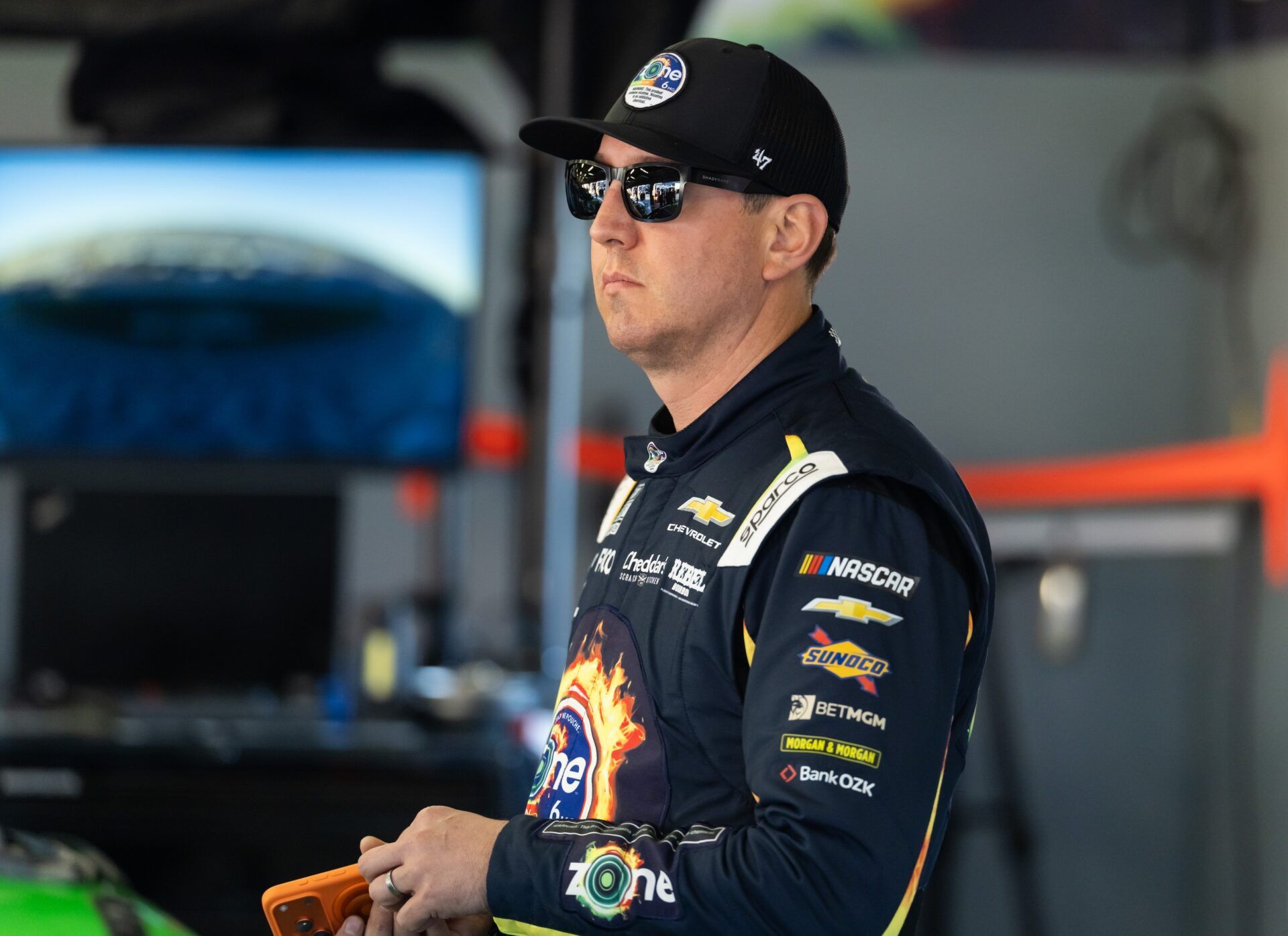
NASCAR Cup Series two-time title winner Kyle Busch went into Sunday’s season opener with renewed purpose. However, as the 200-lap feature unfolded, the pole-sitter’s hope waned.
Yet even as Tyler Reddick crossed the checkered flag to claim his first Daytona 500, Busch, who was running behind, lived up to his “Rowdy” moniker by doing something entirely tempered. In a moment that called for fire, the 40-year-old instead leaned on experience and restraint, underscoring the subtle but significant return of points racing over pure spectacle racing in the wildest yet mildest manner.
The Math Behind the Madness – Why Kyle Busch Chose Restraint Over Rowdiness
As the closing laps ticked down at Daytona International Speedway, the familiar superspeedway carnage loomed over the horizon. The lead draft churned restlessly, lanes narrowing and stacking as drivers searched for one final surge.
With two to go, the No. 8 Richard Childress Racing Chevrolet of Busch was mired deep in the pack, boxed in and surrounded by aggressive moves that hinted at the inevitable.
Then, he did something few expected.
Rather than forcing his way into the hornet’s nest, Busch lifted his foot off the gas and eased off from the pack. To the casual viewer, it looked like trouble, and so it did for his No. 8 crew. When his team asked over the radio whether he was out of fuel, the Las Vegas native responded in typical “Rowdy” fashion –
STAY UPDATED: The Side Draft: PFSN’s FREE NASCAR Newsletter
“What the f**k am I going to rush into the wreck for? We’re running fu**ing 30th.”
It was vintage Busch, but the decision was anything but impulsive. It was calculated. Although superspeedway endings reward boldness, they equally punish desperation. The veteran understood the math.
Running down the order (P29) in the closing laps of the Daytona 500 offers little realistic path to victory without chaos. And chaos was inevitable. So, instead of gambling his race car on a low-percentage move, Busch chose preservation.
Moments later, when the field erupted behind the leaders, Busch, sitting safely behind the fray, advanced through the smoke, climbing to a 15th-place finish.
In another era, that move might have been criticized as overly cautious. But NASCAR’s competitive landscape is shifting once again. With a renewed emphasis on season-long consistency and points accumulation, every finish matters. A clean top-15 in the season opener can carry weight later in the season.
PREDICT THE CHASE: PFSN’s FREE NASCAR Season Simulator
For the Vegas native, whose recent seasons have lacked the championship momentum that once defined his career, the decision signaled something important. While the fiery, outspoken, unapologetic persona remains, it is now tempered by two decades of experience.
At 40, he understands that titles are not built solely on dramatic lunges in individual races, but on disciplined accumulation across 36 races.
Ultimately, in a race that invites risk and rewards bravado, Busch’s meaningful move got him some extra points. With one down, the No. 8 driver is tied for 14th with Kyle Larson (P16) at 29 points, a world away from the 17 points that place Ross Chastain (P20 finish) 23rd.
In the end, Busch’s move wasn’t a highlight-reel gamble; it was a veteran’s calculation, bold in intent and restrained in execution.
