
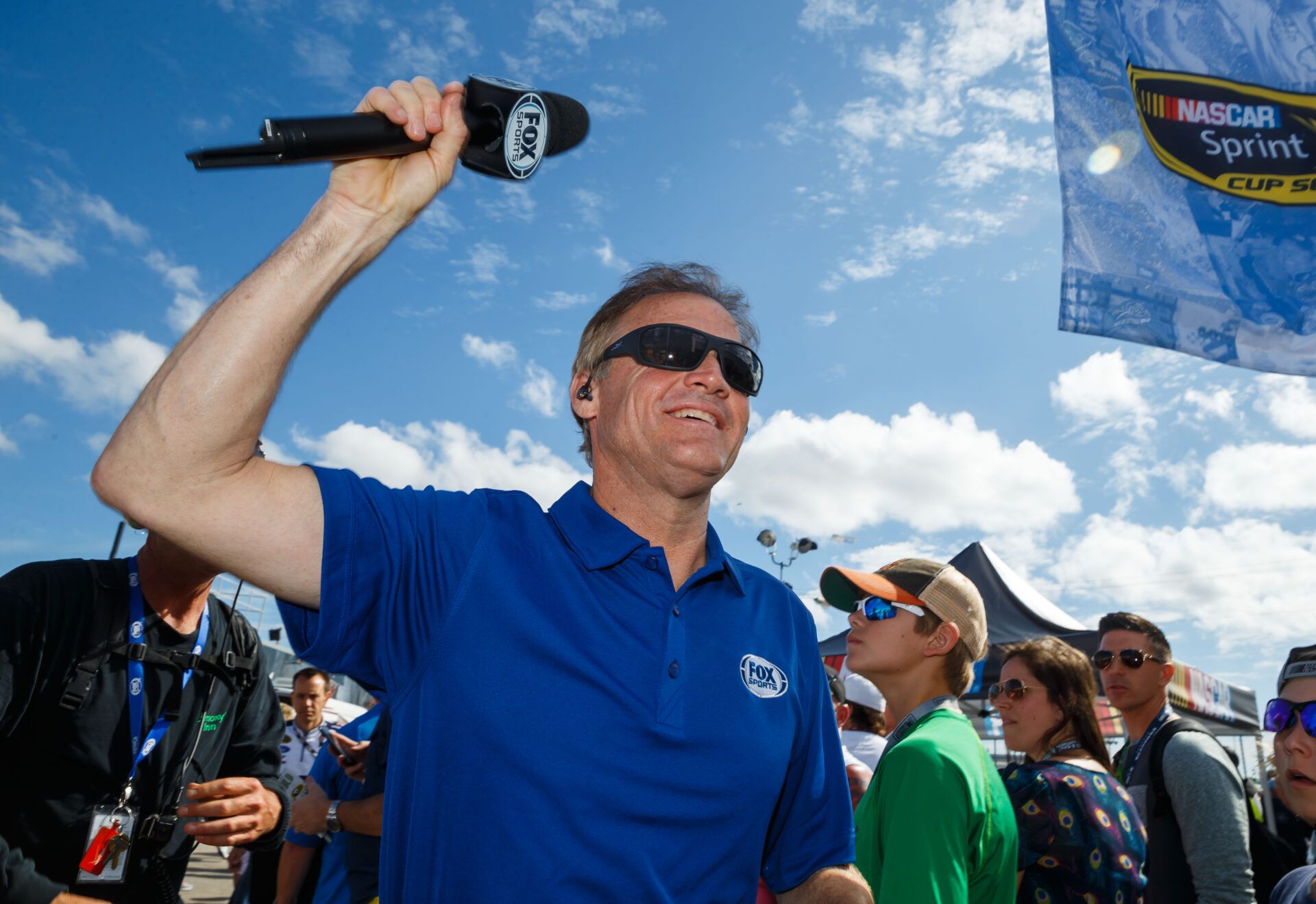
Kenny Wallace recently opened up about the harsh financial realities of NASCAR’s demanding travel schedule.
The former NASCAR driver’s candid admission came just days after experiencing a frightening mid-air emergency that forced his plane to make an emergency landing in Charlotte
Kenny Wallace Explains the Hidden Side of NASCAR’s Relentless Travel
The incident occurred earlier this week when Wallace’s aircraft filled with smoke shortly after takeoff. The pilot became dizzy and required oxygen, prompting an immediate return to Charlotte.
Emergency vehicles chased the plane down the runway in what Wallace described as a scene “right out of the movies.” While everyone landed safely, the experience highlighted the constant aviation risks NASCAR personalities face.
Following the emergency, Wallace took to social media to discuss why private air travel became essential during his racing career.
He painted a picture of NASCAR life that many fans never see — a grueling schedule that keeps drivers on the road for 39 weeks each year.
“Living the life in NASCAR is like a carnival act,” Wallace explained.
“39 weeks on the road. Sponsor appearances throughout America on Monday, Tuesday or Wednesday. Then back to the race track on Thursday night. Commercial air travel was not an option in the NASCAR glory days.”
SUBSCRIBE: The Side Draft, PFSN’s free NASCAR newsletter
The financial burden of maintaining this lifestyle is staggering. Wallace revealed that top-tier NASCAR drivers spend approximately $60,000 per month on air travel alone.
For Wallace personally, the costs were equally crushing. His King Air 200 aircraft was carrying a $20,000 monthly bank loan after he purchased it for $1.7 million. But that was just the beginning.
“Then my pilot salary and fuel and insurance and maintenance. I spent more than 30,000 a month,” Wallace admitted, adding with a laugh, “I do miss my plane. The kids wish we had it back. But I do not miss the $30 thousand a month I spent on it.”
The expenses extended beyond the obvious operating costs. Wallace pointed out that even minor maintenance items are priced at premium levels due to aviation regulations. “A mere light bulb for a plane can cost $200 because that bulb has a FFA approval,” he explained.
While private planes offered massive tax deductions for business expenses, Wallace noted the government eventually wants that money back when the aircraft is sold, requiring owners to “get creative” with their accounting.
The necessity of private travel wasn’t just about convenience or luxury. Wallace emphasized the real risks of relying on commercial airlines.
“Imagine a NASCAR Cup team flying commercial to a race. Taking a big risk doing that. Because you are on the commercial airlines’ schedule. NOT the race teams’ schedule,” he wrote, highlighting how flight delays or cancellations could jeopardize an entire team’s ability to compete.
Fortunately, times have changed. Wallace noted that modern NASCAR has evolved, with teams now providing their own aircraft. “Times have definitely changed. TEAMS now have their own planes. Saves the drivers massive money,” he explained.
Wallace’s revelations came weeks after the tragic plane crash that killed fellow NASCAR driver Greg Biffle and six others, including Biffle’s wife, two children, and friends.
The December 2025 crash has shaken the NASCAR community and brought renewed attention to aviation safety within the sport.
