
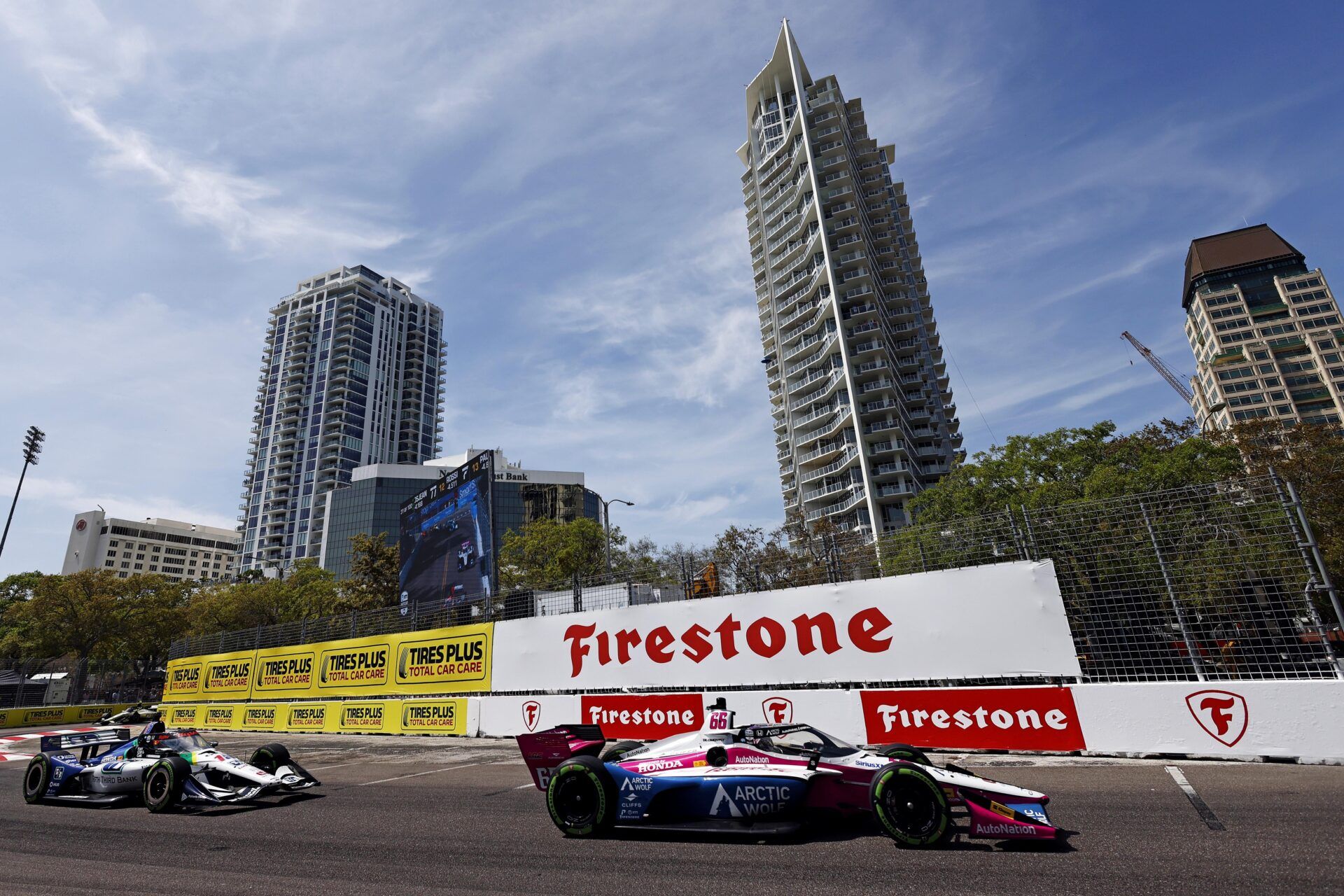
The wait is almost over for fans of the NTT IndyCar Series, and just before the 2026 season gets underway, officials have rolled out several updates that could shape how races unfold, from tire rule changes to added safety measures for the sport’s biggest race.
The championship kicks off this weekend on the streets of St. Petersburg, where defending champion Alex Palou will start chasing history by aiming to add another championship to his growing resume, but the environment around him is changing a bit this year due to all the updates announced ahead of the new campaign.
New Tire Rule Could Shake Up IndyCar’s Street Races
One of the most noticeable changes for 2026 involves tire usage at street circuits, as IndyCar has adjusted the compounds drivers must run during races on these tracks.
Under the new rule, teams must use one set of primary tires and two sets of alternate tires during street-course events. Previously, drivers were only required to run one set of each compound, and the added use of an alternate tire could make the strategy far more complex.
From a racing perspective, this could lead to more aggressive pit-road calls and perhaps more variation in how drivers approach the race. Alternate tires typically offer better grip but wear out more quickly, which means teams will have to carefully decide when to push and when to conserve.
IndyCar Senior Vice President, Mark Sibla, admitted that the change in tire regulations is to improve the quality of racing, “IndyCar is always looking into ways to improve the quality of what is already exceptional on-track action. This street circuit update will challenge drivers and strategists alike and provide an avenue for even more memorable wheel-to-wheel action at our fan-favored street events in 2026.”
Practice formats are also getting a slight adjustment as the second practice session on street circuits will now mirror the group format used in the first practice. Cars will run in split sessions based on pit box numbers, and each entry will receive an initial 40-minute practice period before shorter group runs begin.
Another small but notable change is the length of the warmup session, as they will now run 30 minutes instead of 25.
IndyCar’s Safety Focus Intensifies Ahead of Indianapolis 500
Safety improvements are a major part of the update, as IndyCar is introducing a new technical requirement for the Indianapolis 500.
For all sessions during the event, cars will now be required to use superspeedway tire ramp flaps, which are carbon fiber components designed to help keep cars on the ground during spins, reducing the risk of airborne crashes.
The decision comes after several incidents last year at the Indianapolis Motor Speedway, where multiple drivers experienced frightening moments during practice and qualifying. Those crashes highlighted the ongoing challenge of maintaining stability at extremely high speeds on oval tracks.
Engineers and officials worked with chassis manufacturer Dallara to analyze data from past incidents. According to testing results, the updated ramp-flap design can reduce the likelihood of a car lifting off the ground during a spin by nearly 9%.
IndyCar Director of Aerodynamic Development Engineering, Tino Belli, said, “Dallara is a tremendous partner and have joined us to closely examine spins that have occurred over the last few years at IMS. This update to the rear tire ramps has proven in computational fluid dynamics testing to decrease, by nearly 9 percent, the likelihood of a car at speed ‘lifting’ after a 180-degree spin.”
For the first time in years, the sport will feature an 18-race calendar, giving drivers more chances to score points and fans more action to follow throughout the season. Television coverage will be carried by FOX Sports.
There are also several driver moves that fans are watching closely as Mick Schumacher joins the grid for his rookie IndyCar season, adding another well-known name to the lineup.
