
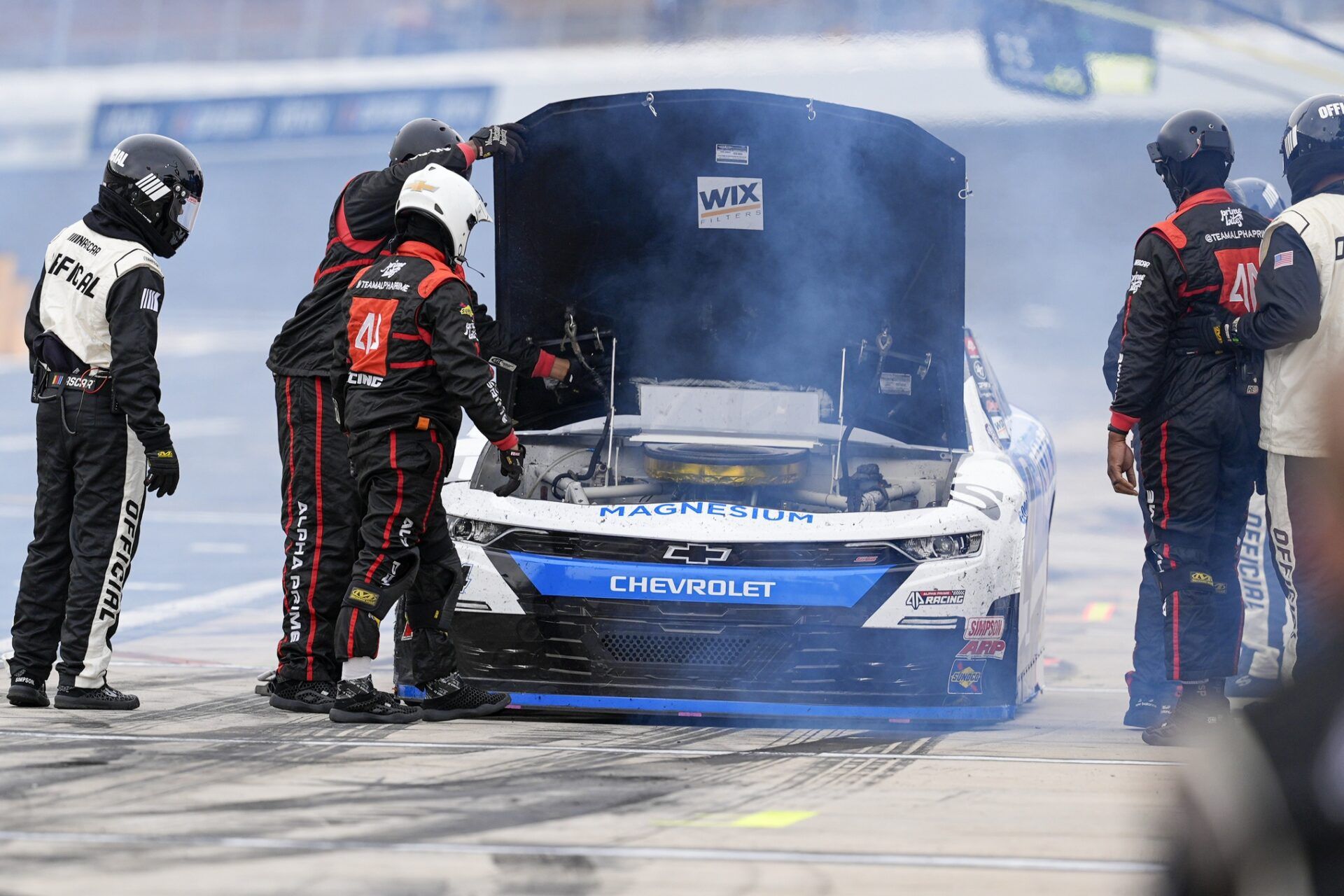
The roar of a NASCAR field at full throttle is something that hits fans right in the chest, and behind that sound is one of the most fascinating pieces of engineering in motorsports. The engines that power the modern cars in the NASCAR Cup Series have a lot going on beneath the surface.
Today’s NASCAR engines still follow a tradition that dates back decades in American stock car racing and also carry some modern tech that helps teams squeeze every bit of performance possible while staying inside strict rules. That balance between old-school muscle and modern engineering is a big reason these V8s remain unique in motorsports.
The Traditional V8 That Still Defines NASCAR
Unlike many racing series that use standardized engines, NASCAR still allows manufacturers to build their own V8 powerplants, and that means brands like Chevrolet, Ford, and Toyota each have their own engine programs. Even though the cars share many common parts in the Next Gen era, the engine is still one area where identity matters.
Modern NASCAR Cup engines are 358 cubic inch pushrod V8s with an overhead camshaft layout, a design many road cars moved away from years ago, and this setup remains incredibly effective in stock car racing. Engineers have further refined these engines so they can rev past 9,000 rpm.
Inside the engine, teams use advanced materials like titanium valves to reduce weight and improve durability at high speeds, and there is also a dry sump oil system. Instead of oil sitting in a traditional pan under the engine, it is quickly pulled away and stored in a separate reservoir, which helps maintain lubrication during the intense cornering forces seen on oval tracks.
Another important detail is compression: NASCAR engines run at a 12:1 compression ratio, which helps deliver strong power while keeping the engine responsive throughout the rev range. Engine builders do not only chase peak horsepower but also aim for a wide, usable power band so drivers can stay competitive across different track types.
NASCAR Rules That Shape the Engines
One big reason these engines look the way they do is regulation, as NASCAR has always worked to keep competition close by limiting what teams can change. Even in the early days, leadership made decisions that shaped the sport’s mechanical direction when founder Bill France Sr. famously banned fuel injection and superchargers in the late 1950s to keep racing affordable and competitive.
Over time, rules evolved, and by the 1960s, engines were limited in size and required to match production-based designs sold to the public, which helped keep the “stock car” identity alive.
Safety also influenced engine rules, and in 1987, a terrifying crash following a 212 mph run forced officials to rethink top speeds. After that incident, NASCAR introduced restrictor plates that limited airflow to the engine, significantly reducing horsepower and helping keep speeds under control on superspeedways.
In more recent seasons, NASCAR has adjusted horsepower based on track type, and with the Next Gen era continuing to evolve, short tracks and road courses now see horsepower limits rise to around 750 from earlier 670.
Technology has also modernized the system since 2012, when fuel injection replaced carburetors across the Cup Series, and the current fuel injection system helps NASCAR manage performance and ensure fairness between teams.
One thing many fans might not realize is how specialized these engines are: they are not built to last years like a road car engine, but instead designed to withstand the intense demands of a race weekend.
A typical NASCAR race can stretch to nearly 400 miles, excluding practice sessions and qualifying laps, and the engine must handle a huge workload. After races, teams often tear down and rebuild their engines to check for wear and maintain performance.
Teams are also allowed to use limited engine blocks during a season; hence, some organizations keep fresher blocks ready for races where they believe they have a strong chance of winning.
In the end, the sport’s engines are a blend of tradition and engineering skill, and a lot of careful work goes into every single one used during race weekends.
