
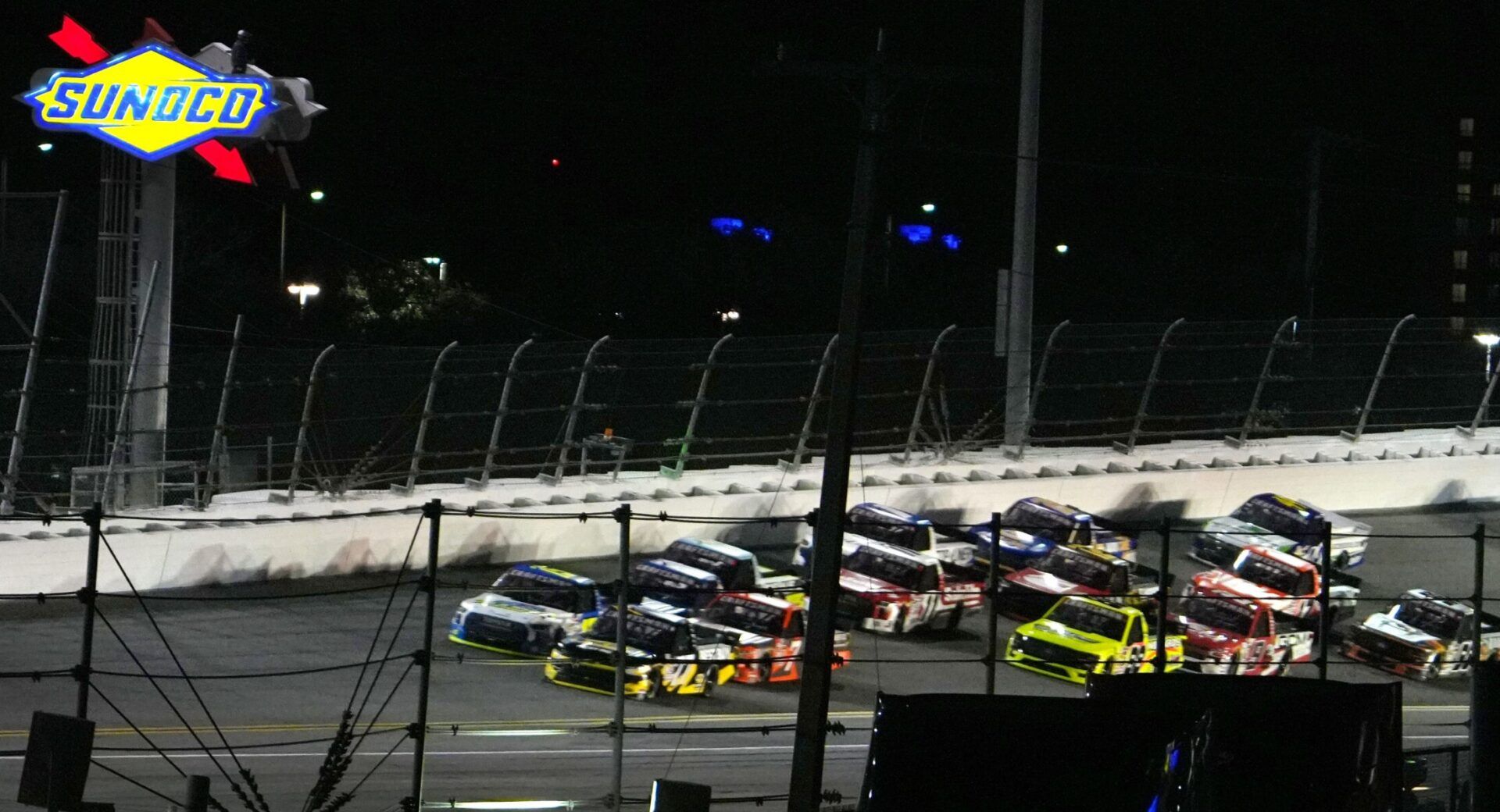
Freddie Kraft is sounding the alarm on the ballooning costs of competing in the NASCAR Craftsman Truck Series. During a recent episode of the Door Bumper Clear podcast, Kraft noted that a top-level Truck ride now requires teams to bring at least $130,000 to the table per race. The discussion highlights a widening financial gap that is fundamentally reshaping the barrier to entry for teams and drivers alike.
Rising Costs in the NASCAR Truck Series
The remarks surfaced during a deep dive with veteran team owner and series regular Tommy Baldwin Jr., who offered a stark contrast between today’s financial requirements and the sport’s grassroots origins. Baldwin Jr. recalled an era when teams built their own equipment and arrived at the track ready to compete without the prerequisite of a massive corporate backer or a deep-pocketed “pay driver.”
“We all used to show up in ARCA with what you got, dad used to build your car, we used to build our car,” Baldwin Jr. said. He noted that in the past, a driver’s primary job was simply to race hard enough to make a name for themselves based solely on talent.
That era has largely vanished. Baldwin Jr. indicated that only eight or nine teams currently receive over $100,000 in funding per race, creating a clear financial divide in ARCA and the national series. When Kraft pressed for specific numbers on the Truck Series, Baldwin Jr. confirmed that a competitive ride now costs approximately $130,000 per race.
The most jarring revelation for Kraft was how closely these figures mirror the Xfinity Series. Baldwin Jr. estimated an Xfinity ride costs between $130,000 and $160,000 per event. When Kraft questioned how a developmental truck could cost as much as a more powerful Xfinity car, Baldwin Jr. pointed to the schedule’s overhead.
The Operational Money Pit
The Truck Series currently runs a 25-race schedule. Baldwin Jr. explained that while there are fewer races than in the higher tiers, operational costs remain constant throughout the year. “You still have to employ most of those people all year long,” he said. Teams must maintain facilities, staff, and preparation cycles regardless of whether the trucks are on track that weekend.
Because the Truck Series runs fewer events than Xfinity or Cup, teams pull in less total race-day revenue while carrying similar year-round overhead. Baldwin Jr. described the business model as a “money pit,” a sentiment Kraft did not dispute. It’s a mathematical reality where the reduced number of paychecks from the track doesn’t offset the fixed costs of a professional racing shop.
This financial reality explains why smaller, underfunded teams struggle to survive, even in a series intended as a stepping stone. When entry-level costs align with the higher tiers of the sport, the path for grassroots operations narrows, making significant financial backing a prerequisite just to reach the starting grid.
Baldwin Jr.’s insights suggest the sport is drifting further from its “built-not-bought” roots. As the cost of entry continues to rise, the focus shifts from finding the fastest driver to finding the one with the most secure bank account.
