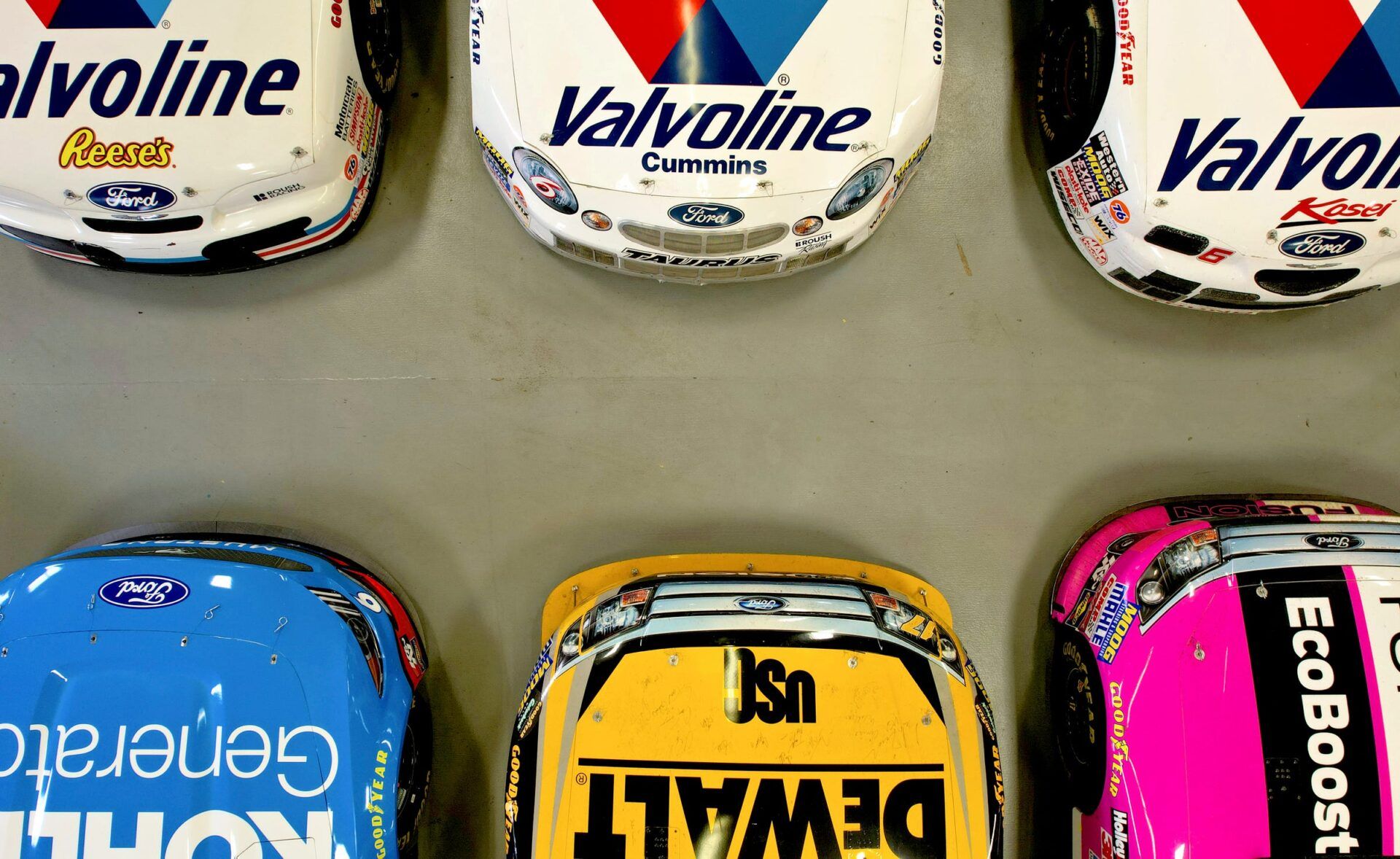
At EchoPark Speedway this weekend, only two of the 39 cars are from Ford Motor Company. Nick Sanchez and Luke Fenhaus are the only Ford drivers in NASCAR’s O’Reilly Auto Parts Series, compared to 31 Chevrolets and six Toyotas.
For a brand that has raced in NASCAR since 1949 and won more than 1,200 races, its position in the sport’s top feeder series now looks worrying.
Ford’s NASCAR Future in Doubt as Development System Falters
As recently as last season, Ford had five full-time drivers in the then-Xfinity Series. That number has collapsed almost overnight.
Haas Factory Team — rebranded from the old Stewart-Haas Racing outfit — jumped to Chevrolet. RSS Racing, which ran Fords as recently as 2025, did the same.
Our Motorsports, a six-year competitor that debuted in 2020 and gave rides to drivers like Brett Moffitt, Anthony Alfredo, and Jeb Burton, announced it was ceasing operations entirely.
And Kaulig Racing, which had run a competitive O’Reilly program since 2016, paused that effort to focus on a new five-car Ram partnership in the Truck Series for 2026.
PREDICT THE CHASE: PFSN’s FREE NASCAR Season Simulator
AM Racing, the most hopeful Ford story after making the playoffs for the first time in 2025 with Harrison Burton, tried to sell the operation to Sigma Performance Services — a former Chevrolet ARCA team.
SPS has retained the Ford relationship and is rebranding as Team SPS Racing, but the transition leaves Nick Sanchez as the only confirmed full-time Ford driver in the series.
Fans and journalists aren’t just frustrated — they’re alarmed. Motorsport journalist Austin Konenski put it plainly on X: “It is just baffling to me.”
And it’s not hard to see why. The O’Reilly Series is the most important developmental pipeline in all of NASCAR.
Not just for drivers, but for crew chiefs, pit crews, and engineers. When a manufacturer pulls back at this level, they’re not just losing Saturday races. They’re losing the next generation of people who run their cars on Sundays.
Ford Motor Company has deeper structural issues.
Unlike Chevrolet, which gets strong support from teams like Hendrick Motorsports through shared data and resources, Ford runs a looser system that leaves smaller teams struggling.
When teams leave, Ford loses valuable data and influence, making it harder for the rest to compete.
STAY UPDATED: The Side Draft: PFSN’s FREE NASCAR Newsletter
Chevrolet works closely with its teams, while Toyota follows a clear development path through Joe Gibbs Racing. Ford has relied mostly on brand loyalty, but that is no longer enough.
Team SPS Racing’s Wade Moore has floated the idea of making his operation a landing spot for Cup Series drivers wanting extra seat time, particularly at road courses.
That’s a start. Ford’s Cup Series lineup remains anchored by powerhouses like Team Penske and RFK Racing, and wins are still happening at that level.
But without a real feeder system, the long-term pipeline of talent and technical development is quietly draining away.
The Blue Oval has been part of American motorsport for over 75 years. It would be easy to assume that legacy guarantees a future.
In today’s NASCAR, however, legacy doesn’t develop the next championship team. Infrastructure does. Right now, Ford doesn’t have nearly enough of it where it counts most.
