
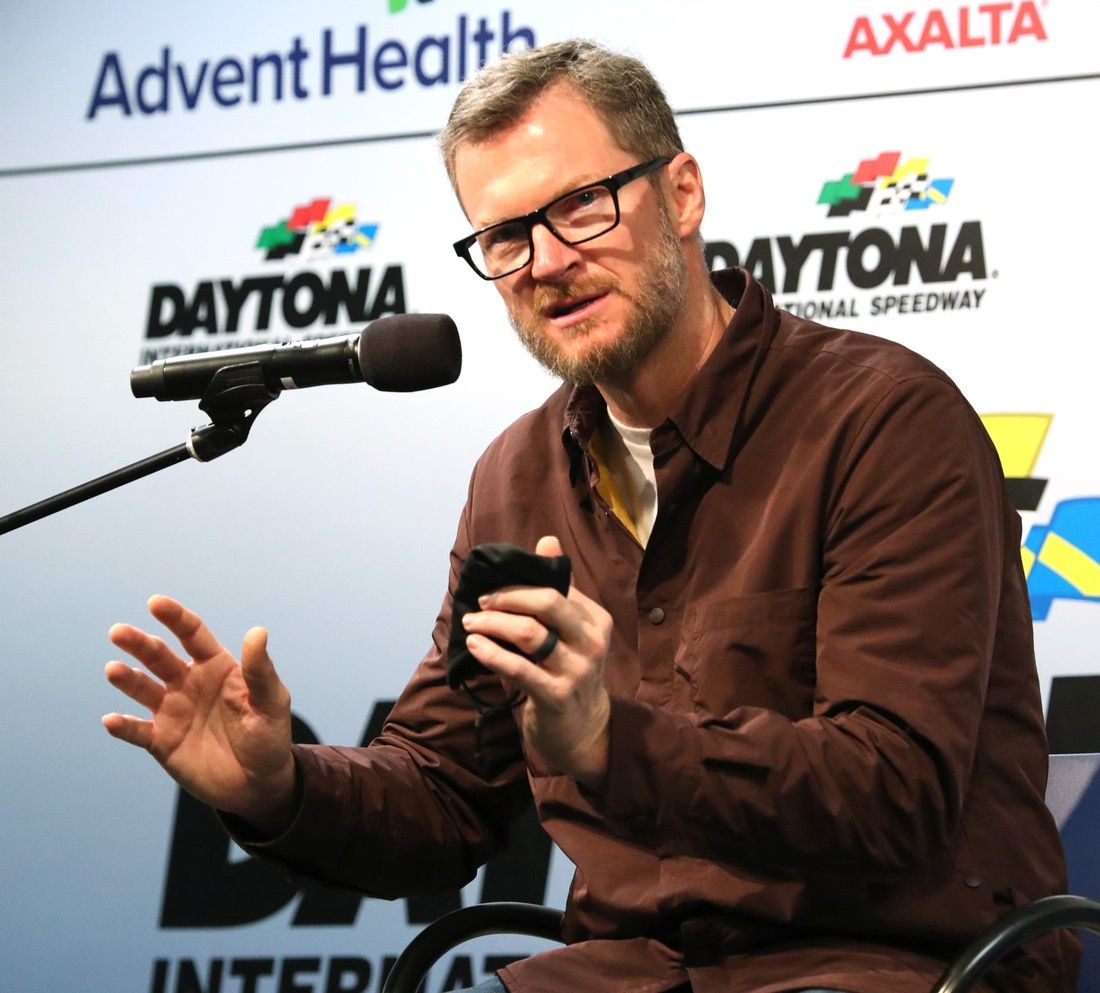
Following NASCAR’s shift from Amazon Prime Video to TNT Sports for its broadcast of the 2025 season, Dale Earnhardt Jr. was once again in the limelight as a presenter. Having stepped away from a driving role, the 50-year-old has remained an integral part of the sport’s proceedings, lending his expertise in various elements of the sport.
One of those elements has been the race presentation side of things, with Earnhardt often featuring in the booth of a race. While there, the semi-retired driver has had his fair share of a variety of experiences, but perhaps none of them were as strange as his most recent outing in Chicago.
Dale Earnhardt Jr. Shines a Light on His Chicago Booth Experience
The 2025 Chicago Street Race was the last of the circuit’s three-year run on the NASCAR schedule, and this year, the race was broadcast on TNT Sports. In a bid to shift from traditional broadcast practices, NASCAR has been experimenting with its presentation packages this season, and the shift to TNT Sports comes under the same umbrella.
Before TNT, Prime Video took the onus of broadcasting the races, and it was a largely successful venture. Amid a series of positives, Earnhardt’s role as a presenter was a major plus, and TNT wanted a piece of the same. While they did get their man, Earnhardt’s experience in the booth was far from ideal, particularly during the Grant Park 165.
Speaking on the latest episode of the “Dale Jr. Download” podcast, Earnhardt revealed how he encountered a strange situation, with his booth not giving him an overview of the entire race that was going on.
For some reason, Earnhardt’s booth was a trailer roughly one block away from the actual track. It had a big screen with a series of cameras covering all aspects of the race, but it left the 50-year-old uncomfortable.
“We were in a trailer about a block from the track. And you know, we had all the cameras on a big screen, but I can’t look at those cameras and go, ‘Okay, is anybody spinning out? Has anybody hit a wall?’ I’ve got to look at the production and talk about what’s on the, you know, the camera or what’s on TV.”
Earnhardt asked one of his friends to sit in the booth and look at all the cameras and tell him if there was any incident. The friend had a whiteboard in his hand and was supposed to write things down on it to get the presenters’ attention.
Once that happened, the presenters would then relay the information to the director or the producer, who would subsequently get a camera on the situation.
As such, presenting a race in such a situation becomes all about reacting to what everyone else is also seeing live. Experts can no longer look ahead in the race and predict an upcoming incident, which then leads to fans not enjoying the race commentary.
Earnhardt himself isn’t a fan of presenting the race in such a manner, as he feels it becomes a somewhat redundant task.
