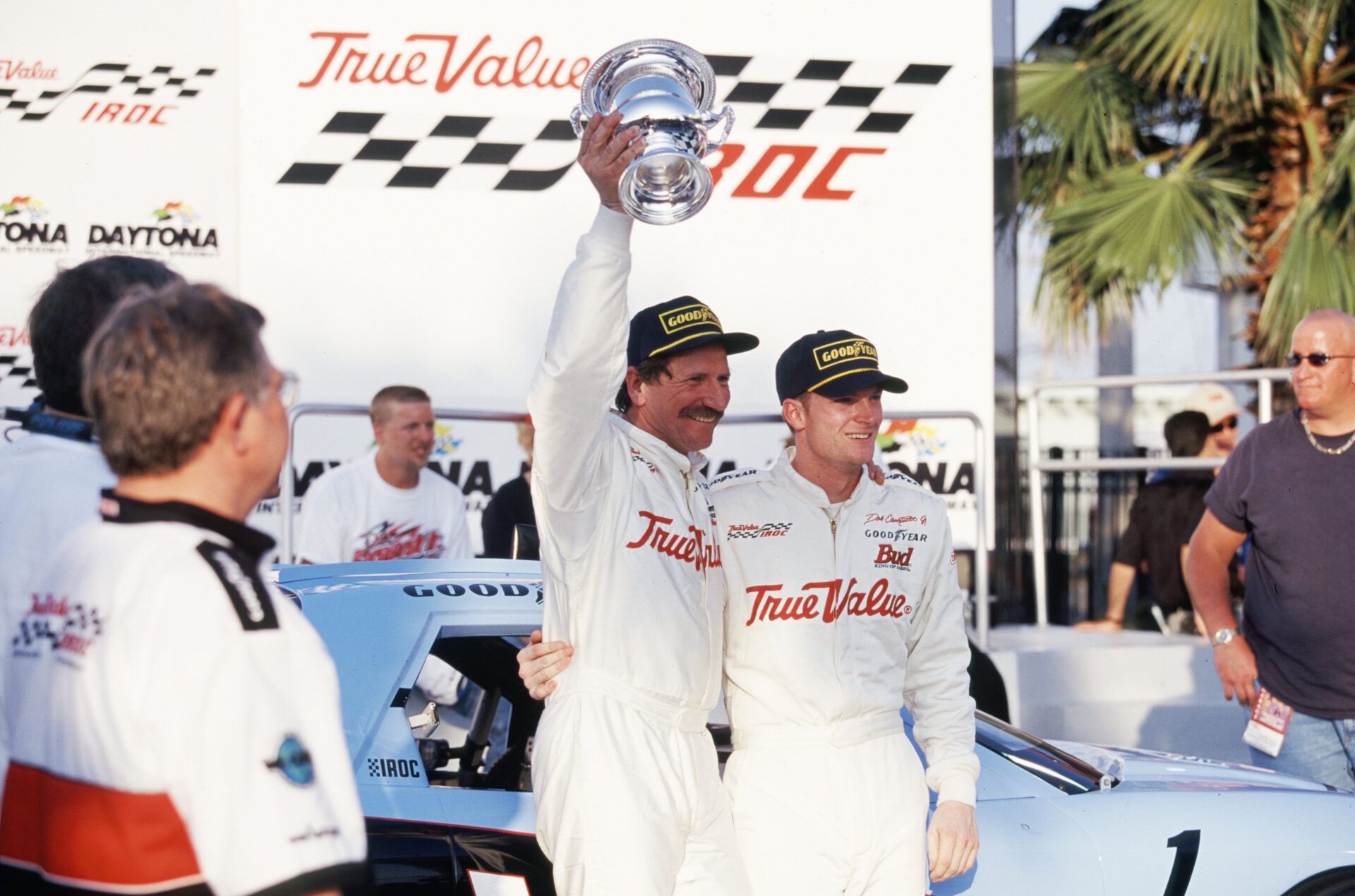
A resurfaced clip of Dale Earnhardt Sr.’s fiery Daytona rant has reignited debate around NASCAR’s control over its drivers. But it was Dale Earnhardt Jr.’s sharp, one-line response that truly grabbed fans’ attention.
Now, his cheeky reaction is sparking fresh discussion about what really happens behind the scenes in the sport.
Dale Earnhardt Jr. Reacts to Father’s Iconic Daytona Rant With One Bold Comment
Dale Jr. is a social media regular and often shares his opinion on various controversial topics in NASCAR. This time, he took the opportunity to expose NASCAR’s behind-the-scenes dealings with a throwback clip of his father.
Earnhardt Sr. was never a man who minced words. When something bothered him, the world heard about it — loudly and without apology. So when a new rules package for shocks left him furious after the 2000 Daytona qualifiers, he didn’t hold back.
“That’s the worst race I’ve ever seen at Daytona in a long, long time,” he said.
“They took racing away from the drivers’ and the crews’ hands. We can’t make adjustments and kick back our car and drive like we want. They just killed the race at Daytona. Mr. Bill France Sr. would roll over in his grave if he’d seen that deal.”
Classic Earnhardt. Raw, passionate, and completely unfiltered. But it was his son’s recent reaction to that iconic moment that has people talking all over again.
When a clip of the rant resurfaced on social media with the caption noting that Sr. had been fired up over a new shock rules package after the qualifiers, Dale Jr. responded with a single, loaded question: “I wonder if he got a text or email on Monday.”
Short. Simple. And absolutely devastating.
For anyone outside the NASCAR bubble, it might read as a harmless comment. But those who follow the sport closely know exactly what Jr. was getting at.
He was implying that even his famously outspoken father — The Intimidator himself — likely received a quiet message from NASCAR after that rant, a gentle but firm reminder to dial things back.
It’s the kind of behind-the-scenes pressure that many believe the sanctioning body has long used to keep its drivers from going too far off script.
And if NASCAR was doing it to Dale Earnhardt Sr. back in 2000, you can only imagine how common the practice is today.
That’s what makes Jr.’s comment so pointed. He didn’t write a lengthy criticism or call anyone out by name.
He didn’t need to. One sentence was enough to shine a light on something fans have suspected for years — that drivers are quietly discouraged from speaking their minds, no matter how legitimate their frustrations may be.
It’s a far cry from the era his father helped define. The ’90s and early 2000s were a time when NASCAR’s biggest personalities wore their emotions on their sleeves.
Tony Stewart called out debris cautions he believed were manufactured. Kevin Harvick ranted about safety issues and rules he thought were absurd. Even the more polished Jeff Gordon wasn’t afraid to vent when pushed to his limits. The garage had a pulse back then, and fans could feel it.
Today, post-race interviews sound like they were written by a marketing department. Drivers thank their sponsors, praise their teams, and talk about “learning experiences” — even when half the field has just been wiped out in a wreck.
The raw honesty that once made NASCAR must-watch television has largely been replaced by carefully managed messaging.
That’s why Jr.’s comment hit so hard. He didn’t just make a joke about his dad. He pulled back the curtain, even just slightly, on a culture within NASCAR that many fans have long believed exists but rarely gets acknowledged from the inside.
