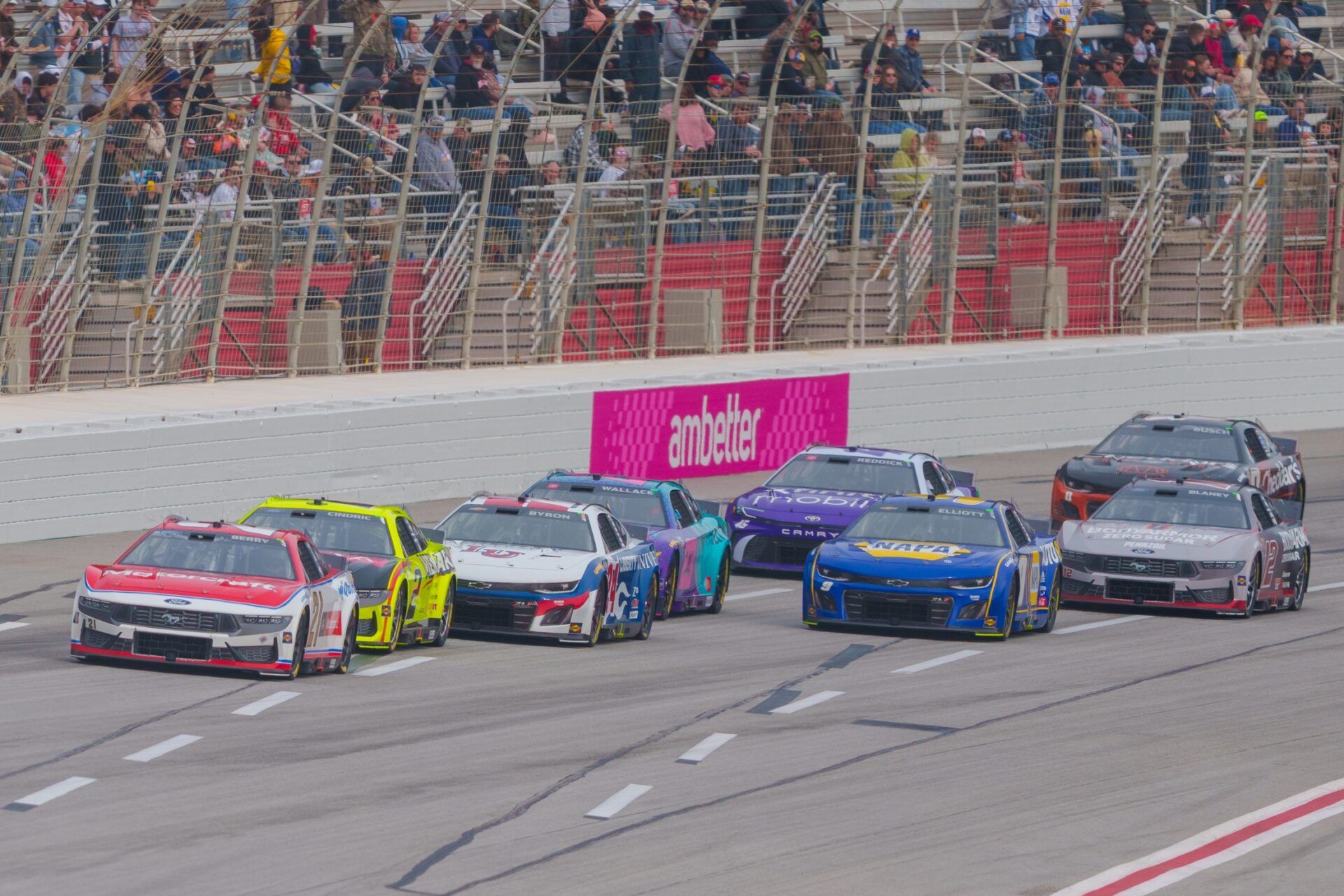
Pre-race inspections are routine in NASCAR, but every now and then, a failed check can shake up a team’s entire weekend, and that is exactly what happened when NASCAR officials found issues with two Chevrolet entries during inspections ahead of track activity in Atlanta.
Both teams are dealing with penalties this weekend at EchoPark Speedway that could affect their races and also serve as a reminder of how strict the inspection process is in modern NASCAR.
Austin Dillon and RCR Hit Early Hurdle in Atlanta
Before cars hit the track for qualifying, NASCAR officials thoroughly inspect them to ensure teams follow every detail of the rulebook. If a car fails inspection once, teams are given another chance to correct the issue, but multiple failures usually bring penalties.
That was the case for the No. 3 car driven by Austin Dillon as the Chevrolet fielded by Richard Childress Racing failed inspection twice before finally clearing on its third attempt, and because of the repeated failures, NASCAR ejected the team’s crew chief from the remainder of the race weekend and stripped the team of its pit stall selection.
Losing pit stall selection in the sport can matter quite a bit, as teams often pick stalls that help them avoid traffic on pit road or provide a quick exit back onto the track, and without that advantage, a team may find itself at a noticeable disadvantage during pit stops.
Another team ran into similar trouble, as the No. 78 Chevrolet driven by BJ McLeod and operated by Live Fast Motorsports also failed inspection twice, and NASCAR responded the same way by ejecting the team’s crew chief and removing pit stall selection.
Unlike Dillon’s car, McLeod’s car still has to go through another inspection attempt, and if the car passes on the third try, the team would be allowed to qualify normally, but if it fails again, the consequences would become more serious, including a drive-through penalty at the start of Sunday’s race and missing qualifying altogether.
Inspection Issues Still Matter in Modern NASCAR
Inspection failures are not new in the NASCAR Cup Series, as the process occurs on many race weekends and often catches minor technical details that teams must fix. But when multiple failures occur, NASCAR tends to act harshly to maintain fairness.
Over the past seasons, several teams have dealt with similar situations during pre-race checks, and it is part of the sport’s effort to keep competition fair across the garage.
For Dillon, Atlanta has not always been his strongest track historically; across a long list of starts at the speedway, top finishes have been limited. This means Richard Childress Racing is already trying to find extra speed wherever it can, and losing pit stall selection only adds another challenge heading into the race weekend.
Meanwhile, McLeod’s situation has been a bit more complicated recently as the driver and team owner has scaled back operations for his organization after selling the team’s charter and focusing mainly on superspeedway appearances, which makes every race weekend important for the smaller team trying to stay competitive against larger organizations.
His recent Daytona outing also did not go as planned, which makes Atlanta an opportunity to reset, but starting the weekend with inspection trouble and penalties is far from ideal.
