
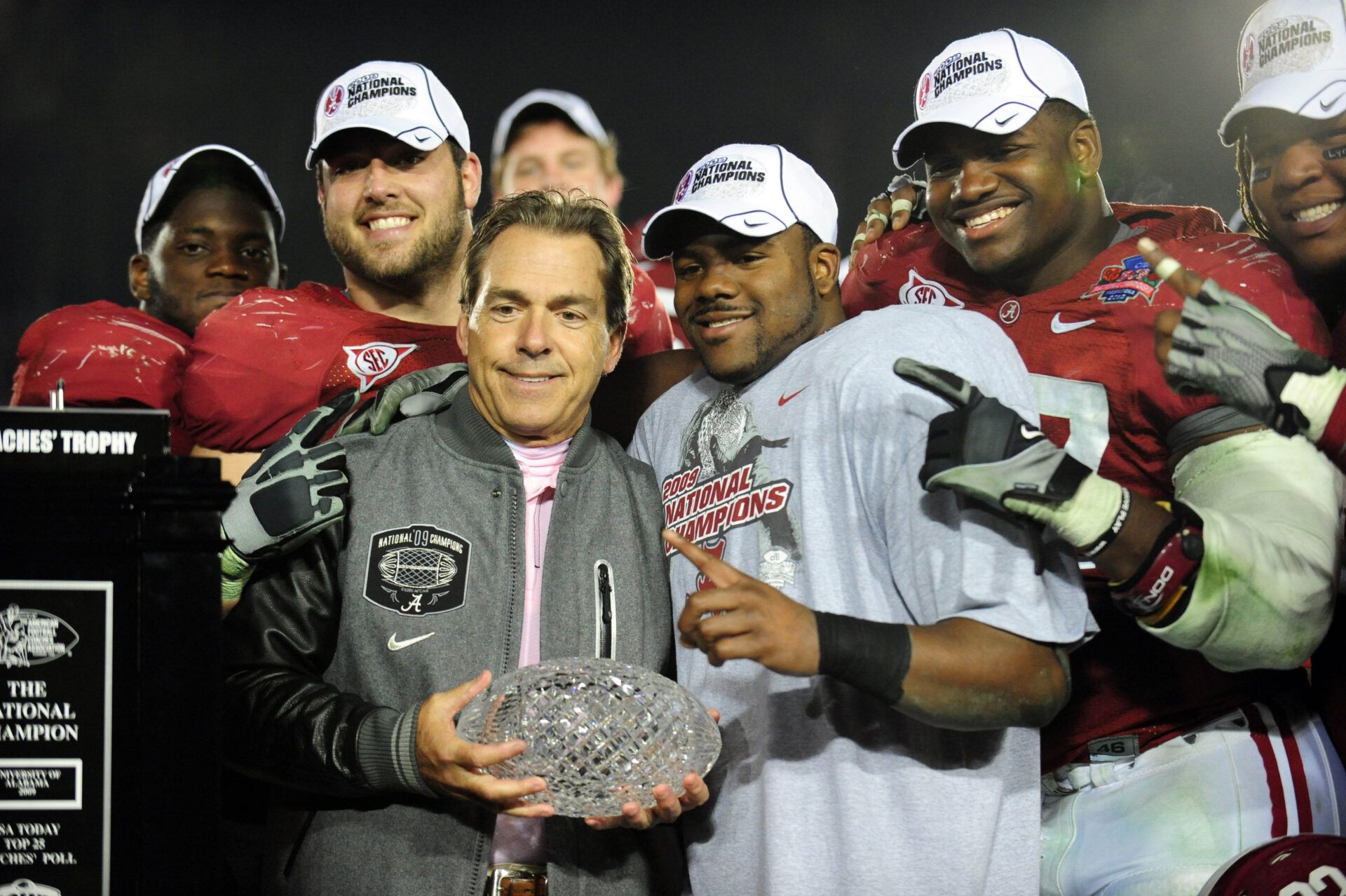
The SEC’s grip on college football over the past two decades is undeniable. The league has transformed into a powerhouse that has claimed the lion’s share of national titles since 2003. Since 2003, SEC teams have won 14 national championships, including seven consecutive BCS titles from 2006 to 2012.
However, from 1980 to 2003, the SEC secured just six national championships, which led a fan on the ‘Cover 3’ podcast to ask, “Did it not just mean more back then?” The podcast hosts share their takes and opinions to make sense of it all.
Analysts Unpack the SEC’s Ascent to College Football Supremacy
The hosts of the “Cover 3” podcast share that, to them, the SEC’s ascent began in 1992, when they launched the first conference championship game. This innovation put the SEC in the national spotlight. By pitting top teams against each other, the game drew attention to the league’s talent and intensity, which set it apart from rivals.
The added exposure helped cement the SEC’s reputation as college football’s premier conference, paving the yellow brick road for it to travel and advertise itself as the nation’s best, creating a strong brand identity.
A significant shift came under commissioner Mike Slive’s leadership, who took office in 2002. Before his tenure, SEC programs often undermined each other with internal conflicts and public disputes. Slive rallied the conference to stop this infighting, sharing a “high tide lifts all boats” mentality.
By focusing on recruiting top talent rather than snitching to the rivals, the SEC avoided penalties that weakened other conferences. This unity allowed more teams to thrive, boosting the league’s overall strength and helping produce consistently elite programs across the board.
After this, the rise of recruiting rankings in the early 2000s amplified the SEC’s dominance further. Publicized rankings fueled a push for preseason Top 25 spots, which carried weight throughout the season. The arrival of coaching titans Nick Saban and Urban Meyer set an almost untouchable standard.
Saban at LSU and Alabama, and Meyer at Florida, were the best of the best when it came to recruiting and preparation. Their consistent success forced rivals within the conference to push harder, raising the bar across the entire SEC. The conference’s ability to attract top talent, combined with elite coaching, created a self-sustaining cycle of excellence.
The SEC also benefited from broader trends in college sports. In the 1990s, the ACC’s basketball-heavy media rights deal outpaced others, but football’s growing popularity shifted the landscape. Slive recognized this, strategizing a plan to help the SEC capitalize on football’s rising value.
As media rights deals ballooned, the SEC secured massive funding, enabling significant investments in facilities, coaching, and player development. This financial advantage allowed SEC schools to offer top-tier resources, further attracting elite athletes and coaches.
KEEP READING: Top 50 Highest-Graded Quarterbacks Since 2019: Joe Burrow Leads an All-Star Cast
However, recent shifts, like the post-NIL era, have raised some debates about the SEC’s dominance. Analysts note that since NIL rules took effect in July 2021, the Big Ten has claimed two national titles, while the SEC has not won anything during this period.
The hosts of Cover 3 suggest that legalized player payments have leveled the playing field, with other conferences now competing more openly for talent. This sudden loss of grip due to the shifting landscapes even led to Big Ten coaches trolling the SEC, questioning if its dominance was tied to less-regulated recruiting practices of the past.
In the end, while the NIL era may challenge its grip, the SEC’s blueprint for success, including branding, talent, and relentless ambition, ensures it remains a force to reckon with in college football.
