
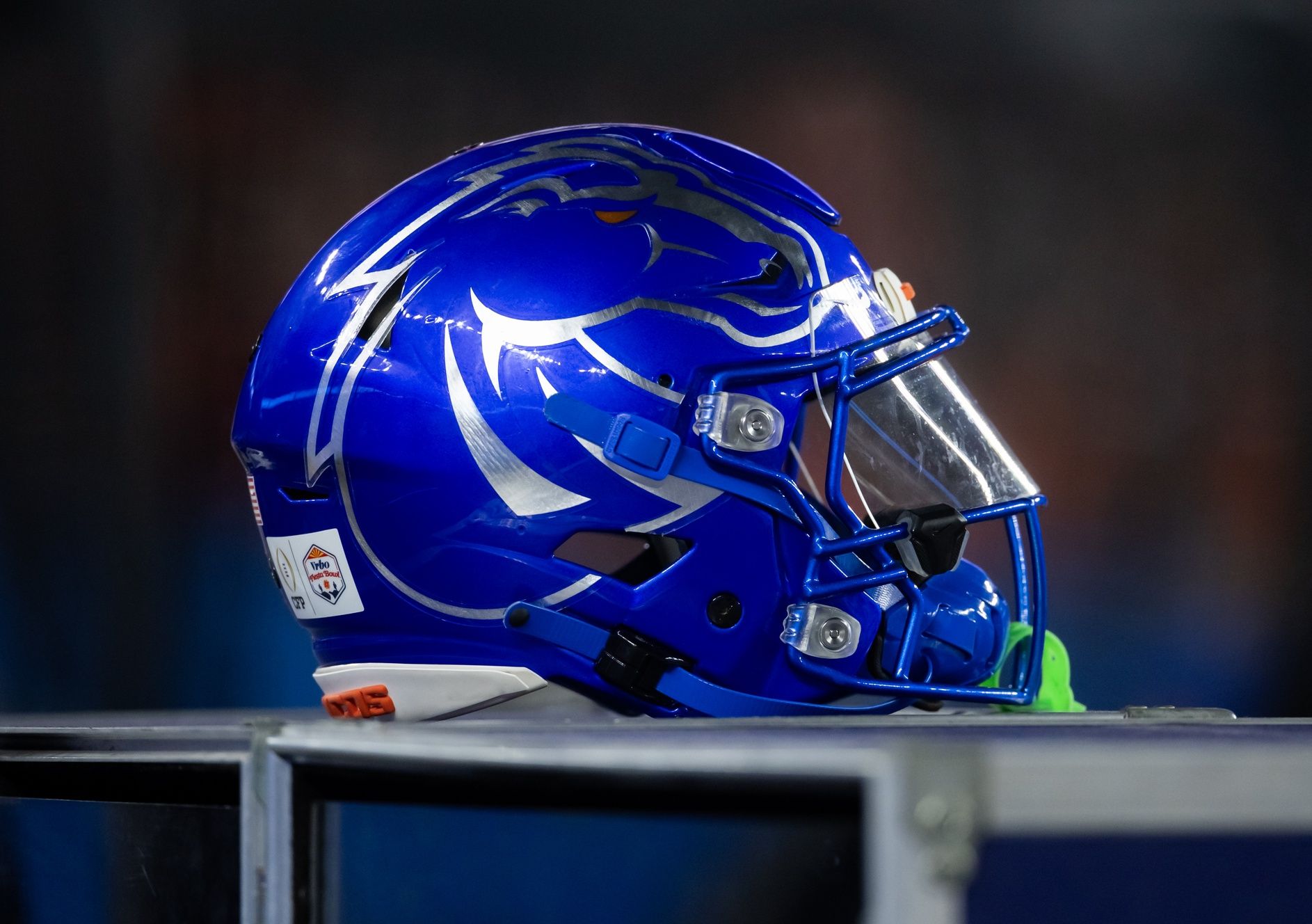
In the age of NIL, programs are looking for new and innovative ways to fund their teams to keep up with the rest of the sport. For smaller programs, like Boise State, finding funding to compete with schools like Alabama and Texas is very hard, but the Broncos are coming up with new ideas to help stay competitive.
Boise State’s athletic director, Jeramiah Dickey, recently announced that the school plans to undertake numerous projects, from private equity to hotels and parking lots, as the Broncos attempt to stay ahead of the ever-changing landscape of NIL. However, he needs the school and the state’s help.
Boise State AD Jeramiah Dickey Warns of Program Falling Behind Without Bold Athletics Investment
Don Day, a writer for BoiseDev, sat down with the Boise State athletic Director, Jeramiah Dickey, to discuss the future of Broncos Athletics in the new age of NIL, direct athlete payment resulting from the House v. NCAA settlement, and private equity.
Now or never’: Bronco sports looks at new revenue ideas as it starts to pay athletes: Hotel? Retail? Stadium & Arena expansion?
Link in next tweet pic.twitter.com/sjUrpSKQ9i
— Don Day 🔅 (@DonLDay) June 24, 2025
Day reported that the Broncos are considering many avenues to increase their NIL funding.
“Concepts Boise State is considering could involve developing a large empty parking lot between Albertsons Stadium and Broadway Ave,” Day wrote, “With a private partner, along with upgrades to the east side of the stadium and ExtraMile Arena using private credit.”
“The goal is to generate more revenue as the school works to compete in a rapidly changing landscape.”
According to Day, Dickey believes that because the Idaho State Board of Education controls Boise State University, the Broncos must find alternative routes to NIL funding rather than just ‘seeking a loan from a bank.’
“I have to figure out another solution,” Dickey told Day. “There’s Bronco Nation, there’s the institution, there’s the state, and then there’s this. Is it private credit? If there is a means, a mechanism, a way for us to navigate that within the state rules, policies, and procedures to make sure I don’t get fired in the process?”
While Dickey believes that he is capable of getting the funding, he needs the higher-ups at Boise State and in Idaho to give him approval, or else the Broncos will not be a competitive sports school, something that Dickey says he doesn’t want to be a part of.
“We have to go out there and say, ‘How do we stay ahead of it? And I tell the appropriate story to the powers that be, that look, here are options. If it’s not this, then you have to do this,” Dickey told Day. “Or we can say ‘no, we just want to be average’ and that’s fine too. Then, maybe I’m not the right fit here and that’s OK too.”
RELATED: House v. NCAA Fallout — Louisiana-Monroe Cuts Women’s Tennis; Washington State Shrinks Track & Field
Already, while large schools with deep pockets are flourishing, such as Texas, Michigan, and Miami, attracting multi-million-dollar QBs, smaller schools across the country are having to shut down programs due to the ever-rising “maintenance cost” in “profit” sports. Sports like tennis and track & field shrink, as the football and basketball beasts grow.
Regardless, Dickey has had a successful career at Boise State, and his ability to navigate the NIL world so far is a big reason that the Broncos football program built and maintained a roster good enough to go to the College Football Playoff last season.
Now, his primary goal is to turn the Boise State athletic department into a for-profit LCC called “Bronco Athletic Growth Solutions,” which the University of Kentucky did with its department in April.
If the Broncos can do that and Dickey can garner the support he wants, then there’s no doubt that Boise State will remain a competitive athletic program. This is the new world of college athletics, and it seems that Dickey is doing his best not to fall behind.
