
Every week, we take questions from our readers for our Friday NFL news mailbag. This week, we’re trying to figure out how valuable non-quarterbacks can be, game planning against the Eagles, and breaking down other Panthers’ trade candidates.
To submit questions to the mailbag, be sure to join our Discord server and ask questions in the mailbag channel!
NFL News Mailbag: How Valuable Can Non-Quarterbacks Be?
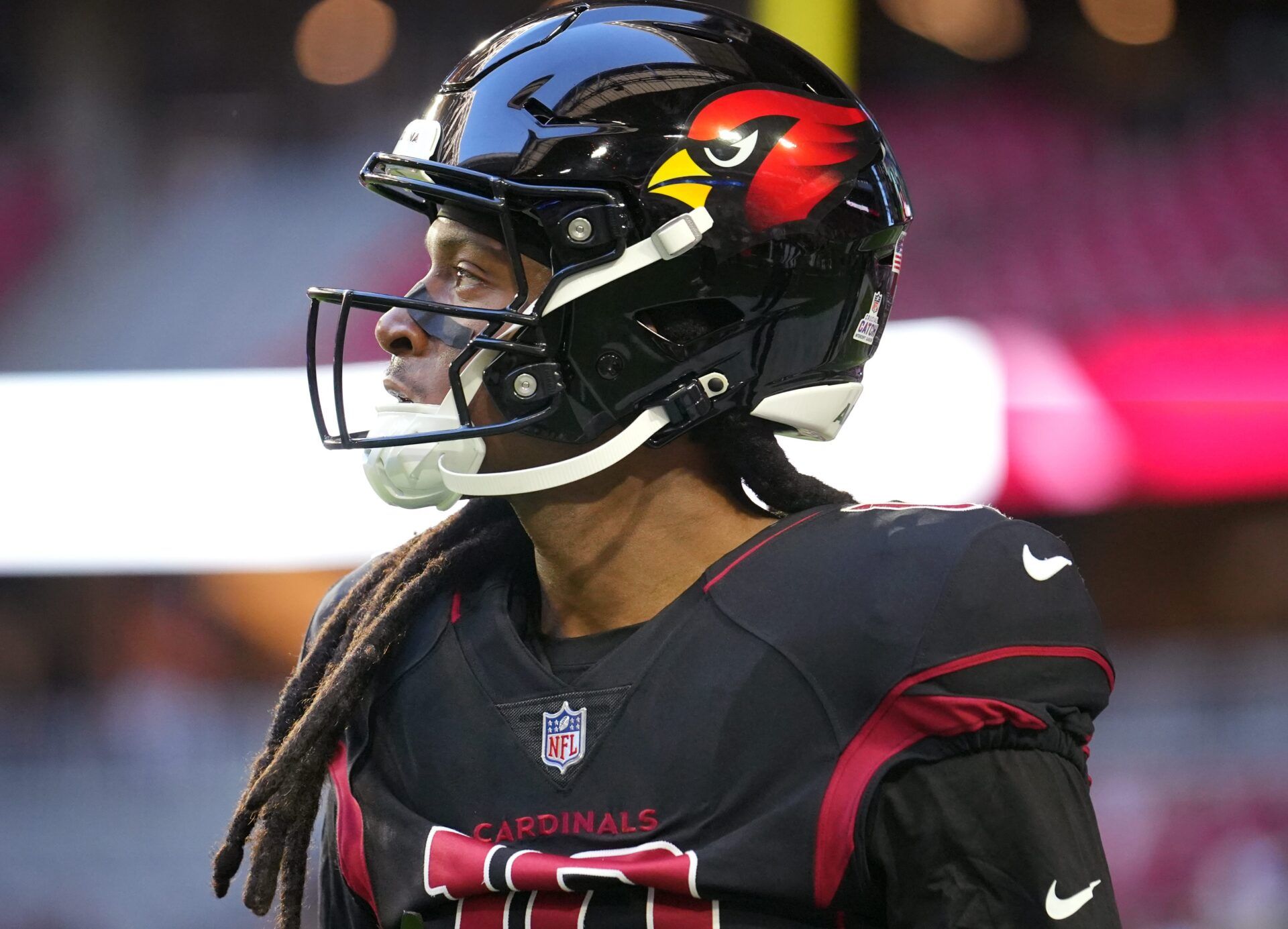
“How much WAR can a non QB have and will Hopkins set that benchmark?” – TheBigHerman
For those unfamiliar, WAR is a baseball term that stands for Wins Above Replacement, which is an estimation of how many wins a team would have with a particular player than with an easily findable replacement.
Because football is so reliant on the passing game and because the skill level at the quarterback position drops off dramatically by the time replacement-level players become available, the highest “WAR” would be at the quarterback position.
After that, it’s difficult to parse. Generally speaking, teams are smarter to invest in wide receivers and offensive tackles than tight ends because of how small the difference between a high-level tight end and an average tight end is (compared to much larger differences for the same span of talent at OT and WR) but truly elite tight ends, like Travis Kelce or George Kittle, do more than elite receivers and tackles.
We’re asking for the top of the top, though, so we can include considerations for players like Kelce and compare him to someone like Tristan Wirfs, Aaron Donald, Micah Parsons, and so on compared to their contemporaries.
MORE: Week 7 OL Rankings
In Eric Eager’s study on WAR in football, he found that after quarterback, receiver, cornerback, and safety were the most significant positions on average. But I’ve had a number of discussions with people who have worked on this complex problem, and while that generally works out to be true it can be tough when looking at specifics.
For example, guard is one of the least valuable positions in the NFL. But Zack Martin and Quentin Nelson are nevertheless two of the most valuable players in the league.
The best player at their respective position is probably Aaron Donald, who laps the competition every year in performance but plays a relatively low-value role, so it turns out he does not top the charts in non-quarterback WAR.
The most WAR generated by non-quarterbacks in Eager’s study were receiver Antonio Brown in 2015 and cornerback Darrelle Revis in 2009. No one else came close, and both of those players only generated a little bit more than one total win over the course of a full season.
When you think about it, it makes sense. Quarterbacks dominate the discussion and the top WAR season was Brees’ 2011 – 5.54 WAR. And there are only 16 games in a season.
Assuming there are no players on a team with negative WAR and a team is good enough to go 13-3, that means about 25 players would account for eight wins after subtracting the presence of the elite quarterback. Generating even one win above replacement is a rare accomplishment worthy of praise.
So the answer to your question is about one win above replacement. I’m not sure Hopkins is the best argument-from-absence in this case, even after his 10-for-103 performance upon his return to play. Even at receiver, I can’t help but look at Davante Adams and how much the Packers have fallen apart without him.
Who Else Will The Panthers Trade?
“In my newsletter 3 weeks ago. I highlighted Carolina’s most available players. My list included: Robbie Anderson, CMC, Shaq, & Donte Jackson. Robbie’s already been dealt. How likely to be traded are the other 3 guys I identified?” – CameronPanthers
Good call! Since turning in this question, the Panthers have also traded Christian McCaffrey, which means they now have a complicated backfield. For more, check out our fantasy analysis on D’Onta Foreman and Chuba Hubbard.
One thing to keep in mind is that Carolina’s trade of Robbie Anderson does not, by itself, signal a fire sale. Anderson was benched in his final game for the Panthers and, as a result, got into a yelling match with wide receivers coach Joe Dailey. After that, interim head coach Steve Wilks sent him into the locker room.
Trading an underperforming receiver for that behavior makes sense on a winning team, much less that circumstance for a team that has all the reason in the world to have a fire sale.
That said, one could see trade markets develop for the remaining two players, both of whom have signed second contracts and do not represent the kind of long-term contract advantage that those on rookie contracts do. That makes them better for another team closer to title contention than for the Panthers, so it makes sense.
The problem is that it’s tough to see which teams would find these as viable assets to acquire for a price the Panthers would want to sell at. Since Wilks, the rest of the coaching staff, and the front office are all fighting for their jobs, they might want to win even if it’s not good for the Panthers long-term.
MORE: 10 Candidates For the Panthers Head Coach Position
My colleague at Pro Football Network, Dallas Robinson, went over a number of potential trade assets from the Panthers and thought Shaq Thompson might actually not see himself dealt. For him, Thompson has too much value as a franchise cornerstone player to be traded for what would ultimately be a mid-round pick.
I understand that, but I think it’s still possible – the Panthers have made a lot of investments in the position over the years, and modern defenses often only play two linebackers on the field. I’d say the odds of Thompson being traded as even.
Donte Jackson seems like a better bet to be traded. He’s a good player on a reasonable contract who is nevertheless expendable for a team with some long-term answers at the position.
There are a number of teams who could use a player of Jackson’s caliber, as Robinson detailed in his piece, and I think he’ll be in high demand, even if the ultimate price won’t end up being too high.
How To Beat the Eagles
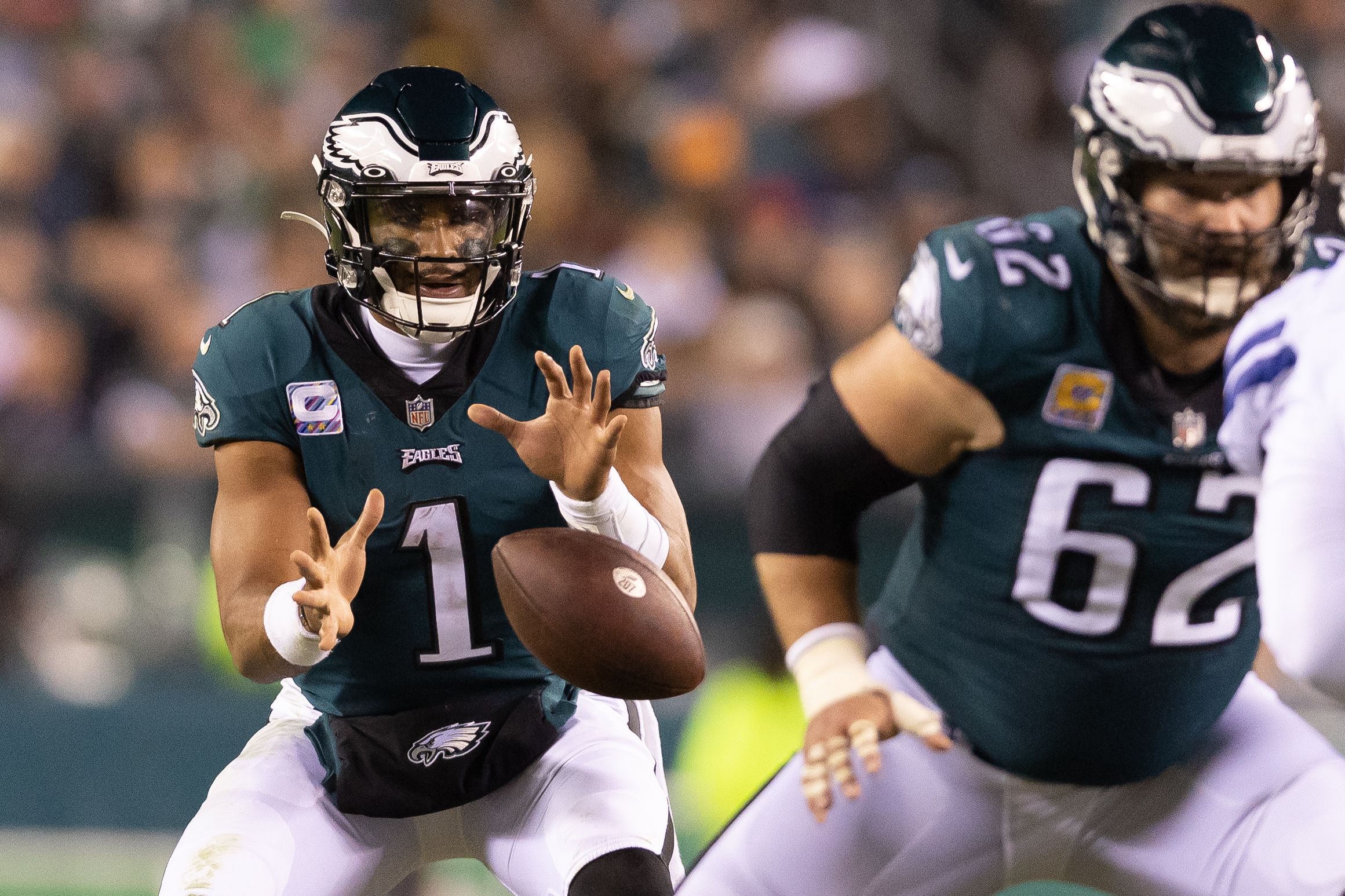
“The Eagles are clearly the team to beat in the NFC. What game plan do teams like New York, Tampa Bay, Minnesota, or other contenders need to follow to take advantage of Philadelphia’s few weaknesses?” – Jonathan.
There are not many areas one can exploit on the Eagles. Every position group is operating at a pretty high level, and matchups aren’t really how teams will win against the Eagles unless they have an overwhelming advantage in some area.
Instead, the advantages will have to be tactical. Offensively, the Eagles have wedded to a few key concepts, and one of them is the RPO. That read-pass option, as the name implies, requires reading a defense or a specific player in order to make a decision about whether to hand the ball off or keep it to throw a quick pass. Because the offensive line will be blocking as if it’s a run play, defenses know the ball is going to get out quickly.
So if they can identify which player will be read on a particular play, they can force a decision and then exploit it. If the “bubble” linebacker (the one over the empty gap not covered by a defensive lineman) is the read, which is often the case, the linebacker can begin to drop back in coverage at the mesh point with a defensive lineman, nickel corner or another linebacker stunting or switching gaps in order to attack what would be that linebacker’s gap.
The same thing can happen the other way around and could lead to picks on slant routes. RPOs have their limitations, and teams that know how the reads work have an advantage.
MORE: Week 7 QB Power Rankings
Not only that, the Eagles’ offense has a weakness against the blitz. Part of that is because it allows the pass rush to get home without worrying as much about the threat of the scramble because the rush lanes are clogged.
On top of that, the Eagles’ offense has fewer “hot routes” – or routes that adjust to something shorter that attacks the space left behind by the blitz. When quarterbacks have fewer blockers than there are pass rushers, they are responsible for the extra rushers, usually by throwing into the holes left in coverage.
As the Eagles adapt to opposing blitzes, they will install more responses, and the best way to counter those responses is with “replacement” blitzes, where a designated defender fits into the coverage gap (creating one somewhere else) left by the blitzer.
Defensively, those opposing offenses might want to play the substitution game. By figuring out when the Eagles present five-man fronts or four-man fronts, they can create matchups that they like or install their favored run game. After all, the Eagles’ five-person front with Jordan Davis does much better against zone running than power running, and the four-person front seems to do better the other way around.
There are a dozen other answers, but the teams you mentioned all have the tools to deploy these strategies as they come up with plans to play the Eagles (or play the Eagles once more).
