
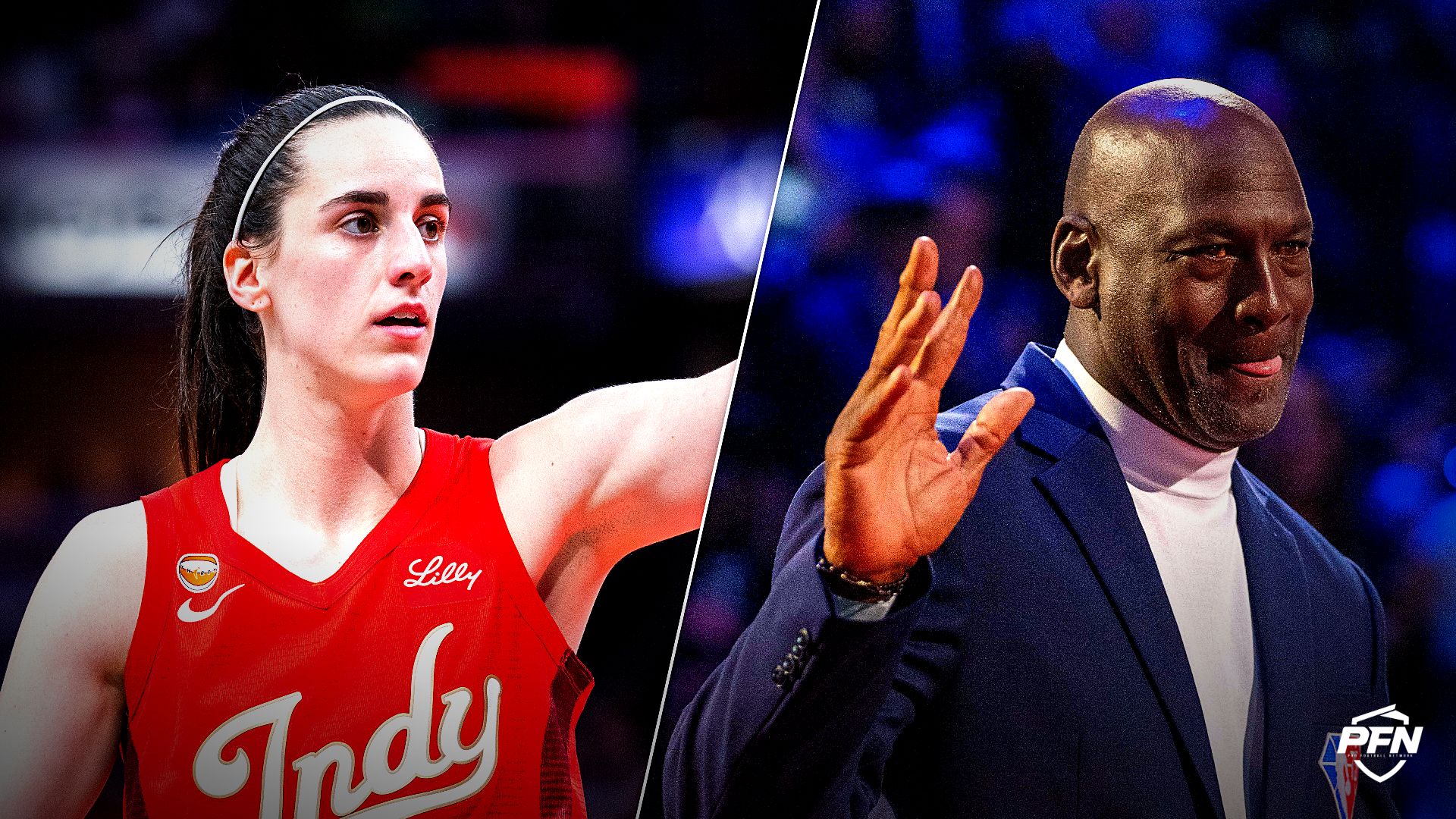
Caitlin Clark’s influence on the WNBA extends well beyond her production for the Indiana Fever. Since entering the league in 2024, the former Iowa star has helped draw larger television audiences and turn regular-season games into major events.
Now, Hall of Famer Nancy Lieberman is placing that impact in a broader historical context, comparing Clark’s arrival to what Michael Jordan and Tiger Woods did for their respective sports.
Nancy Lieberman Explains Caitlin Clark’s Growing WNBA Impact, Comparing It to Michael Jordan, Tiger Woods
Clark entered the WNBA as one of the biggest stars in college basketball, bringing an enormous following with her to Indiana.
The league felt the impact immediately. WNBA viewership surged 170% in 2024, rising from roughly over 440,000 average viewers in 2023 to nearly 1.2 million per game. The Fever became a major television draw almost overnight.
That momentum has carried into 2026 as well. Indiana’s July matchup with the Las Vegas Aces averaged 2.64 million viewers across NBC and Peacock, making it the season’s most-watched WNBA game at the time.
An August meeting with the Atlanta Dream then averaged 2.6 million viewers on ESPN and peaked at 4 million, setting a record for the most-watched WNBA cable broadcast.
Those numbers form the backdrop for Lieberman’s larger argument. During an Essentially Sports appearance, the Hall of Famer said Clark’s value is not confined to what she produces between the lines.
Instead, the unprecedented economic growth the league has experienced since her arrival should also be taken into consideration.
“She moves the financial needle more than any other player right now,” Lieberman said. “She’s a friend, and I admire her deeply for what she’s done.”
“Caitlin Clark is the economic engine for the wnba.” 🗣️📈
Hall of Famer – Nancy Lieberman breaks down clark’s unprecedented financial impact:
– moves the financial needle more than any other player.
– compares her reach to michael jordan, tiger woods & taylor swift.
– says her… pic.twitter.com/MLncE5UxA5— EssentiallySports (@ES_sportsnews) August 22, 2026
Lieberman then reached back to the 1980s to explain the kind of impact she believes Clark is having. When Michael Jordan entered the NBA in 1984, his popularity helped elevate interest in the league.
Likewise, Tiger Woods’ arrival brought unprecedented attention to golf. Lieberman sees a similar phenomenon developing around Clark.
“Back in 1984, when Michael Jordan went to the NBA, the salaries went up, the arenas were full,” she said. “When Tiger Woods came, the crowds got bigger.”
The comparison speaks to Clark’s ability to convert individual popularity into broader interest in the WNBA. Her arrival coincided with a dramatic expansion in the league’s audience, while Fever games have continued to command exceptional television attention.
That commercial momentum has also accompanied a landmark financial expansion. The WNBA signed an 11-year, $2.2 billion media-rights agreement, while the league and players executed a new collective bargaining agreement on May 22, 2026, delivering substantial increases in salaries and other benefits.
Lieberman has previously connected that growth to Clark’s presence.
“They don’t get the $2.2 billion collective bargaining agreement, honestly, without her being there,” she said.
Clark did not directly participate in those negotiations, and the league’s growth is not the product of a single player. Angel Reese, Paige Bueckers, and even rookie Olivia Miles have also emerged as major attractions, giving the WNBA a deeper collection of marketable stars.
Yet Lieberman believes Clark remains in a category of her own. She has even put the Fever star in the 2026 MVP conversation.
“Yes, she’s in the MVP conversation,” Lieberman said. “If you match up her statistics and where the Fever are, [Clark has a case].”
Her central argument, however, is ultimately about Clark’s overall influence on the league and the popularity she has brought to the WNBA, rather than an individual award.
“What happened is there was a group of women at the NCAA level that had this massive fan base,” Lieberman said. “Fandom is real right now in the WNBA. And the economic engine for this is Caitlin Clark.”
Lieberman even invoked Taylor Swift to describe Clark’s commercial pull, saying, “Taylor Swift moves the needle like nobody else. It’s happened. This is not an anomaly.”
Whether Clark’s long-term influence reaches Jordan’s or Woods’ historical impact is hard to measure.
Nonetheless, the size of the audience and business she can generate simply by being on the floor have already established Clark as one of the defining forces behind the WNBA’s current commercial rise.
