
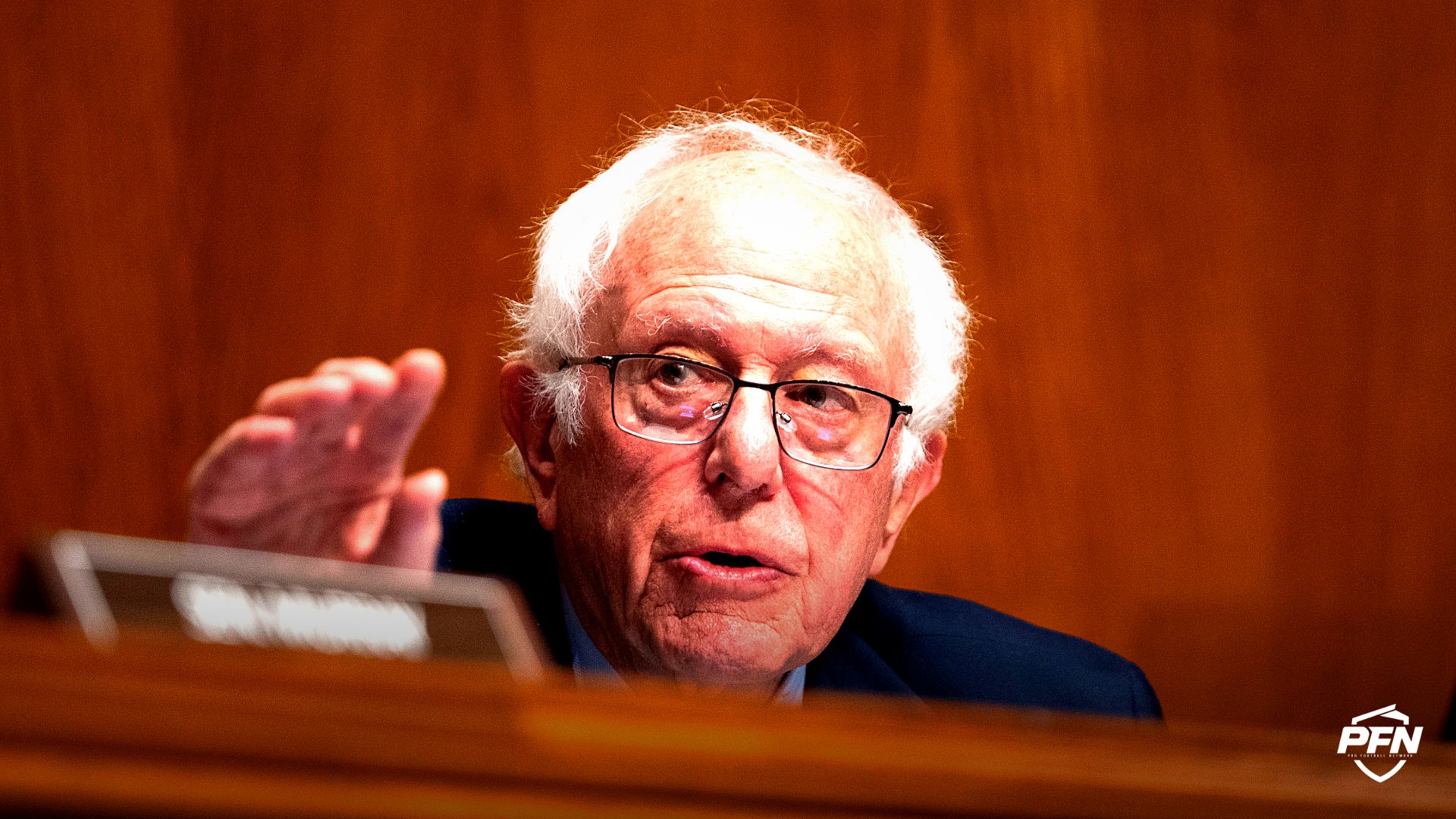
United States Senator Bernie Sanders has taken aim at the growing influence of billionaire sports owners, arguing that taxpayers are helping finance expensive stadiums while working-class fans are increasingly priced out of attending live games.
To combat this issue, Sanders has introduced federal legislation aimed at curbing team relocation threats and providing local fans and municipalities a path toward public ownership models.

Sen. Bernie Sanders Takes Aim at NFL Owners
Sanders highlighted the enormous wealth held by owners across America’s major professional sports leagues, pointing out that 31 of the 32 NFL franchise owners are billionaires, alongside 26 of 30 NBA owners and 26 of 30 MLB owners.
“Your tax dollars helped build their stadiums. But today, the average person can’t afford the price of a ticket to a sporting event. That must change,” Sanders said.
His criticism focuses on the gap between public spending on stadium construction and the everyday experience of local fans.
State and local governments have committed hundreds of millions of dollars toward sports venues in recent years. Buffalo’s Highmark Stadium, for example, received $850 million in public funding, $600 million from New York State and $250 million from Erie County, while Kansas committed $2.4 billion in STAR bonds toward the Chiefs’ relocation across the state line, including roughly $1.8 billion for the stadium itself.
BE THE GM OF YOUR FAVORITE TEAM: PFN’s Free NFL Mock Draft Simulator
Supporters of these deals typically argue that new stadiums create jobs, increase tourism, and generate additional economic activity. However, critics question whether taxpayers ever realize a meaningful return on those municipal investments.
The cost of attending an NFL game has also become a major concern for everyday families. Average ticket prices frequently top $100 per seat, and when factoring in parking, concessions, and merchandise, a single family outing can approach four figures.
At the same time, owners continue to benefit from lucrative television contracts, sponsorships, naming rights, and increasingly valuable franchises.
This underscores the imbalance Sanders is highlighting: taxpayers help finance stadium construction, but they are paying high prices to enter those same buildings.
Sanders Seeking Overhaul of Stadium Funding Ecosystem
Another point of contention is the leverage team owners hold when negotiating facility upgrades with local governments.
Franchise owners can threaten to relocate teams if local governments refuse to provide funding for new stadiums or renovations. Sanders and other critics argue that this puts cities in a difficult position, particularly when officials fear losing a major professional sports franchise and the economic activity it generates.
START PREPARING: PFN’s Free Fantasy Draft Simulator
Sanders has introduced legislation designed to limit that leverage.
The Home Team Act, introduced by Sanders and Rep. Greg Casar, seeks to prevent professional sports owners from using relocation threats to pressure communities into financing new stadiums.
For Sanders, the debate goes beyond football or any individual franchise. He believes publicly funded stadiums should provide meaningful benefits to the communities paying for them rather than primarily increasing the value of privately owned teams.
