
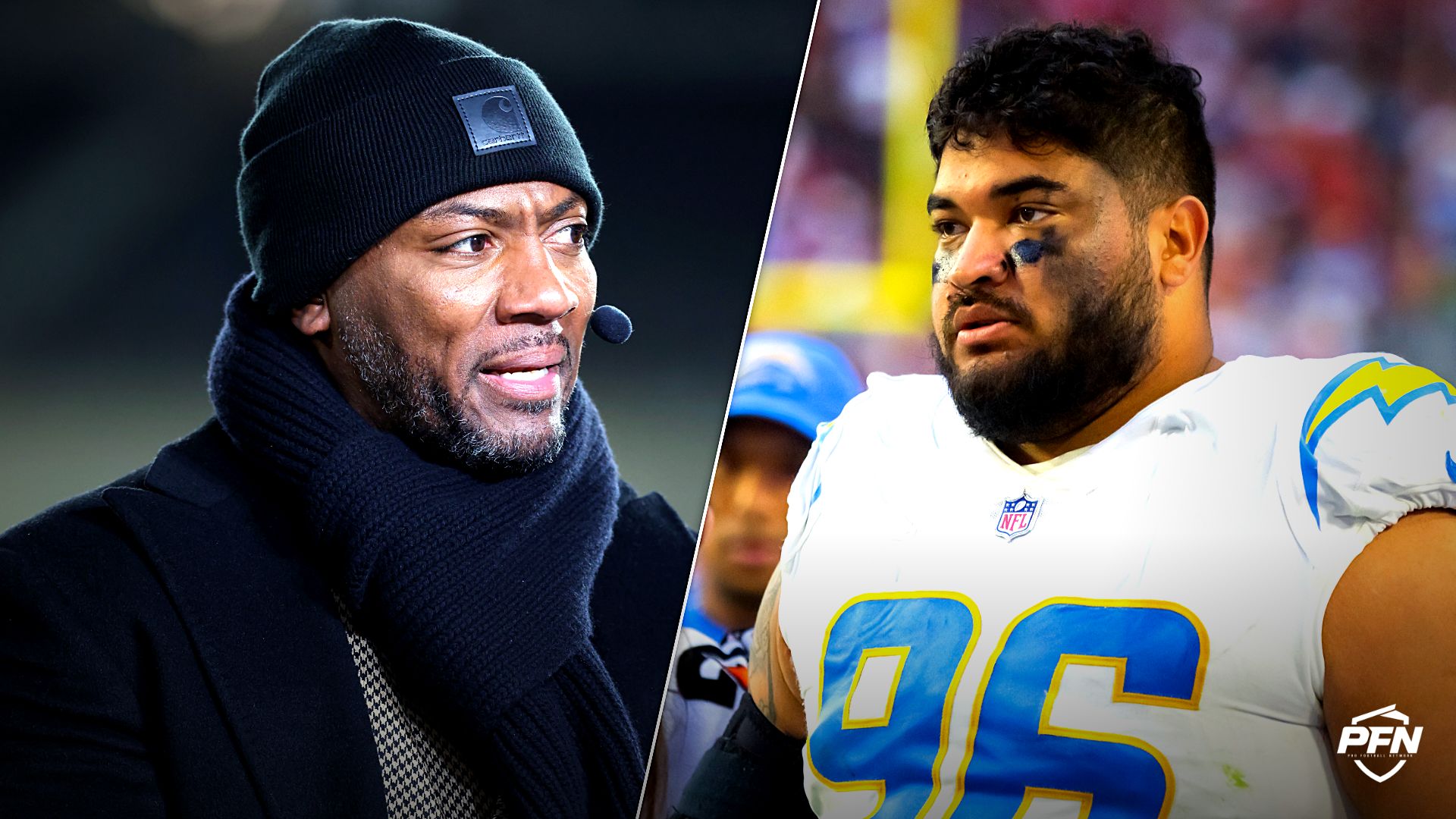
The sports media world is still reeling from the recent ESPN layoffs, with Super Bowl champion Ryan Clark being the center of many conversations.
Now, former NFL defensive lineman Breiden Fehoko weighed in on the discourse via social media, claiming that Clark’s firing is actually good for business.
Breiden Fehoko Takes Aim at Ryan Clark After Surprise ESPN Firing
Fehoko seemingly supports the idea that sports platforms need fewer voices who frame storylines through a racial lens. Clark’s commentary on topics like NFL coaching hires had repeatedly drawn accusations of “race-baiting” from critics.
“Nah we need less race baiters,” Fehoko wrote on X. “Nothing wrong with having a former athletes sports opinion but Ryan Clark and co feel they can’t get a point across without saying it’s because of skin color.”
Nah we need less race baitors. Nothing wrong with having a former athletes sports opinion but Ryan Clark and co feel they can’t get a point across without saying it’s because of skin color. https://t.co/7l81mSZFt7
— Breiden Fehoko (@BreidenFehoko) July 22, 2026
Fehoko’s stance is not a new sentiment, but it remains one of the most divisive in modern sports discussions. Advocates of this view argue that constantly filtering player performance, coaching decisions, and roster moves through race distracts from the games themselves.
On the other side of the fence are those who argue that race is a real factor in professional sports, from hiring disparities to differences in media narratives. From this perspective, dismissing those conversations as “baiting” risks silencing legitimate inequalities.
Fehoko’s comments were always going to draw both strong agreement and strong pushback rather than settle anything. Athletes weighing in on this debate adds another layer worth noting. Unlike media pundits, former players like Fehoko bring a different kind of credibility to the conversation. They’ve been inside locker rooms and experienced firsthand how teams talk about personnel decisions behind closed doors, and that insight carries weight with fans.
REDRAFT THE ENTIRE NFL: PFN’s FREE NFL Ultimate Redraft Simulator
Social media has also changed the shape of these disputes considerably. A single post from a recognizable name can travel far faster than any lengthy on-air segment, compressing a nuanced issue into a soundbite that’s easy to agree or disagree with in a matter of seconds. That speed rewards strong, clear-cut takes over careful ones, which may explain why conversations about race in sports so often end up polarized into two camps.
The term “race baiter” itself is part of what keeps this debate so contentious. It’s rarely used as a neutral descriptor; it functions as an accusation, implying that someone is manufacturing racial conflict for attention or clicks.
As long as these topics continue to make headlines, so will the disagreement over whether it’s a fair critique or a way of dismissing uncomfortable conversations altogether.
