
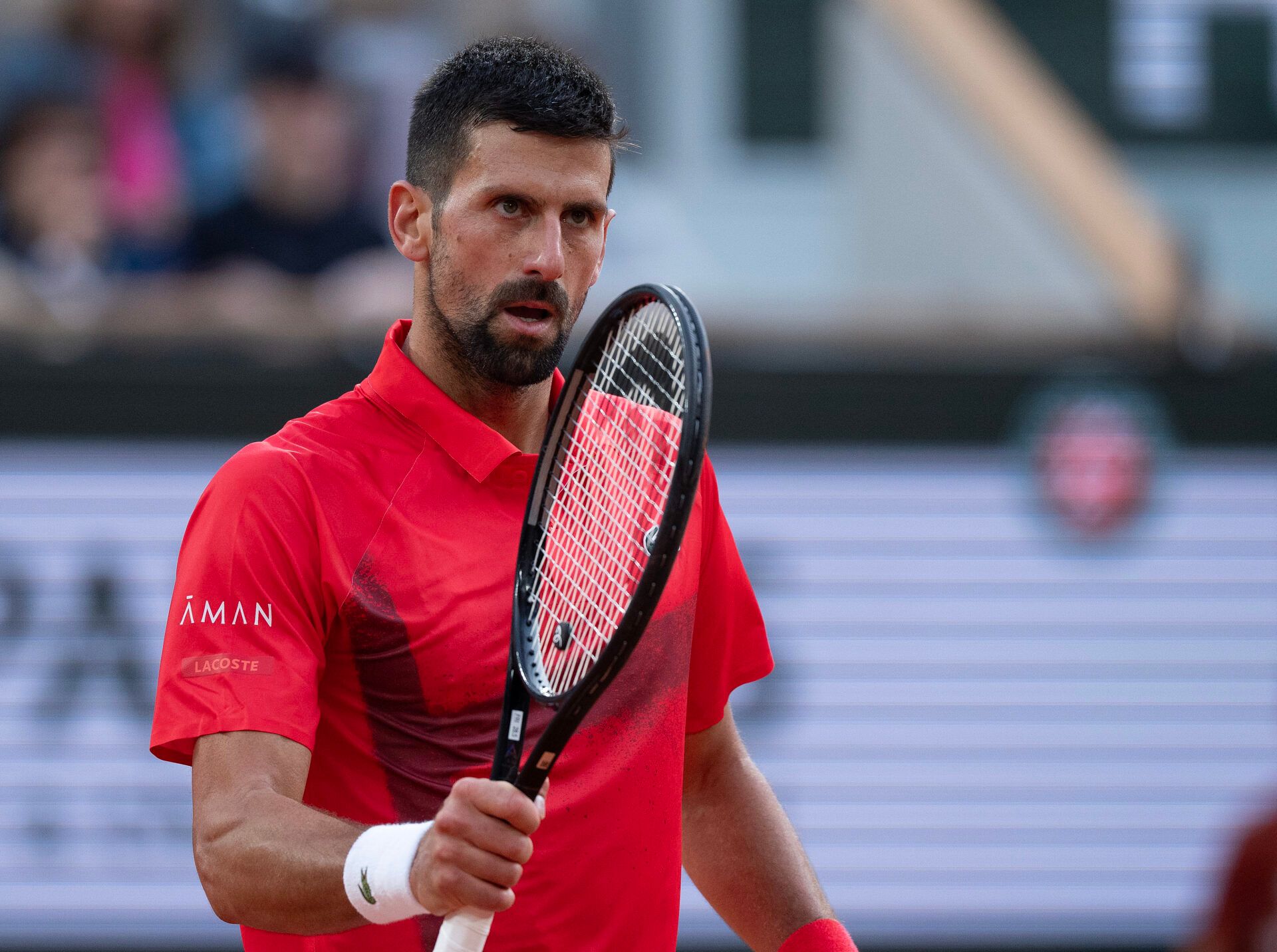
As the 2026 French Open has just started amid a contentious player-led media boycott over prize money, Novak Djokovic has a nuanced perspective on the whole dispute. Before he begins his campaign for a record 25th Grand Slam singles title this Sunday against France’s Giovanni Mpetshi Perricard, the Serb clarified that he is not involved in the current protest. However, he used the spotlight to clarify why he is not participating and to warn about the impacts of the lack of unity.
Novak Djokovic Warns Tennis Players’ Protests Could Lead to A Future Like Golf
The locker rooms at Roland Garros are buzzing this week with a strategic media strike. Rather than a total boycott, players are taking a “work-to-rule” approach, limiting pre-tournament press conferences to exactly 15 minutes and bypassing extra interviews with broadcasters.
This 15-minute limit is symbolic. It represents roughly 15% of the French Open’s total tournament revenue allocated to player prize money. While organizers boosted the 2026 prize pot by 9.5% to €61.7 million (around $71.62 million), the tournament’s overall revenue jumped 14% to €395 million last year, but the players’ share was still 14.3%. In response, a unified front of players is demanding that Grand Slams allocate 22% of their total revenues to the prize pool by 2030 to match ATP and WTA 1000 events, alongside increased contributions to pension, healthcare, and maternity funds.
The movement has seen participation and vocal support from the sport’s biggest names.
Aryna Sabalenka and Jannik Sinner, both the current world No. 1s, are sticking to the 15-minute directive. Sabalenka noted that “15 minutes is better than zero,” while Sinner called out a lack of “respect” from organizers.
Coco Gauff and Iga Swiatek, the last two French Open champions, and many more, including Taylor Fritz and Andrey Rublev, are with the protest.
Given his history of vocal advocacy for player rights, many assumed Djokovic was helping orchestrate the boycott. However, when asked directly if he was participating, the 24-time Grand Slam champion set the record straight.
“I haven’t been part of that process,” Djokovic said in the latest presser. “I haven’t been part of the process of the conversation, the planning, or the decision-making, so I can’t comment on that, to be honest.”
He’s not in the protest. Still, Djokovic’s priority remains exactly what it has been for years: ensuring the financial survival of players ranked 50-200, who often struggle with travel and coaching expenses.
“The players on both the men’s and women’s sides that are lower ranked are often forgotten about,” he noted. “We tend to forget how small the number of people who actually make a living from this sport is. I will never stop mentioning that or talking about that because it is the most important field of the tennis professional circuit.”
Djokovic also expressed deep concern over dividing the sport’s stakeholders. The 2026 French Open already has the growing rift between athletes, Grand Slams, and governing bodies. He pointed to golf, referencing the bitter, multi-year divide between the PGA Tour and LIV Golf.
“It’s already complex enough as a sport, how the structure is set and how we are regulated, so further fragmentation is really hurting me personally,” he admitted. “Let’s also learn from golf… Let’s try to be a bit more united and have a unifying voice in finding a better structure and a better future for our sport.”
He hopes that the authorities and players come to a middle ground as soon as possible. Djokovic will now turn his attention back to the court, headlining Sunday night on Court Philippe-Chatrier at 8:15 p.m. local time (2:15 p.m. ET).
