
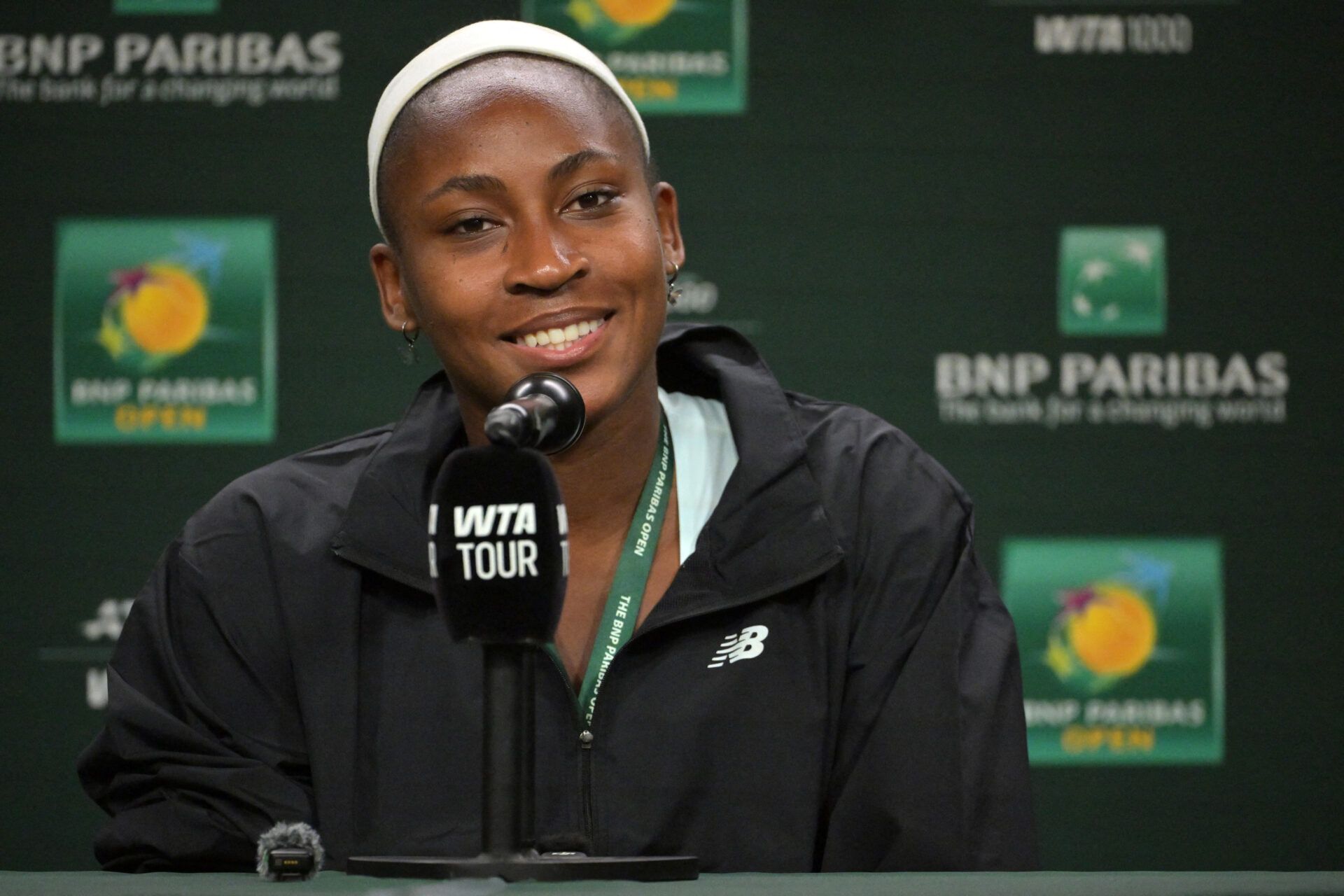
Unlike team sports, tennis players are alone both on the court and at the press conference mic. Because of this intense individual spotlight, managing media questions can be challenging. But according to Kim Clijsters, Coco Gauff has mastered this skill. The four-time Grand Slam champion praised Gauff for the way she presented her off-court struggles, comparing it with the intense scrutiny that Naomi Osaka faced when she opened up about her own mental health.
Coco Gauff’s ‘Smart’ Media Tactics, Dodging Naomi Osaka-level Scrutiny, Earns Clijsters’ Praise
Speaking on the latest episode of the “Love All” podcast alongside journalist Blair Henley, Clijsters defended her refusal to critique players who are visibly struggling ruthlessly.
“I think in general, I just always think about the human side of it,” Clijsters explained. Unless a player is intentionally crossing the line into extreme behavior, mistakes on the court or heightened emotions could be symptoms of unseen personal battles. “There could be so many things we deal with that you don’t see, and that commentators a lot of times maybe don’t think about enough,” she added.
“I hear about Coco’s press conference, and it’s like, that’s why it’s not up to us. I feel like it’s not up to me to sit here and say, ‘Oh, why was she late on a lot of these shots?’ It’s very easy to criticize. But I think she handled that very well; she was very smart in the way she communicated that,” Clijsters said.
Over the past week in Rome, Gauff’s media strategy, as Clijsters mentioned, was on full display. The 22-year-old has battled her way to the semifinals, surviving tough three-set scares against Solana Sierra and Iva Jovic before defeating 19-year-old Mirra Andreeva in the quarterfinals. Throughout the tournament, she has shown visible signs of emotional strain, even tapping her racket against her head in frustration. And the press had so many questions about it.
But the way Gauff carried herself was so candid during her press conferences. “It was a tough day for me,” Gauff confessed. “One of those days, I just didn’t feel motivated to go on the court. Then when you’re on the court, you’re motivated. You get too frustrated.”
When asked about whether the issue was physical, Gauff simply drew a firm boundary to protect her privacy:
“No, mental. Just personal things off court that I’m just trying to get through, but then you also remember how much fun you have. I think my regret today was not enjoying the battle, for sure.”
Clijsters compared this to a few years ago, when Osaka was very open about her struggles. “For a couple of years, Naomi answered questions like, ‘Hey, why were you crying on the court?’ or ‘You smacked the racket, what was going on in your head?’ People want to know a lot about the mental side, too,” said the Belgian.
Osaka took a mental health break in May 2021, withdrawing from the French Open to address long-term bouts of depression and social anxiety, caused by mandatory post-match press conferences. Her decision to prioritize mental well-being actually challenged the traditional media obligations and broke the stigma.
KEEP READING: ‘Crazy Stuff Happening’ — Tennis World Can’t Believe Their Eyes After Smoke Fuels Italian Open Suspension
“I think it’s very good the way Coco phrased it, basically saying, ‘Listen, there’s some stuff going on off-court, which is why I’m not feeling quite myself out there.’ It was very, very smart the way she handled that. We’ve all dealt with things like that, right? Whether it’s family issues, a breakup, just generally not feeling well, or the time of the month,” Clijsters explained.
The world No. 4 is preparing for her semifinal clash in Rome against Sorana Cîrstea today at 9 a.m. ET.
