
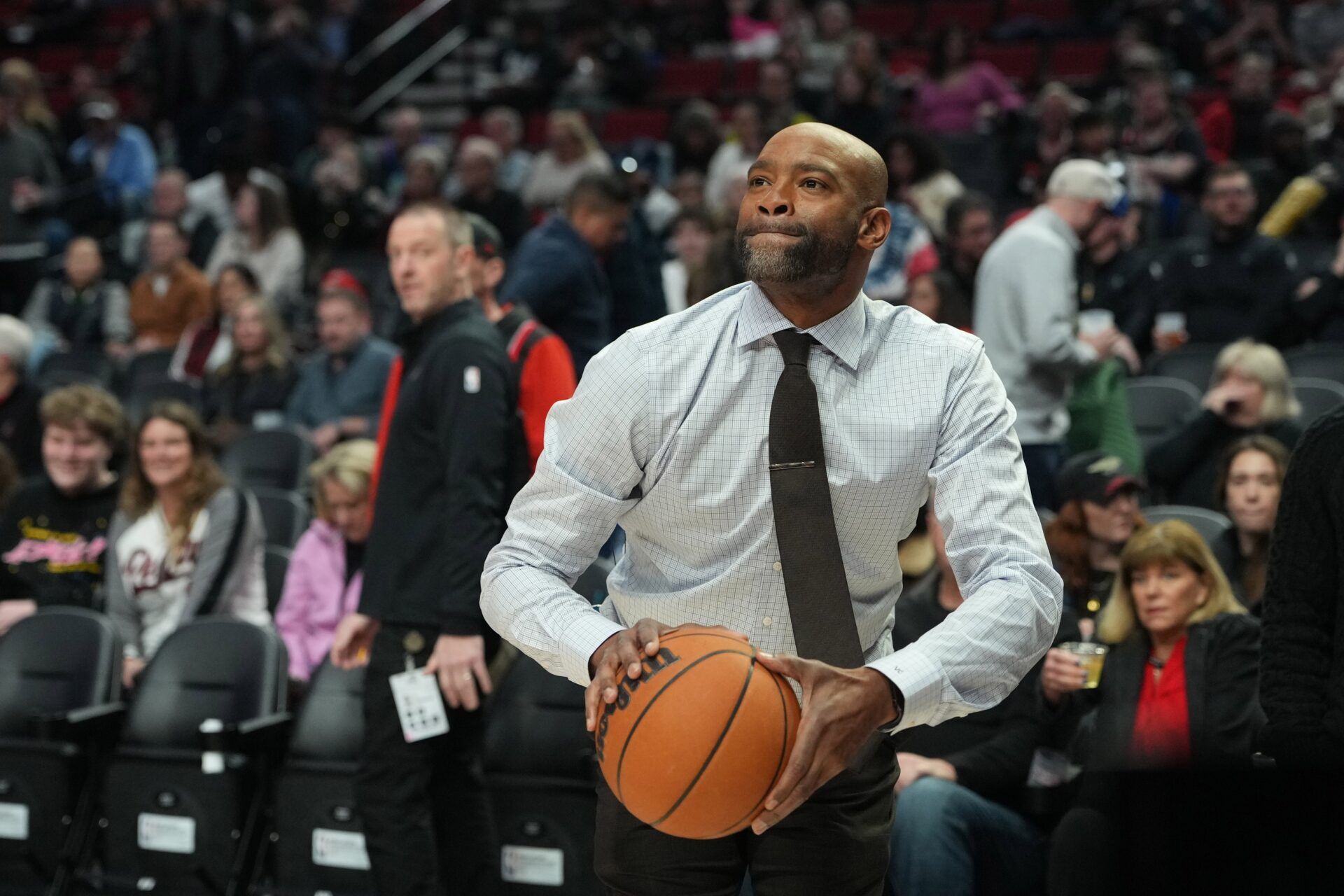
When North Carolina tabbed Michael Malone as its next head coach, the move blindsided even some of the program’s most celebrated alumni. Vince Carter, a consensus All-American who suited up for the Tar Heels between 1995 and 1998, confessed that the Malone hiring was a surprise.
Yet Carter’s initial shock gradually shifted to cautious optimism, then to genuine excitement. Speaking on his podcast “Cousins,” the UNC legend walked through what he learned from former teammate Antawn Jamison, who played an active role in the hiring process, and explained what ultimately convinced him Malone is the right person to lead Chapel Hill.
Antawn Jamison Sold Vince Carter on Michael Malone
Carter’s clearest window into the hiring process came directly from Jamison, his former frontcourt partner and fellow 1998 consensus All-American, who also claimed the National College Player of the Year honor that season. Jamison was actively involved as UNC conducted its search following Hubert Davis’s departure.
“I was told by my former teammate, Antawn Jamison, who was a part of the process, that they reached out to him, he wasn’t sure at first, and then all of a sudden, he had a change of heart,” Carter said.
The revelation underscored how unconventional this appointment truly was. Malone’s only tangible tie to Chapel Hill runs through his daughter, who competes on UNC’s volleyball roster, hardly the kind of deep institutional bond the program typically prizes.
Unlike Davis, a former Tar Heel who arrived with firsthand knowledge of the culture, Malone built his reputation entirely in professional basketball, culminating in guiding the Denver Nuggets to their first championship in 2023.
Carter, who noted a personal familiarity with the Malone family, having played for Michael’s father, Brendan Malone, during his time in Orlando and having nearly wound up in Denver himself, said the absence of a direct Carolina connection initially gave him pause.
Malone’s Respect for Carolina’s Identity Is What Carter Needed to Hear
What genuinely resonated with Carter was the philosophy Malone communicated early on. Rather than arriving with a blueprint designed entirely around his own preferences, Malone has made it clear that he has a clear respect for what Tar Heel basketball has stood for across generations.
“He has said he wants to coach, he wants to develop, but he also wants to keep Carolina basketball the way we know it to be,” Carter noted. “He said, ‘I’m not trying to change this to be just my way. I know what Carolina basketball is, what it was, and what it needs to be.'”
MORE: College Basketball 2026 Transfer Portal Tracker: Complete List of Players Who Are Available
Carter called those words “comforting,” while acknowledging that performance on the court will ultimately be the real measure. Encouragingly, Malone has already taken concrete steps to engage the alumni network, sitting down with legendary coach Roy Williams and speaking with Jamison to understand the expectations and values that define the program’s identity. He has also prioritized involving the former players.
These went a long way with Carter, particularly the fact that Malone met with Williams.
Carter also pointed to Malone’s track record as a developer of elite talent, specifically highlighting the role Malone’s coaching staff played in shaping Nikola Jokic into one of professional basketball’s premier players, as the clearest argument for why an outsider deserves the trust being extended to them.
Carter framed it simply: “If you’re going to go out there and get a coach that didn’t play Carolina, get a champion. A guy who understands and a guy who develops players.”
For Carter, those commitments, paired with the championship pedigree and a genuine effort to honor what came before, make the hiring one worth rallying around.
