
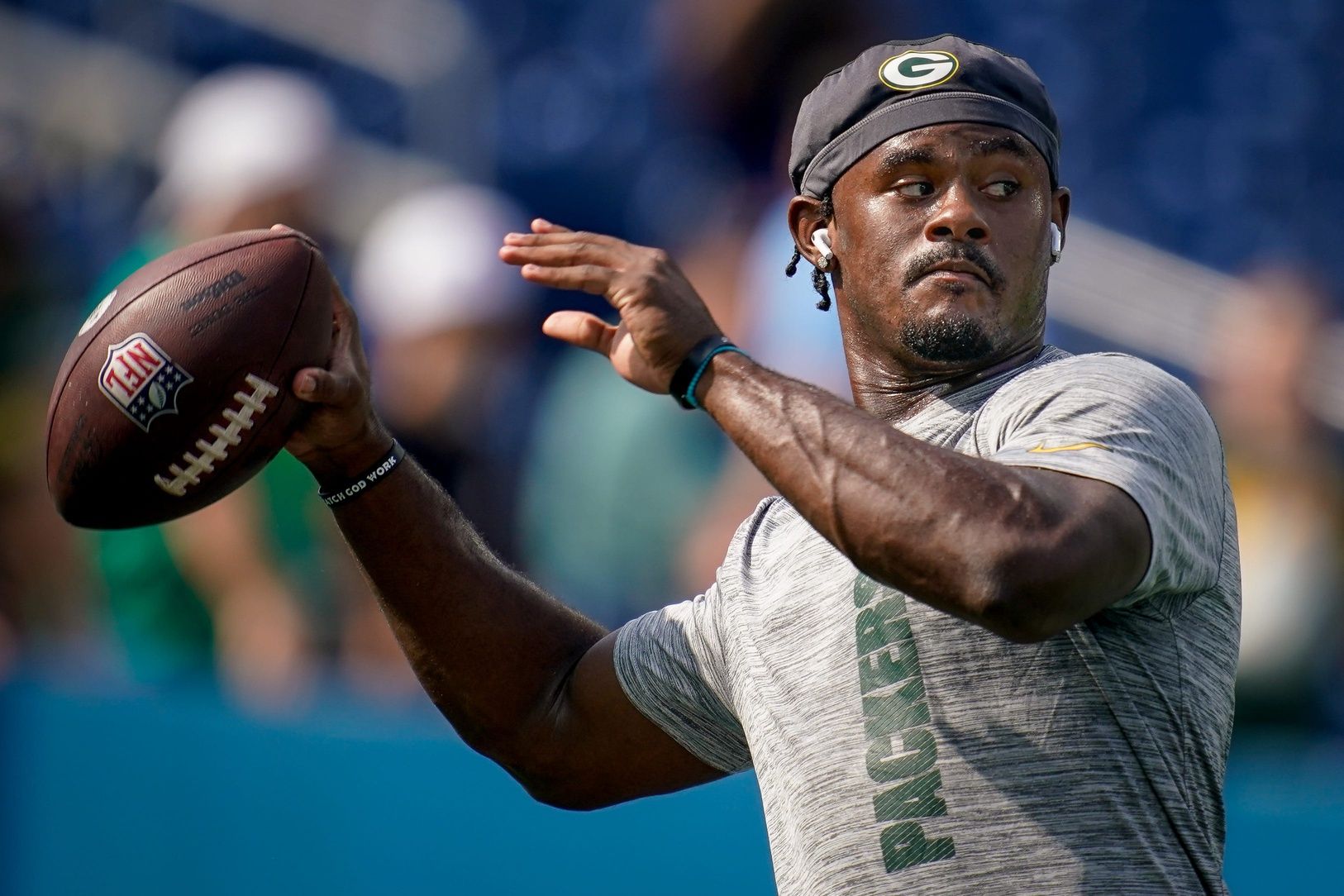
After trading away major pieces and handing the offense to their new field general, Malik Willis, Miami has opened itself up to criticism about whether this is a coherent rebuild or a confused reset. NFL analyst Nick Wright believes the Miami Dolphins are doing something many NFL teams avoid: accepting short-term pain instead of chasing a fake shortcut.
Wright sees a front office that is choosing clarity over denial. In his view, the Dolphins are not trying to patch over deeper roster issues with cosmetic fixes. Instead, they are tearing things down enough to find out whether Willis can be part of what comes next.
NFL Analyst Nick Wright Backs Miami Dolphins’ Rebuild Strategy Despite Malik Willis Questions
The Dolphins’ offseason became one of the league’s more dramatic pivots after they moved on from key offensive talent, including wide receiver Jaylen Waddle and their longtime QB Tua Tagovailoa, while reshaping the roster under first-year head coach Jeff Hafley.
That naturally led to pushback over why Miami would commit to a signal-caller like Willis if the organization is not clearly positioned to win right away. Wright addressed that exact contradiction while explaining why he actually agrees with the franchise’s direction.
“I actually support what they’re doing,” said Wright. “And I think that just taking your medicine…and saying, ‘we’re not going to do a half measure here. We made some very, very aggressive moves thinking we were championship contender.’ I think the reason people take issue with that is, well, then why sign Malik Willis?”
📹 @getnickwright supports the Dolphins strategy this offseason:
“Taking your medicine and saying we’re not going to do a half measure.
(But) why sign Malik Willis?
In order to evaluate any(one else on offense).”#PhinsUp pic.twitter.com/G5MkuppHJs
— The List – Dolphins Podcast (@TheListFinsPod) March 28, 2026
He continued: “And my answer to that is Jeff Hafley has familiarity with them in order to evaluate any of, I assume they’re going to draft a receiver like young players on roster you need to have a level of competency at quarterback and if they end up having the number one pick but they think despite that Malik shows them enough then they can really supercharge the reload by flipping that number one pick.”
Wright’s argument centers less on Willis being a guaranteed answer and more on the value of having a functional bridge while Miami figures out its long-term ceiling. In other words, the Dolphins do not necessarily need Willis to become a star immediately; they need him to provide enough stability to evaluate the rest of the roster honestly.
Why Willis Still Makes Sense in the Dolphins’ Rebuild
That is where Wright believes the signing becomes more logical than critics want to admit. Even if Miami ends up near the top of the draft, Willis could still help shape what the team does next.
“If he plays well enough for them not to have the number one pick then they sign the right guy and if not it’s not like they signed him to a five-year huge guarantee, and even if they get the number one pick and draft a quarterback, you still might be like, okay, but Malik, you start next year and then maybe he’s a trade chip if he plays well,” Wright added.
“So I think what they’re doing, logically, and if you said, ‘Nick, you’re taking over the Dolphins,’ I would have done a lot of the same things. Like let’s take our medicine right now.”
BE AN NFL GM: PFSN’s Ultimate GM Simulator
That viewpoint comes as Miami would most certainly ask Willis to lead an offense that no longer has the same proven support system. His strong NFL resume remains small, but his stint in Green Bay gave evaluators a more encouraging glimpse of what he might become in the right setup.
The Dolphins now appear willing to use 2026 as both a developmental test and a broader roster reset. If Willis proves he can handle that responsibility, Miami’s rebuild could move faster than expected, and if he does not, the Dolphins may still be positioning themselves to control the next major QB decision.
