
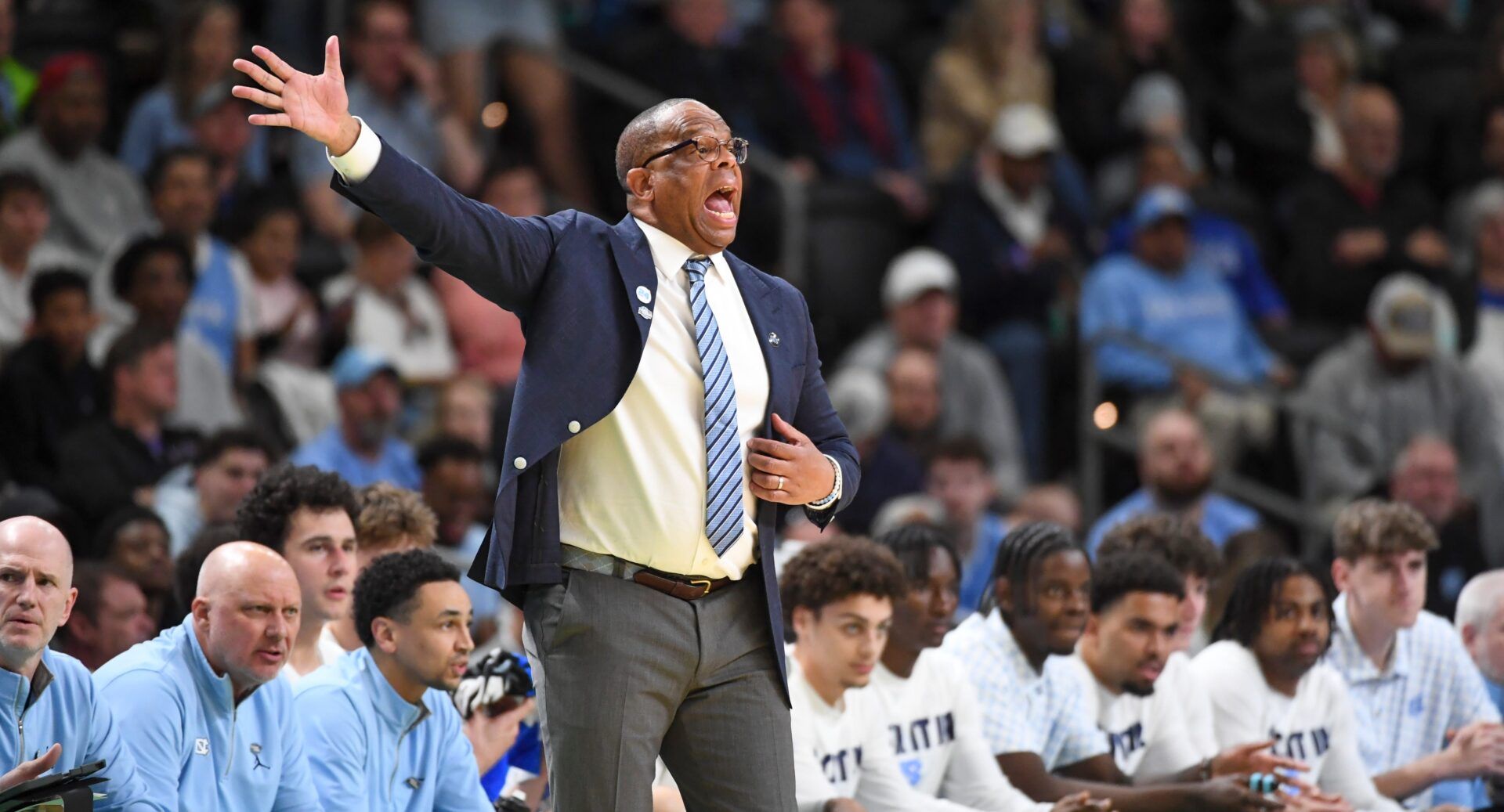
The pressure is mounting in Chapel Hill.
Following another disappointing early exit from the NCAA Tournament, this time a shocking first-round loss to VCU, the noise surrounding North Carolina head coach Hubert Davis is getting louder by the day. For a program with the history and expectations of North Carolina Tar Heels basketball, patience tends to run thin when March success doesn’t follow.

Why North Carolina Head Coach Hubert Davis’ Seat Is Red Hot
Davis stepped into one of the most difficult roles in college basketball when he succeeded Hall of Fame coach Roy Williams. Replacing a legend is never easy, and Davis understood the challenge from the start. But in today’s results-driven landscape, understanding the pressure doesn’t buy much time when wins aren’t coming.
What makes the situation even more complicated is that it is happening just a few miles away in Durham.
At Duke, Blue Devils head coach Jon Scheyer, who, like Davis, took over for a legendary predecessor, has kept the program a powerhouse. Despite being younger and less experienced, Scheyer has kept Duke not only relevant but dominant.
MARCH MADNESS: Fill In Your Bracket Now!
That contrast hasn’t gone unnoticed.
On a recent episode of “First Take,” Stephen A. Smith didn’t mince words when discussing Davis’ future. He framed the situation as “inescapable,” pointing out that when you talk about UNC, you inevitably talk about Duke. The rivalry doesn’t allow for isolated evaluation; success and failure are always relative. Smith went on to note:
“All we’ve had are questions surrounding Hubert Davis and it’s primarily due to recruiting…Roy Williams was bringing you a couple national championships, he wasn’t messing around.”
.@stephenasmith reveals what is “inescapable” when talking about UNC 👀 pic.twitter.com/EP0ifDA6lD
— First Take (@FirstTake) March 20, 2026
Right now, the comparison isn’t flattering for the Tar Heels.
Duke is ascending, fueled by elite recruiting and high-impact talent. Names like Cooper Flagg, Kon Knueppel, and Cameron Boozer highlight a pipeline that continues to deliver star power to Durham. Meanwhile, questions continue to surround UNC’s roster building.
Smith pointed directly at recruiting as a central issue, noting that most of the criticism aimed at Davis stems from his inability to consistently bring in top-tier talent. In a rivalry where both programs are expected to compete for the same elite players, falling behind in recruiting can quickly translate to falling behind on the court.
And in Chapel Hill, falling behind is simply unacceptable.
If Duke makes the deep tournament run many expect this year, the scrutiny on Davis will only intensify. Fair or not, his performance will be measured against Scheyer’s success, and right now, that gap appears to be widening.
For Davis, the challenge isn’t just about improving UNC. It’s about keeping pace with a rival that refuses to slow down. Because in this rivalry, standing still often feels the same as falling behind, and that reality could ultimately determine Davis’ future with the Tar Heels.
