
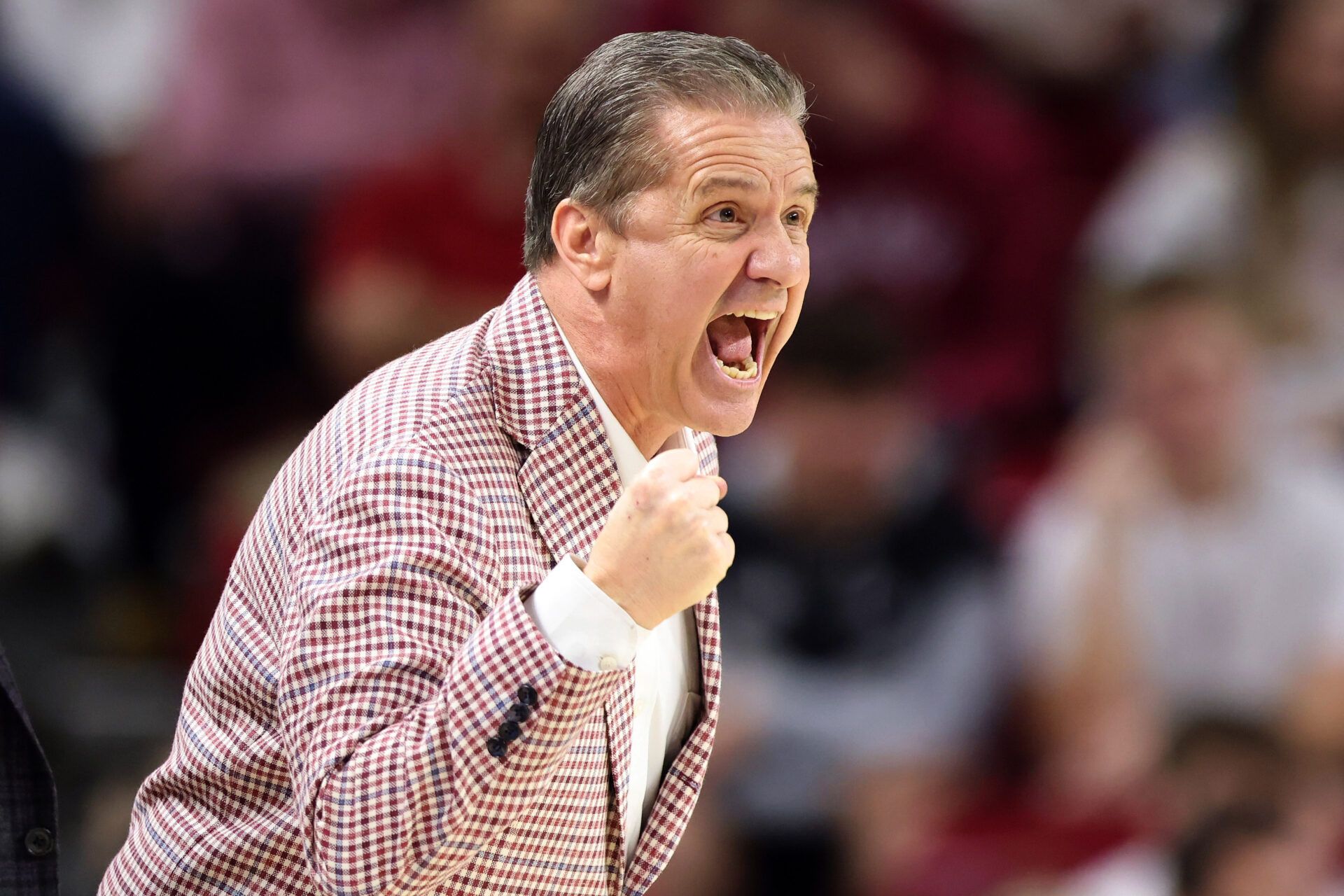
John Calipari used to be the master of building a deep roster. One of his best Kentucky teams literally went through hockey-style line changes, with five players going out and five more coming in.
Now? Calipari noted that building a roster that way is a thing of the past.

Building a Roster Is Not the Same, Believes John Calipari
College basketball has changed dramatically since the inception of the transfer portal and NIL.
That’s true across college athletics. In basketball, however, the changes can be drastic. Some teams can turn over an entire roster in one offseason, regardless of the level of success each team may have individually.
Calipari was one of the pioneers of change across college basketball. When college basketball shifted to a one-year residency requirement before entering the NBA, he was the first to really embrace it.
Anthony Davis, Derrick Rose, Karl Anthony Towns, and Willie Cauley-Stein are just a few examples of players who had a pit stop at Calipari’s program before chasing their dreams in the NBA.
One thing about Calipari’s Kentucky teams as well is that they always had a deep, talented group of players. Sometimes his bench could go all the way to a 10th player on the roster.
Now, Calipari and the rest of the world have to go about things in a different way. Players are paid, but they also expect to play when they arrive on campus, which means rotations are shorter, and budgets are smaller. That affects everything on a team’s roster.
“You have eight or nine guys. You can’t afford to have more. And if you do have more, they’re transferring anyway,” Calipari said.
While NIL budgets do vary across schools, Calipari is right that you cannot pay everyone nine-figure salaries unless a team has a benefactor with the wealth of Mark Cuban.
College players have more power than ever on the court these days. They come into school and expect to compete for a job immediately. If they do not, they will find the place that best suits them.
That’s how you see players going to four schools in five years, sometimes more. It’s not a knock on the players, necessarily; it’s the system the adults helped create.
This is how college athletics will be for the foreseeable future. There is no system in place, and it’s hard to imagine that any institution is going to be able to rein things in with everything being what it is, in essence, a free-for-all for the last five years.
It’s changed the way players operate, the way coaches recruit, and now coaches like Calipari are starting to see the long-term effects of all these factors blending together.
