
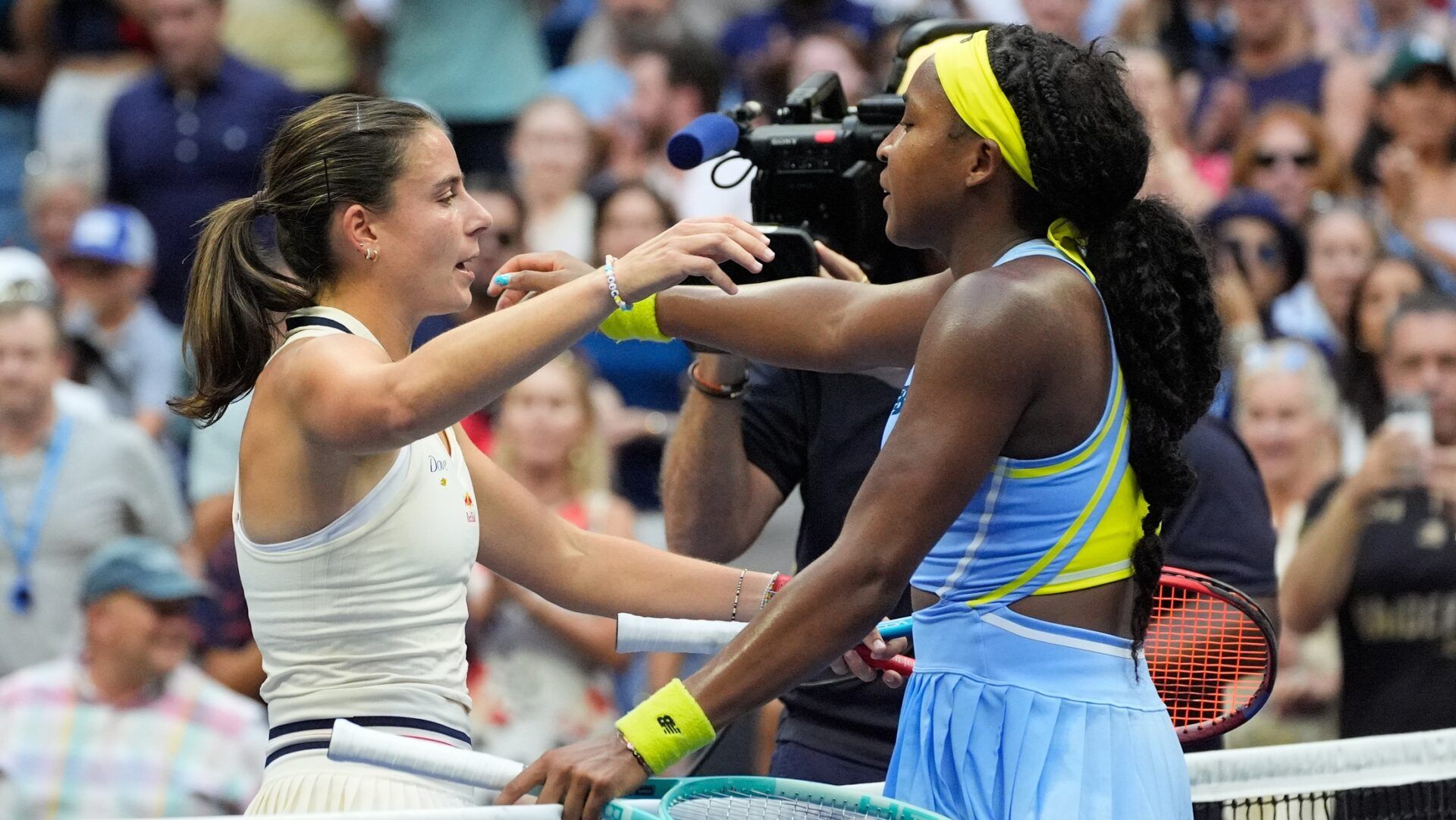
The WTA and ATP scheduling concerns keep rising even after multiple major players have already spoken on the heated topic. The demanding WTA calendar results in major form dips among top women’s players, including Coco Gauff, Emma Navarro, and others, prompting global criticism.
Now, Gauff’s former coach, Brad Gilbert, spoke on the matter, expressing his feelings on the complicated situation.

Brad Gilbert Speaks on WTA Calendar Amid Emma Navarro, Coco Gauff’s Form Dip
Gauff and Navarro are two of the strongest women’s players on the WTA tour, representing the United States on the global level. Both stars have achieved immense success, including two Grand Slams by Gauff and two WTA titles by Navarro.
However, one thing that has been missing from both players’ performances is consistency. There is a major surge during particular tournaments, and then both players struggle significantly for the rest of the tour.
This caught Gilbert’s attention, who took to X to point it out. After Gauff’s exit from the WTA 1000 Qatar Open, he wrote, “Wow, lucky loser Cocciaretto takes out Gauff for the 1st time in Doha in straight sets, she hadn’t won a set in there 3 previous matches, 3rd year in arow Coco has lost 1st rd there.”
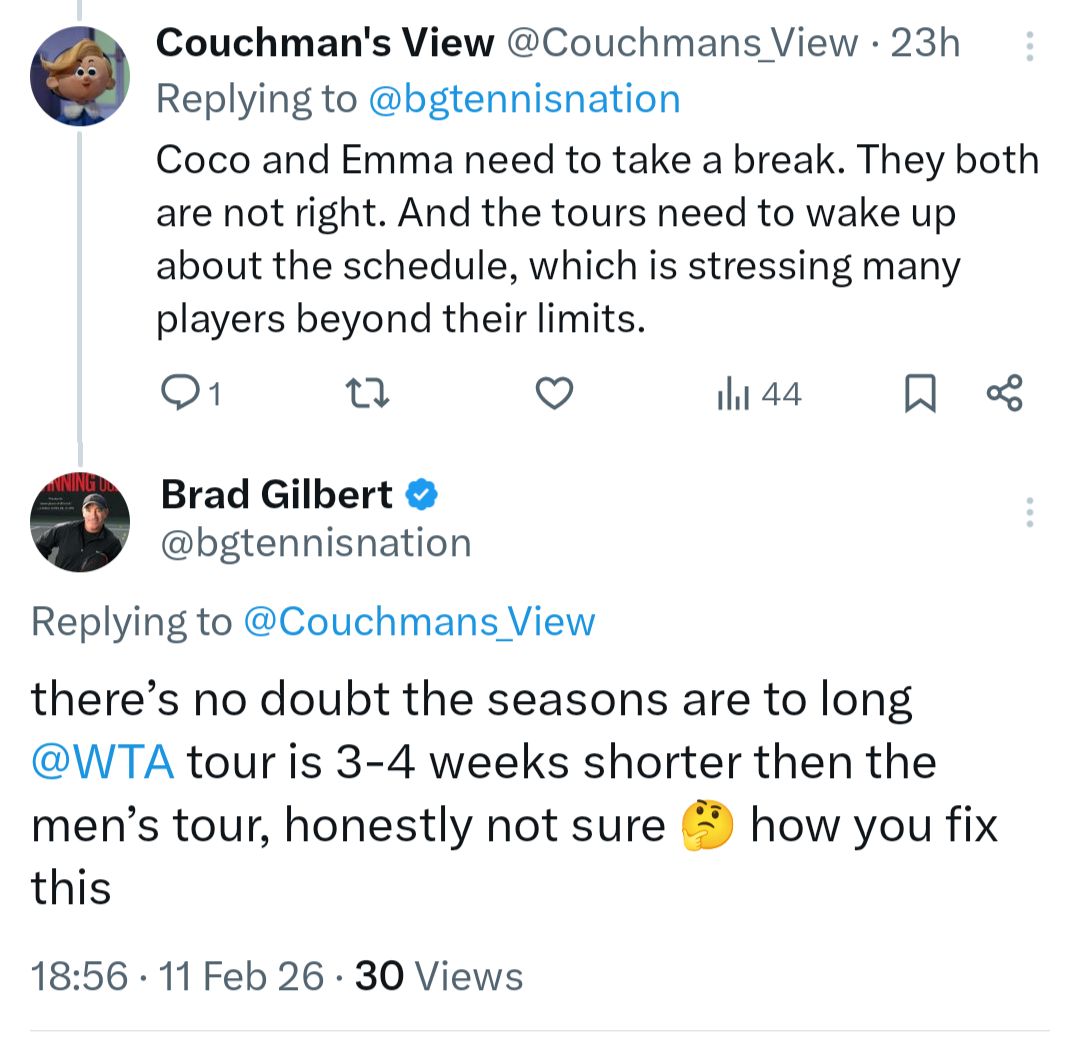
A fan replied to this post, expressing concerns about Gauff and Navarro’s performances, suggesting they take a break and pointing the finger at the WTA calendar, “which is stressing players beyond their limits.”
Gilbert replied to these assessments, writing, “there’s no doubt the seasons are to long @WTA tour is 3-4 weeks shorter then the men’s tour, honestly not sure 🤔 how you fix this.”
What’s interesting in the coach’s words is that he pointed to the better condition of the WTA tour compared to the ATP. He noted that the women have to play 3-4 weeks less than the men; still, the situation is alarming, leaving him wondering how it can be fixed, with no suggestions.
Both calendars are comparable in length, with the WTA tour often concluding in early November, while the ATP calendar runs until mid- to late November. This provides a month-long break for both players before the United Cup begins early January, leading into the Australian Open.
Additionally, there are multiple compulsory tournaments for both players, making it much more difficult to manage time and rest between matches. What made the situation even worse was the expansion of the WTA 1000/Master 1000 events from one week to 12 days, decreasing the rest period in between.
Player Concerns Over the Demanding WTA and ATP Schedule
World No. 1 Carlos Alcaraz has delivered some of the most striking criticisms of the ATP calendar, stating, “probably they are going to kill us in some way.” The Spaniard emphasized multiple times that the schedule is “so tight” and expressed concern about the player injuries. He pointed out that the demanding schedule leads to physical injuries, player burnout, and a lack of motivation for many players.
WTA World No. 1 Aryna Sabalenka has been very straightforward about facing penalties rather than risking her health, calling the WTA season “definitely insane.” In January 2026, she stated, “The season is undeniably crazy, and it’s detrimental for all of us, as we witness so many players getting injured.”
Iga Świątek has been one of the most notable voices against the WTA calendar. At the China Open last year, she stated, “The WTA has made this a madness with all these mandatory rules. It’s impossible to fit everything in the calendar. I don’t think any elite player can manage it.”
The Pole warned that choosing the right tournaments is important and she may skip some necessary ones, saying, “Perhaps I’ll have to choose some tournaments and skip them, even if they are mandatory.”
Jannik Sinner has been keeping his words to himself compared to other players, though he acknowledged specific concerns. In October 2024, Sinner stated, “We have a lot of tournaments, that’s for sure. It would be ideal if there was no Davis Cup after the ATP Finals. I think that’s definitely something I would change in the program”. He stressed the recovery time is an important part of playing professional tennis, stating, “It’s important to recover.”
Gauff has also addressed multiple scheduling concerns, including the late match finishes to the calendar structure. During the 2024 French Open, she noted that matches finishing way past midnight are “not healthy” for players. Looking on the bright side, she acknowledged the prize money, stating, “I don’t want to complain excessively because we’re fortunate to be competing for substantial prize money.”
With rising concerns about the tennis calendar and the increasing number of injuries, the management needs to take immediate action, reaching an agreement that satisfies the players while keeping the season interesting.
