
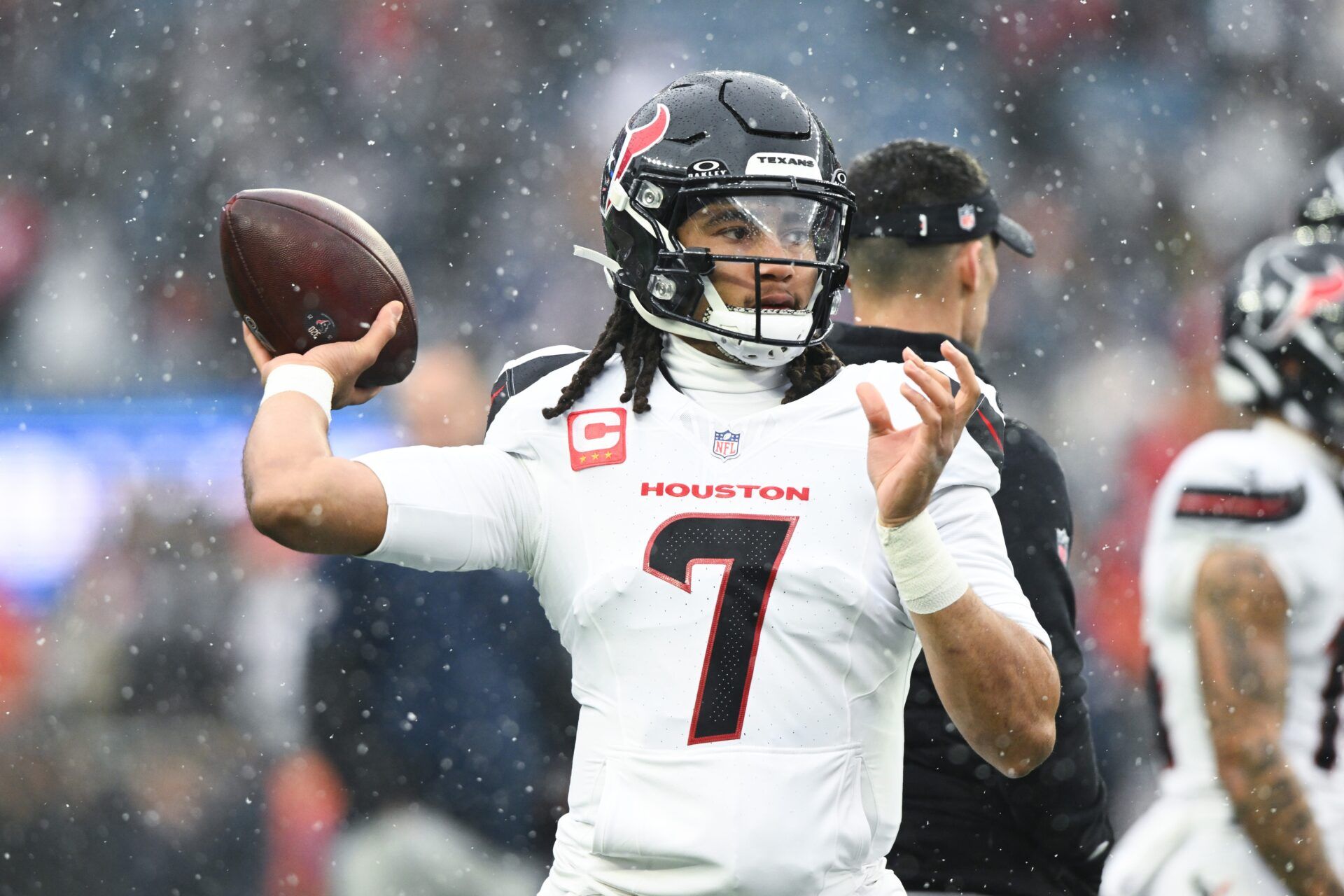
Gillette Stadium will transform into a snow globe Sunday afternoon, and the conditions will only worsen as the New England Patriots and Houston Texans fight for an AFC Championship berth.
Two weather systems are set to collide over southern New England, creating what meteorologists call a “back-loaded” storm—light flurries early, heavy snow late. That timing could determine whether C.J. Stroud and the Texans advance to the franchise’s first conference championship game or whether Drake Maye cements his MVP candidacy with a signature January performance.

What the Updated Forecast Means for Sunday’s Kickoff
Accuweather predicts a 68% chance of snow at 3 p.m. when the game kicks off, with a winter weather advisory in effect. By 4 p.m., that chance increases to 83% and stays around that range for the next several hours.
The real story is the timing. StormTeam 5’s latest projections show the Foxborough area is expected to receive anywhere between 3 and 5 inches of snow. But that accumulation won’t be evenly distributed. The heaviest snowfall is expected between 5 p.m. Sunday and midnight.
“We got hats on, jackets on, nipples out. … What are you doing as a quarterback to make sure you’re prepared?” 😭 @JasonKelce is asking the hard hitting questions. pic.twitter.com/cWFDNVW0Dn
— SportsCenter (@SportsCenter) January 18, 2026
For a 3 p.m. kickoff, that means the first half plays in relatively manageable conditions—overcast skies, scattered flurries, temperatures hovering around 34 or 35 degrees in the morning, dropping to around 32 or 33 as people head back to their cars. The fourth quarter is another matter entirely. Snow is forecast to start before the game, with up to 2 inches expected by the end of the Patriots-Texans matchup.
According to the National Weather Service, “total daytime snow accumulation of 1 to 3 inches [is] possible” with up to 5 inches in the forecast for the evening. The chance of precipitation is 100%, indicating snowfall throughout the contest.
MORE: Latest 7-Round NFL Mock Draft
The wind won’t compound the problem—gusts should stay under 10 mph for most of the afternoon. That’s good news for both quarterbacks attempting intermediate throws. The footing is the variable. Along the defensive line, pass rushers will have a tougher time getting footing on their way to the quarterback. The same applies to receivers running cuts.
Stroud’s Ball Security Under Scrutiny After Performance vs. Pittsburgh
This would be the first snow game in the Texans’ postseason history. They have not played in a snow game since December 2016. No players from that team remain on Houston’s roster in 2026.
The cold didn’t doom Stroud in Pittsburgh, but the elements exposed a troubling pattern. For the day, Stroud passed for 250 yards, one touchdown, one interception, and five fumbles. This could pose issues for Texans QB CJ Stroud, who visibly struggled in the cold outdoors against the Steelers last week, dropping snaps from the center on multiple occasions.
Now add falling snow, a slick ball, and accumulating powder. Stroud has performed in winter conditions before—when Stroud was under center at Ohio State in 2021, rival Michigan beat them in a snow game. He played well, though, throwing for 394 yards and tossing two touchdowns. But college ball in Columbus is a different animal than January in Foxborough with a conference title on the line.
The Texans are also missing their top target. Collins suffered a concussion in the Wild Card game against the Pittsburgh Steelers that forced his early exit. Collins did not practice at all this past week before he was ruled out on Friday. WR Justin Watson is also out with a concussion.
Maye doesn’t have deep experience in these conditions either, as he grew up and played college ball in North Carolina. But he’s been in New England for two seasons now and has the advantage of playing at home, where the Patriots’ ground crew manages the field, and the crowd noise builds through every snowflake.
The strategic calculus is straightforward: both teams need to establish something on offense before the fourth quarter turns this into a survival drill. Whoever holds a lead when the heavy snow arrives can run the ball, bleed clock, and dare the opponent to throw into worsening conditions.