
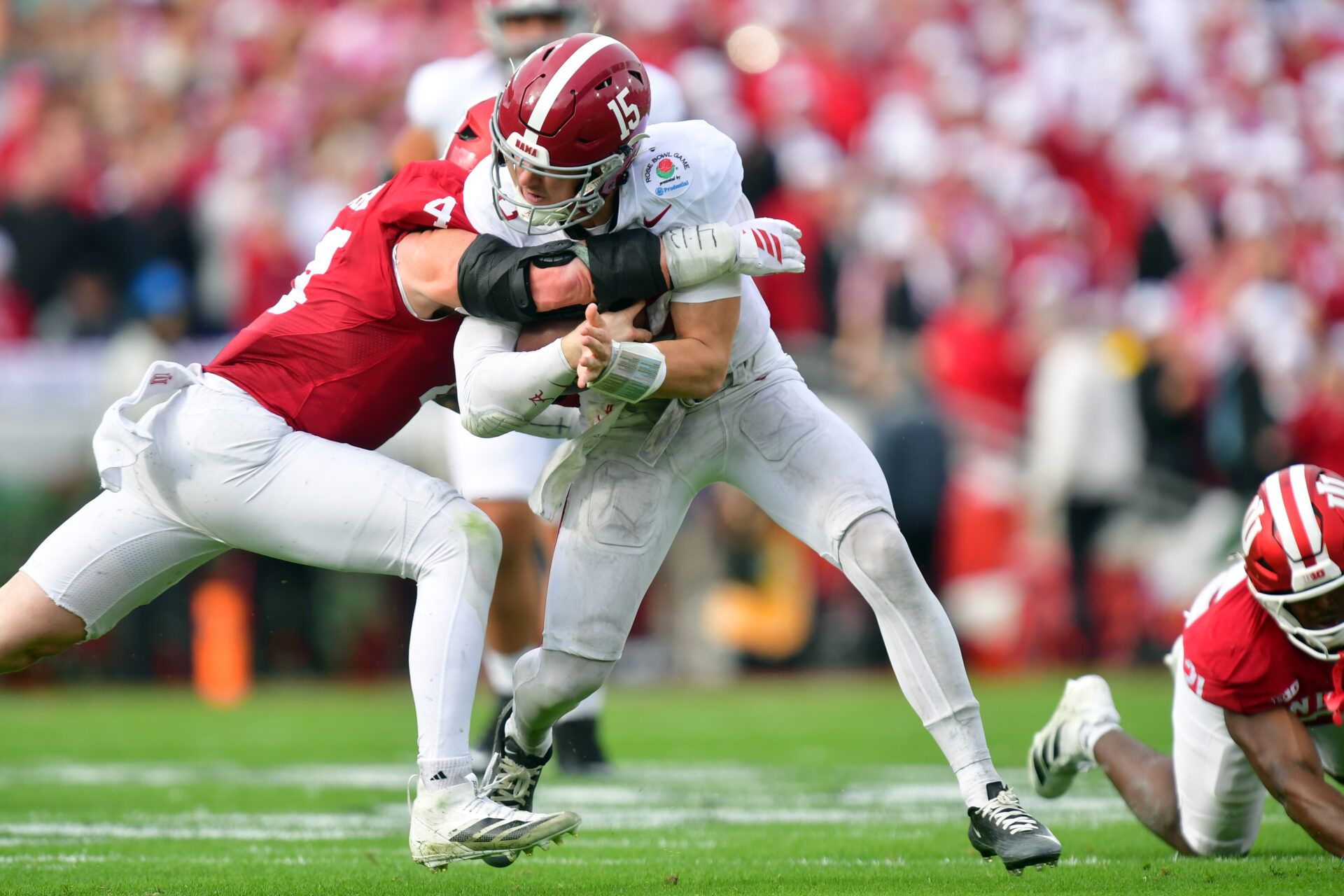
As NFL draft season approaches, Alabama quarterback Ty Simpson continues to generate debate among national analysts. While his arm talent is undisputed, concerns about his long-term viability at the next level are beginning to surface, most notably from respected college football analyst Joel Klatt.

Joel Klatt Has His Concerns With Ty Simpson
Klatt recently joined Colin Cowherd on “The Herd,” where the two broke down Simpson’s profile as an NFL prospect. While both agreed Simpson is a capable and accurate thrower of the football, Klatt highlighted one glaring concern that could ultimately limit his ceiling: His physical profile.
Simpson is listed at roughly 6-foot-2 and between 208 pounds, which is considered undersized by traditional NFL quarterback standards. According to Klatt, the lack of size wouldn’t necessarily be an issue if Simpson compensated with elite athleticism or elusiveness, but that’s not the case.
“When you’re not big, I get worried about your ability to stay healthy, unless you can move,” Klatt explained.
Klatt pointed to quarterbacks such as Kyler Murray, Bryce Young, Russell Wilson, and Baker Mayfield as examples of smaller passers who have survived and thrived because of their ability to evade pressure and create outside the pocket.
Murray’s speed, Young’s slipperiness, and the pocket movement of Wilson and Mayfield all allow them to protect themselves when chaos breaks down in front of them. Simpson, however, lacks that defining trait.
The concern is clear in the numbers. During the 2025 season, Simpson recorded just 93 rushing yards and two rushing touchdowns, confirming that running is not a significant part of his game. He logged only 29 scrambles, ranking 39th in the PFSN College QB Impact metrics, a modest figure for a quarterback who doesn’t possess elite size or mobility.
Klatt suggested this limitation became more apparent as the season wore on, which could help explain why Simpson’s production dipped later in the year. When pressure increased, Simpson struggled to escape or create with his legs, often taking sacks instead.
Alabama’s Offense Put Simpson in a Tough Spot
Alabama’s team sack rate further reinforces the issue. The Crimson Tide posted a 6.1% sack rate, ranking 70th nationally. While some of that responsibility certainly falls on the offensive line, Klatt noted that quarterbacks who can extend plays with their feet often mask protection issues, and Simpson hasn’t shown he can do that consistently.
The supporting cast also matters. Alabama’s offensive line earned a PFSN College Team Offensive Line Impact score of 78.7, ranking 45th in the country, solid, but far from elite. Meanwhile, the Tide averaged just 104.1 rushing yards per game, limiting their ability to lean on the run and keep defenses honest.
For Simpson to succeed at the NFL level, Klatt believes the margin for error will be thin. He would need to land with a team that provides a significantly better offensive line, a strong run game, and a well-designed system that minimizes exposure to pressure.
Without elite size or dynamic mobility, Simpson’s path forward hinges on structure, protection, and precision. And while his arm talent gives him a fighting chance, analysts like Klatt remain skeptical that it will be enough on its own.
