
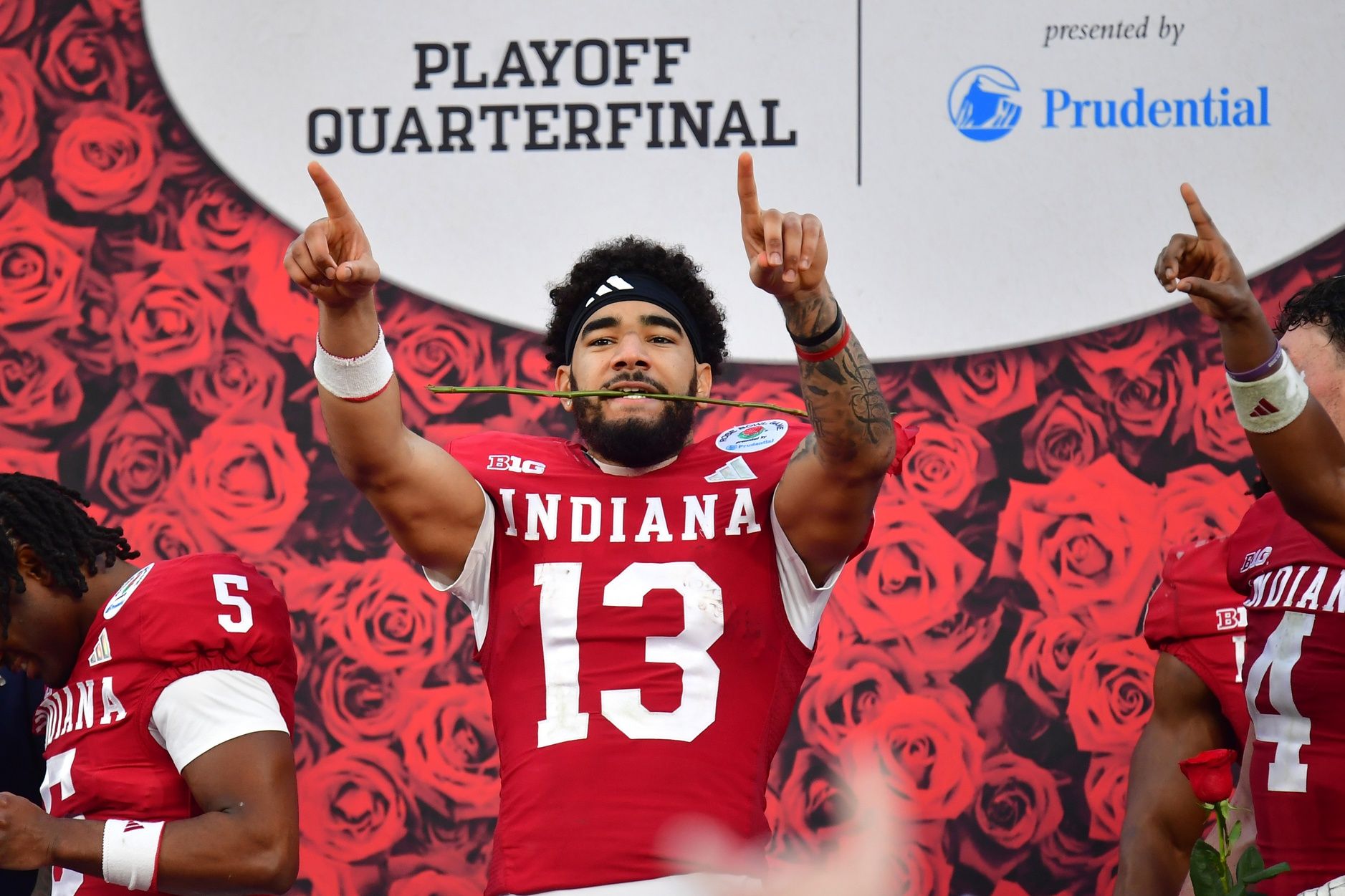
If there was any question about whether Elijah Sarratt belongs in serious 2026 NFL Draft conversations, his recent stretch of tape should settle it. He doesn’t overwhelm defenders with speed. He beats them with timing, leverage, and confidence. Those traits tend to matter more in January than they do at the scouting combine.
That’s why PFSN’s Trevor Ritchie projecting Sarratt to the San Francisco 49ers in his latest mock draft makes sense when you watch how the receiver actually plays the position. This isn’t about flash. It’s about trust.
Elijah Sarratt Emerges as a Scheme Fit for a Title-Chasing NFC Team
Turn on the Iowa game, and the first thing that stands out is Sarratt’s composure. Six catches on seven targets. One of them was a 49-yard touchdown in the fourth quarter, delivered when the game tightened, and the margin for error shrank. Those yards weren’t empty. They came when Indiana needed someone who wouldn’t flinch.
Sarratt consistently won in the short-to-intermediate areas by understanding spacing rather than trying to outrun coverage. On dig routes, he sold vertical stems just long enough. On extended plays, he stayed alive and available. That’s quarterback-friendly football, and it’s exactly why evaluators see him as more than a late-round flier.
The numbers help frame the picture, but they’re not the story. A contested-catch rate north of 60% confirms what his tape already reveals. When coverage is tight and windows are small, Sarratt doesn’t panic. He tracks the ball, positions his body, and finishes through contact. That’s a skill that translates regardless of athletic testing.
At 6-foot-2 and 209 pounds, Sarratt looks the part of an NFL boundary receiver. He’s physical without being reckless. Competitive without freelancing. Scouts have noted that while his athletic traits are average, his route detail and play speed make up for it. That balance is why some believe he could push into Day 2 territory if teams prioritize reliability over raw upside.
Fans will ask the obvious question. What’s the ceiling? Sarratt probably won’t stretch the field vertically or tilt coverage with speed. That’s the limitation. But for a Super Bowl contender, that might not matter. His value is in precision routes, back-shoulder timing, and converting third downs when defenses expect it.
The bigger question is fit, not talent. Drop Sarratt into a system that emphasizes timing and trust, and he immediately raises the floor in the receiver room. Miss on that fit, and his impact flattens.
The takeaway is simple. Sarratt isn’t a highlight-chaser. He’s a problem-solver. And for an NFC contender chasing a title window, that profile carries more weight than most fans realize.
