
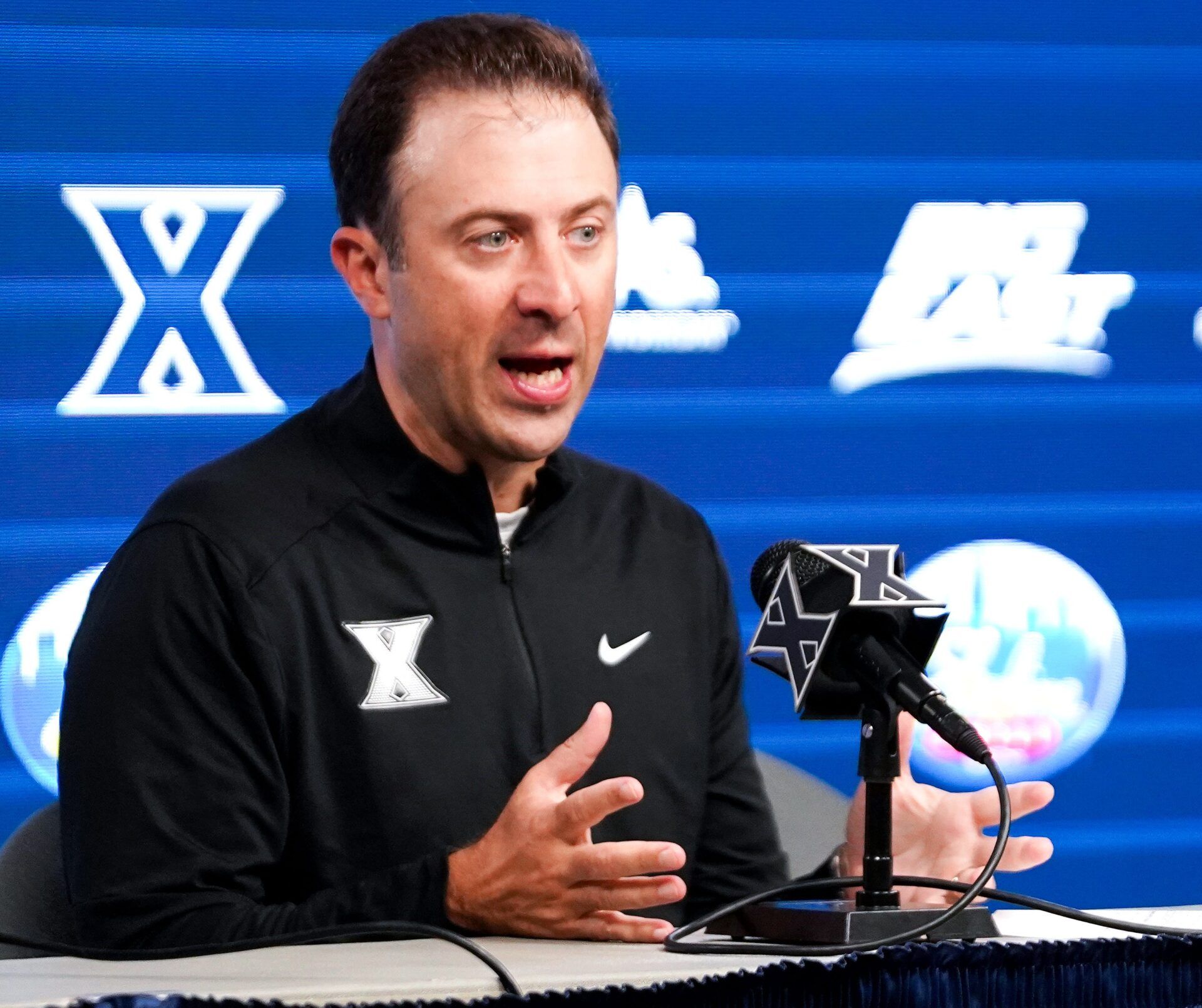
The conversation around name, image, and likeness (NIL) continues to reshape college athletics, and coaches across all sports are still adjusting to what the new era means for roster building, player retention, and player acquisition. Recently, former University of Tennessee baseball coach Tony Vitello left college athletics to become the manager of the San Francisco Giants.
In an interview after leaving college athletics, Vitello shared his opinion on NIL, which was largely negative. His comments struck a chord on social media, including with Richard Pitino, who is now the head coach of men’s basketball at Xavier University.

What Points of Tony Vitello Does Richard Pitino Agree With?
Vitello didn’t shy away from expressing his frustration with the current state of college athletics. His comments weren’t aimed at players benefiting from NIL itself, but at the unintended issues that came along with the new rules.
In response to a post of Vitello’s interview, Pitino simply quoted the post with a bullseye emoji.
— Richard Pitino (@XUCoachPitino) November 5, 2025
Here are the points Vitello made that Pitino agrees with:
The first question asked was, “How is NIL changing the game, particularly at a baseball level?”
“It’s a disaster,” Vitello said. “I have this weird fantasy: can college and the MLB be merged a little bit and help each other? It’s just a mess.”
The comments reflect a concern shared by many coaches and people working in college athletics. Roster continuity is almost impossible to maintain season after season, and it isn’t just a problem in college baseball; it affects every college sport. Instead of a traditional offseason of training and development, coaches need to spend a significant amount of time convincing their players to stay, or even dip into the transfer portal to replace players who have left. On top of that, the transfer portal in its own right is basically free agency, with colleges “bidding” on players.
“It’s like you’re driving in the fog and you can’t really see but about 100 to 200 feet in front of you. You’re grasping for what’s real and what you can do and what you can’t do.”
His comparison highlights the lack of clear guidelines for coaches, given that NIL is relatively new to college athletics. Between NIL collectives, the transfer portal, and the struggle to interpret rules, college staff are reacting day-to-day rather than building long-term.
“Let’s find out who can do it better, but when you really don’t know what the rules of the game are, or they’re so lopsided in favor of Tennessee over Middle Tennessee State, it’s kind of hard to have that nose-to-nose competition.”
NIL hasn’t just changed how players are recruited; it has changed who is realistically able to compete. Programs with significant financial backing can offer much more than smaller schools can. Recruiting players is now much harder, especially with money on the table.
