
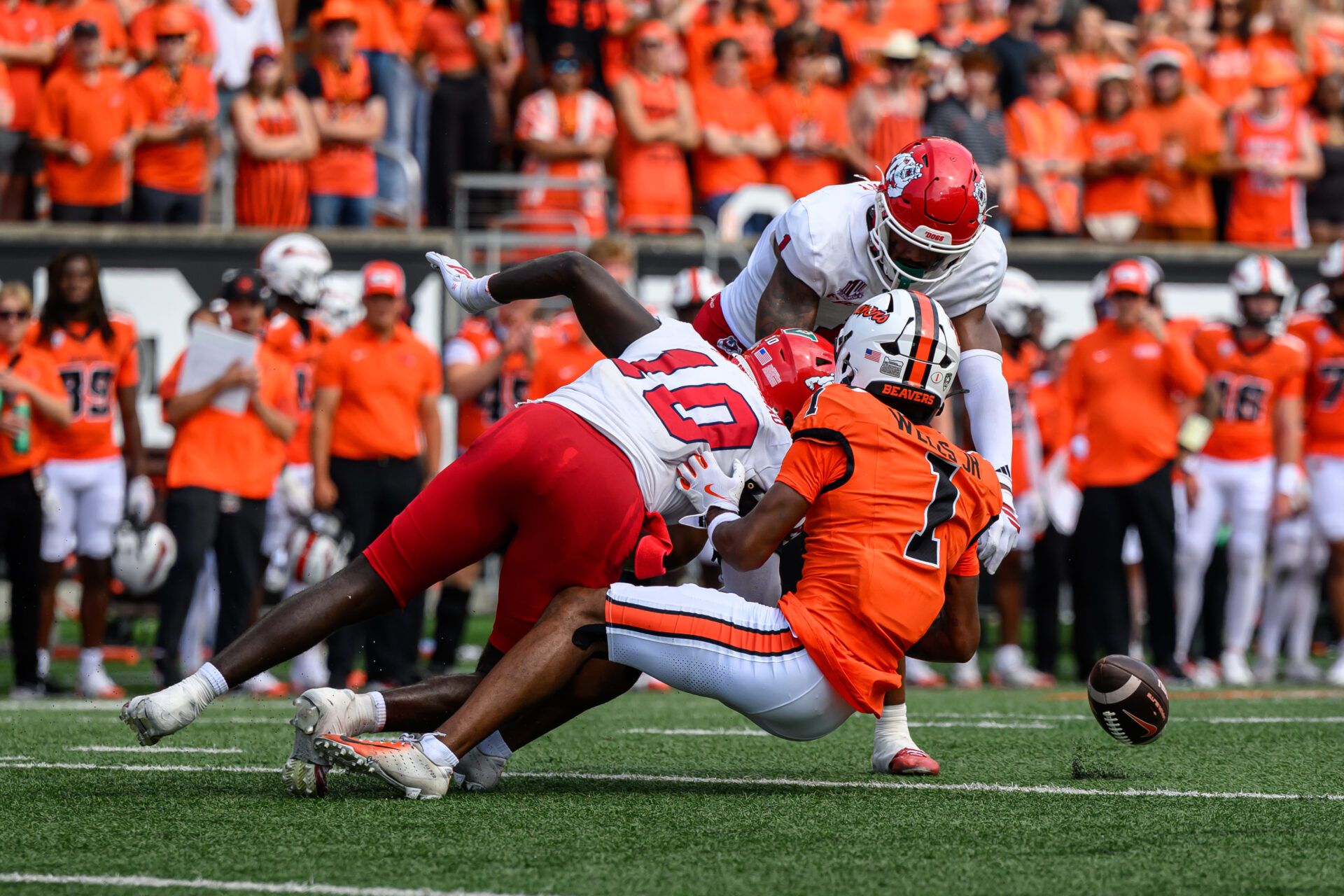
College football has several rules that set it apart from both high school ball and the NFL. One of the most confusing is the targeting rule, which regularly leaves fans frustrated. Here’s everything you need to know about college football’s most controversial rule.
What is Targeting in College Football?
Like almost every college football Saturday, today’s Oklahoma-Temple game featured a controversial targeting call. Sooners star defensive lineman R Mason Thomas was ejected for targeting.
After being ejected for targeting in the 3rd Quarter of the #Sooners contest with Temple, R Mason Thomas will miss the first half of Oklahoma’s matchup with Auburn next weekend.
Thoughts? ⬇️ pic.twitter.com/QDnOVyDLB7
— OUInsider (@OUInsider) September 13, 2025
Thomas hit Temple quarterback Evan Simon after he had released the pass. After being initially penalized for roughing the passer, the foul was upgraded to targeting, which frustrated many fans.
So what exactly is targeting? According to the NCAA, targeting is when a player makes forcible contact to the head or neck area of an opponent using their helmet, forearm, hand, fist, elbow, or shoulder.
The most common call happens when a player leads with the “crown,” or top, of their helmet to hit an opposing player. When targeting is called, it is automatically reviewed, and if the call is upheld, the player is ejected.
This is the part that frustrates fans the most. Reviews are wildly inconsistent, with calls rarely looking the same from game to game. It often feels completely up to the eye of the individual referee rather than a rule written in stone, which is why it’s so controversial.
What makes the rule even more controversial is that if the foul occurs in the second half, the player is also suspended for the first half of the team’s next game, which is what happened with Thomas’s scenario. That means a single foul in one game can cost a team a top player for part of a completely different game.
Regardless of the controversy, the rule has been part of the game since 2008, with the ejection penalty in place since 2013. It’s deeply ingrained in college football and something coaches, players, and fans all have to live with.
It’s undoubtedly a confusing rule, and it’s understandable why fans are against it, but it’s in the rule book and something they need to know as they follow the 2025 season.
