
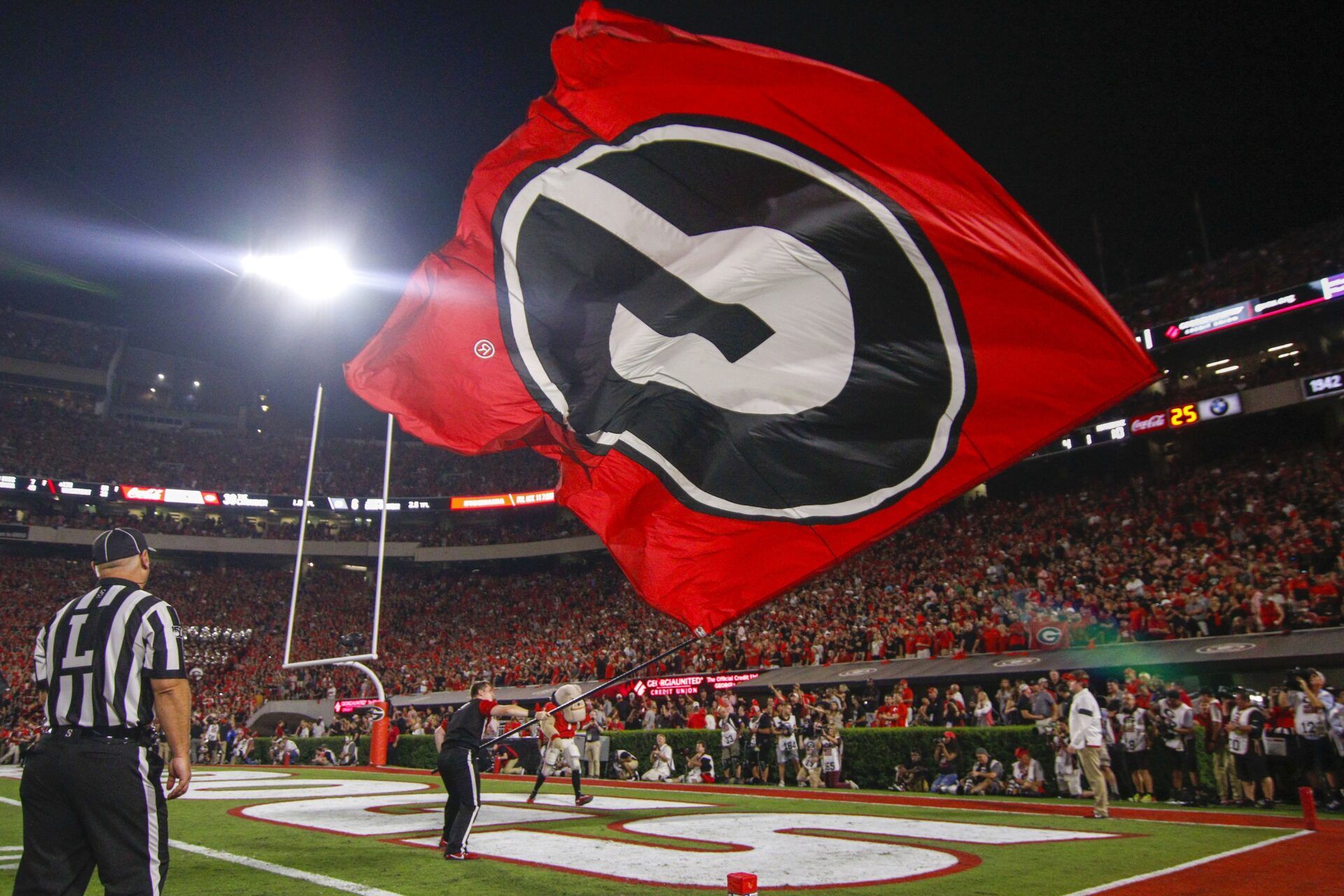
Weather forced its first scheduling change of the 2025 college football season on Saturday morning. Georgia’s matchup with Austin Peay was moved up an hour to avoid afternoon thunderstorms in Athens. This wasn’t the only game affected as Clemson and Troy faced the wrath of mother nature too.
The Bulldogs and Governors kicked off at 2:30 p.m. ET instead of the originally scheduled 3:30 p.m. start time. Saturday’s forecast calls for scattered storms beginning after 4 p.m., with gusty winds and small hail possible.

Why Did Georgia Move Their Game Time Against Austin Peay?
Georgia athletics announced the change Saturday morning, citing incoming storms as the reason, according to Online Athens. The adjustment moves gates to 1 p.m. and shifts the Dawg Walk to 12:15 p.m.
The forecast made the decision straightforward, with storm chances climbing throughout the afternoon from 47% at 4 p.m. to 66% by 6 p.m. The original 3:30 p.m. kickoff would have placed the game squarely in the danger zone.
Georgia chose the proactive route rather than gambling with weather delays. Officials moved the game ahead of the storm front, ensuring kickoff temperatures of 85 degrees under clear skies.
ESPN+ and SEC Network+ will still carry the broadcast despite the schedule change. The adjustment affects pre-game festivities and fan arrival times, but preserves the full game experience without weather interruptions.
After this, the game between Troy and Clemson also suffered a similar delay, proving frustrating for all fans at the Memorial Stadium.
Clemson PA announcer tells the stadium: “Weather is about to get nasty … hopefully this passes through.” Expecting rain at Memorial Stadium shortly — Clemson-Troy was suspended around 3:48 p.m. and there’s no word yet on when the game will resume
— Chapel Fowler (@chapelfowler) September 6, 2025
How Common Are Weather Delays in College Football?
College football’s early-season timing coincides with peak thunderstorm activity across much of the country. Lightning protocols require immediate game suspension when strikes occur within eight miles of the stadium, often leading to lengthy delays.
Teams routinely play through rain, wind, and even hail, but lightning forces immediate evacuation. The standard protocol calls for a 30-minute delay after the last detected strike, with the clock resetting if additional lightning occurs nearby. Weather delays can stretch for hours, testing fan patience and disrupting broadcast schedules.
Moving kickoff times is preferred when forecasts show clear windows before dangerous conditions develop.
Austin Peay Brings Upset Momentum to Athens
For Georgia, preserving ideal conditions matters more than usual against an Austin Peay team riding high from a stunning upset. The Governors shocked Middle Tennessee 34-14 last week, marking their first victory over an FBS program since 1987.
Austin Peay controlled that game from start to finish, jumping out to a 21-0 lead and never looking back. Quarterback Chris Parson threw for 142 yards and two touchdowns while the defense held MTSU to just 0-for-12 on third down conversions.
𝗧𝗢𝗨𝗖𝗛𝗗𝗢𝗪𝗡 𝗚𝗢𝗩𝗘𝗥𝗡𝗢𝗥𝗦! 🎩🏈
THAT’S POWER FOOTBALL. @austinsmitty_ PUNCHES IT IN FROM TWO YARDS OUT.
📺 –> https://t.co/SGvq1lyROc#WeWILL | #LetsGoPeay pic.twitter.com/H5ODyBOcD1
— Austin Peay Football (@GovsFB) August 31, 2025
The complete road victory proved coach Jeff Faris’s second-year rebuilding plan is working and gave the FCS program real confidence heading into SEC territory.
Georgia also opened with a statement, crushing Marshall 45-7 behind quarterback Gunner Stockton’s four total touchdowns. The Bulldogs have won 32 straight home games, but Austin Peay arrives with the belief that upsets can happen anywhere.
Weather might have been the morning’s biggest concern, but the afternoon brings its own storylines. A confident Austin Peay team coming off their historic upset faces Georgia’s incredible home winning streak in Athens.
