
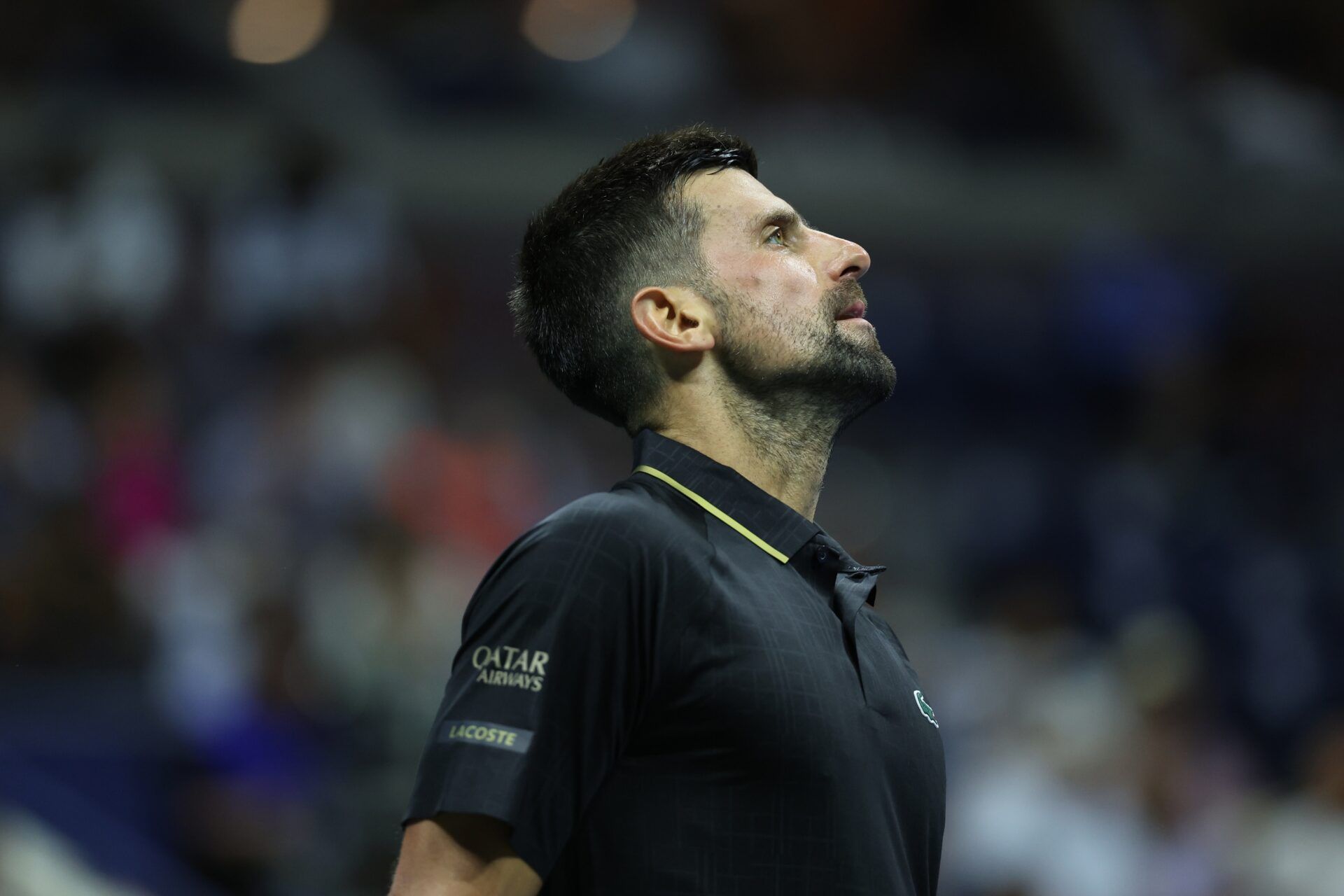
In his long and decorated career, Novak Djokovic has become known for his fierce competitiveness and mental resilience. Recently, the Serbian star sat down for a candid podcast interview to explain how he copes with defeat and why solitude is necessary and beneficial for him.

How Does Novak Djokovic Deal With a Loss?
Djokovic described his process after a tough loss on the latest episode of the “On Purpose with Jay Shetty” podcast. He explained that, depending on how deeply a defeat affects him, he sometimes needs anywhere from an hour to a full week to process it. Immediately after the match, he will have a brief review with his team, but then he retreats.
Djokovic explained why time is important for him after a loss, saying, “Right after the match, if I have to reflect shortly about the match with my team, I just want to be left alone. I don’t like the chitchat or small talk trying to lift my spirits up right after the match. Just give me some time. I need to isolate myself, go in my room, go outside, walk, whatever it is, just blow some steam out.”
Djokovic noted that once he takes that time, he feels ready to re-engage. He then talked about how difficult it is for him to digest a loss. The Serb has 1150 victories in his career since turning pro compared to just 231 losses, a staggering 83% win percentage over 22 years.
MORE: Novak Djokovic – ‘It’s a Matter of Existence… My Father Had to Beg and Borrow Money From Criminals
While Djokovic strictly limits contact after a loss, he makes one exception: his children. He shared: “My kids sometimes, within those few hours, get me and they’re like ‘Daddy, we have to do this, you have to take me there,’ and stuff. So kids have that permission to come into my space.” He added, while noting that everyone else must wait until he’s had time alone.
Djokovic emphasized that solitude helps him to gather his thoughts, calm his mind, and prepare for the next challenge. “Solitude is good; it’s not necessarily bad. Everybody should embrace solitude,” he said, underlining that taking time alone can be a healthy way to cope with disappointment.
With 24 Grand Slam titles and Olympic gold at Paris 2024, Djokovic is one of the greatest players in tennis history. With a record 40 ATP Master 1000 titles, he is the only player to have won all nine ATP Masters 1000 events, achieving this feat twice. Djokovic holds the record for most year-end finishes as World No. 1, a record eight times, and has stayed at the top for 428 weeks. His insistence on alone time reflects the mental toughness that has driven his success.
This year, he reached the semifinals of all three majors and is pursuing his 25th major title in the US Open 2025 as he takes on Zachary Svajda in the second round.
