
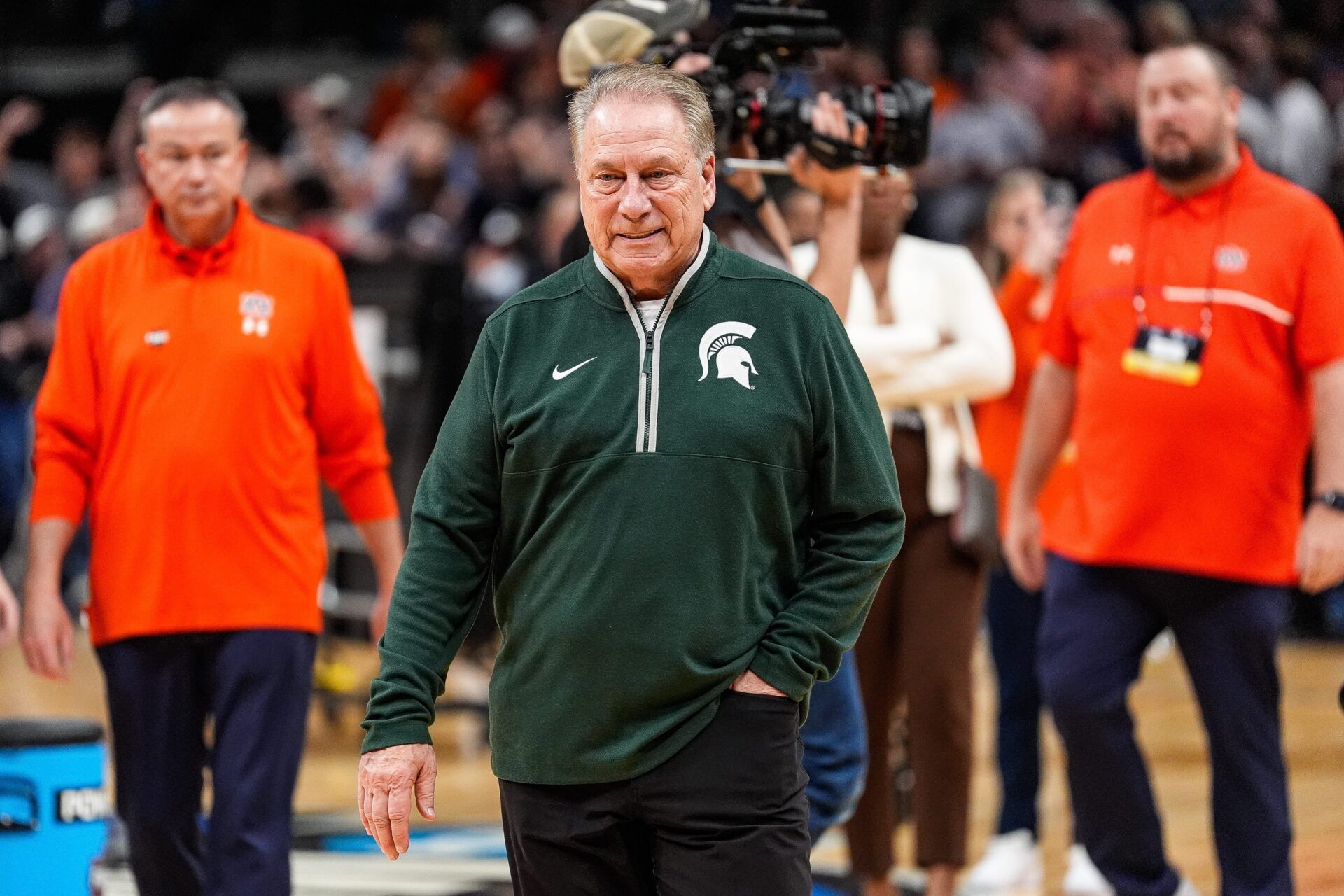
While the transfer portal continues to reshape college basketball, Michigan State head coach Tom Izzo gave his opinion. Find out his thoughts. For better or worse, the transfer portal became an integral part of the process and will continue, barring another overhaul.
The portal allows players to leave their current school and head to another, gaining instantaneous eligibility without the one-year break between starts. Now, another layer of possible problems hovers above the problem, as coaches scramble to figure out how to handle the situation.

Tom Izzo Dislikes Transfer Portal Concept, Aligns with John Calipari
Heading into his 31st season in East Lansing, the 70-year-old coach does not like what he sees as far as the evolution of the sport. Izzo stopped the “CBS Sports College Basketball” podcast to discuss the portal.
“I said the transfer portal is way worse than the NIL, even though who knows how much money you must come up with. However, the transfer portal gives many middlemen a chance to come in,” Izzo said. Then he diverted his attention to the agent tampering in the sport.
Izzo said, “What I think is bothering me and my sport the most is how people tamper with people throughout the year. And that would eliminate some that, like even in the NFL and NBA, you don’t tamper with a guy who’s got a four-year contract and don’t even think about it, right? I think I still think in sports, especially team sports, camaraderie, culture, and all those things matter.”
From his comments, it seems Izzo disdains agents or intermediaries. He believes they interfere and hurt the coach/player dynamic, which many believe college basketball is built upon. Proponents of the current system believe that players incur the lion’s share of the risk but struggle to see meaningful compensation. That was until the current system, thanks to NIL and the portal, changed college athletics.
Calipari stopped by the same show a month ago to discuss how he thinks the portal hurts the game. He also mentioned that ‘fixing the portal’ could involve permitting just one transfer. One transfer could cede the power back to the colleges; agents cannot school shop for their client. In other words, the Arkansas coach wants to diminish the powers that agents have over not just the player but individual programs.
Suffice it to say, Izzo prefers the game as it used to be, not what it has become. As a result, he appears critical of the portal. However, as a veteran coach whose team possesses annual aspirations of winning the Big Ten, he knows that he must deal with the portal, NIL, agents, and everything in between. Can he continue to keep Michigan State competitive within a system that he does not like?
