
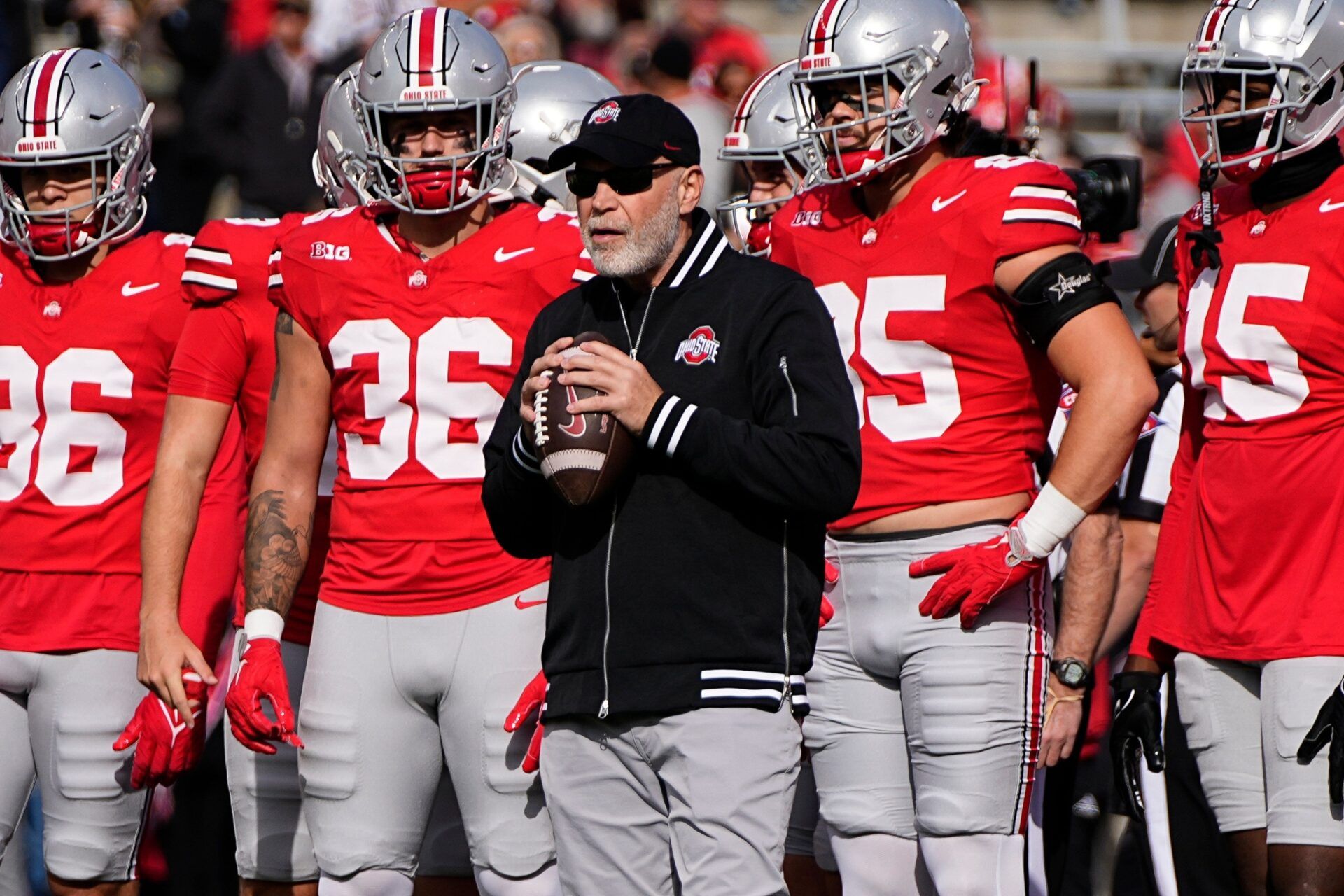
Ohio State finds itself at the center of a brewing controversy that cuts deeper than typical coaching changes. When defensive coordinator Jim Knowles bolted for Penn State, the Buckeyes scrambled to replace him with Matt Patricia, a move that has left fans, analysts, and even insiders questioning the program’s decision-making process.
The hire represents more than just a coaching change — it’s sparked doubts about Ohio State’s ability to navigate crucial personnel decisions when the stakes are highest.
Why Did Ohio State Choose Matt Patricia Over Proven College Coordinators?
Ohio State’s offseason was upended by the abrupt departure of defensive coordinator Jim Knowles to Penn State. The Buckeyes’ swift move to name Matt Patricia as his replacement has been met with more skepticism than confidence across the college football landscape.
Despite Patricia’s experience coaching in six Super Bowls and guiding NFL defenses to top-tier status, his head coaching stint with the Detroit Lions left many unconvinced. A dismal 13-29-1 record in Detroit casts a long shadow over his return to a significant role, this time at the college level.
On the latest episode of “The Solid Verbal” podcast, analysts Ty Hildenbrandt and Dan Rubenstein addressed the widespread unease surrounding the hire.
“Then of course because of the mini fallout, whatever you want to call it, with Jim Knowles, he leaves, departs for Penn State,” Hildenbrandt said, setting the stage for the discussion. “In steps Matt Patricia.” Rubenstein didn’t hold back in his reaction: “Underwhelmed but open to success.”
Patricia’s lack of recent college experience has become a central point of criticism. The transition from NFL schemes to college recruiting, player development, and the unique challenges of amateur athletics presents a steep learning curve that many question whether Patricia can navigate successfully.
“Matt Patricia with no relevant college experience recently, if at all, steps in after it not going well in the NFL,” said Hildenbrandt, highlighting the experimental nature of the transition. “I don’t really get the hire,” he later added, voicing what many in the college football community are thinking.
How Will Simultaneous Offensive Changes Affect Ohio State’s Championship Hopes?
The defensive coordinator change comes at a particularly challenging time, as Ohio State is also managing significant shifts on the offensive side of the ball. Brian Hartline is stepping into a more prominent role, but his track record raises additional concerns about the program’s direction.
“The last time we saw Brian Hartline call offense, they were about 14 points per game worse than they had been the previous year,” Rubenstein noted, adding another layer of uncertainty to an already complex situation.
The timing couldn’t be worse for Ohio State, which appeared to have found the perfect formula with its previous coaching staff. Jim Knowles’ impact in the 2024-25 season remains fresh in the minds of Buckeyes fans, particularly his ability to transform the defense into a dominant unit.
“It feels like an obvious step down to go Hartline and Patricia,” Hildenbrandt said, capturing the sentiment that many feel about the simultaneous changes. “The way Jim Knowles and Chip Kelly teamed up last year… it just feels like an obvious step down.”
Knowles, who took full control after the Oregon game in 2024, helped mold the Buckeyes’ defense into a nearly unstoppable force, filled with NFL-level talent at every level.
Can Elite Talent Overcome Questionable Coaching Decisions?
Despite the coaching uncertainty, Ohio State remains a favorite in Las Vegas for the upcoming season. The roster, stacked with elite recruits and returning experience, provides what many see as a built-in safety net that could minimize the impact of coaching changes.
“There is just so much there that there is a safety net,” said Rubenstein, acknowledging the exceptional talent level that Ohio State continues to attract and develop.
However, even with talent in abundance, the Patricia hire has failed to inspire confidence among those who follow the program closely. The combination of his NFL struggles and unfamiliarity with college football creates a situation where Ohio State appears to be gambling with championship aspirations.
“The Patricia thing left me relatively uninspired as well,” admitted Hildenbrandt, reflecting the measured pessimism that has emerged around the hire.
The concern extends beyond individual coaching performance to questions about the program’s overall judgment.
In an era where college football programs must make increasingly complex decisions about staffing, recruiting, and roster management, Ohio State’s handling of these transitions has raised eyebrows about whether the administration fully grasps the stakes involved.
The lingering worry isn’t about the players on the field, who remain among the most talented in college football. Instead, it’s about the judgment behind the scenes and whether Ohio State’s decision-makers can match the excellence that fans have come to expect from one of the sport’s premier programs.
