
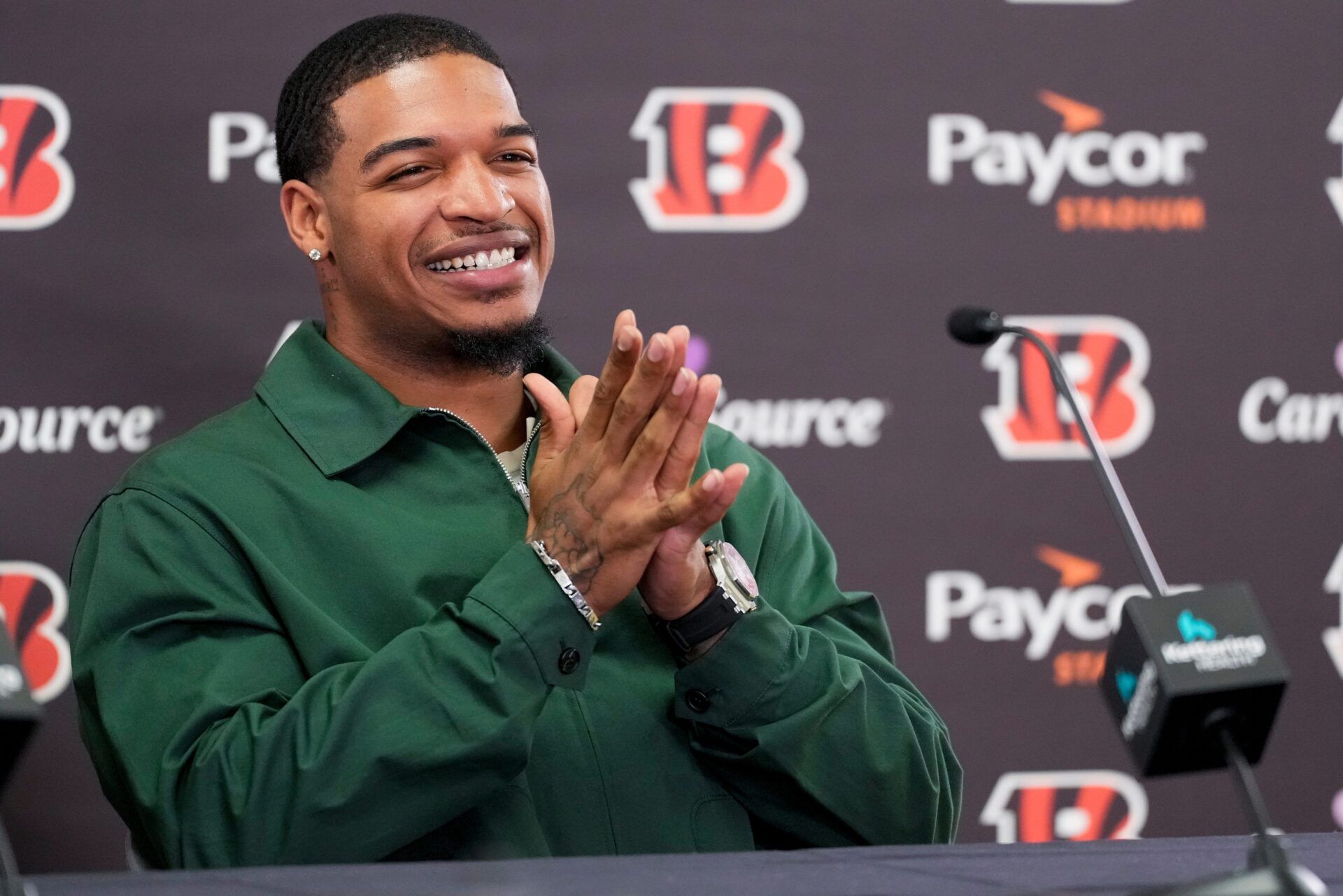
Most NFL wide receivers run from the diva label, but Ja’Marr Chase runs straight towards it! The Cincinnati Bengals star doesn’t just accept the stereotype that has followed his position for decades; he embraces it completely. For old-school coaches, fans, and media, embracing new ideas does not come without resistance.

Why Does Ja’Marr Chase Embrace the ‘Diva Wide Receiver’ Label?
Some of those generalizations are helpful. For example, the thought that tight ends from Iowa will do well in the league pans out. Dallas Clark, George Kittle, Sam LaPorta, T.J. Hockenson, Noah Fant, and Erick Alt, just to name a few. However, a position group rarely shows pride in a negative stereotype.
When Hall of Famer Terrell Owens announced his self-affinity to the world, the diva wideout concept became etched in football lore. Granted, before Owens’ thoughts, wide receivers displayed behavior that raised more than a few eyebrows.
Those behaviors became the bane of the media and parts of fan bases that pined for the days of boring, unemotional play. If a receiver doesn’t display petulant behaviors daily, writers will compose entire verticals praising the athlete. Meanwhile, the Bengals star chooses to walk an alternative path.
View this post on Instagram
Chase laid out his philosophy with typical bluntness: “We all f**kin’ divas, excuse my profanity. We’re supposed to be. We’re not running backs. We don’t just get the ball off a handoff. We gotta depend on a quarterback throwing the ball, on the timing. If you’re a great receiver, you gotta worry about beating a double team and getting gameplanned against you.”
How Does Chase’s Performance Back Up His Bold Words?
Chase’s stellar play backs up his bold talk. With 395 catches, 5,425 receiving yards, and 46 touchdowns in 62 games, the LSU product ranks among the elite in his position group. The numbers helped the Bengals reach the Super Bowl, but what has happened since?
When a wideout averages 8.8 drops per season, it seems more time should be spent on concentration catches than being a diva. To his credit, Chase’s play puts the team in a position to win. Still, the self-described diva’s contract helps constrain the team, making it uneven.
Defensive end Trey Hendrickson, a potent top-five pass rusher in the game, wants a raise. He’s earned it after tallying 35 sacks in the last two seasons. When Cleveland Browns edge rusher Myles Garrett reset the pay scale, making $40 million annually, Hendrickson made half of that. That diva-like contract could haunt Cincinnati in their pursuit of a Super Bowl.
No one should begrudge Chase’s success or wealth; he earned it through hard work and effort. At the same time, what look and perception does this give to a locker room without its defensive leader?
