
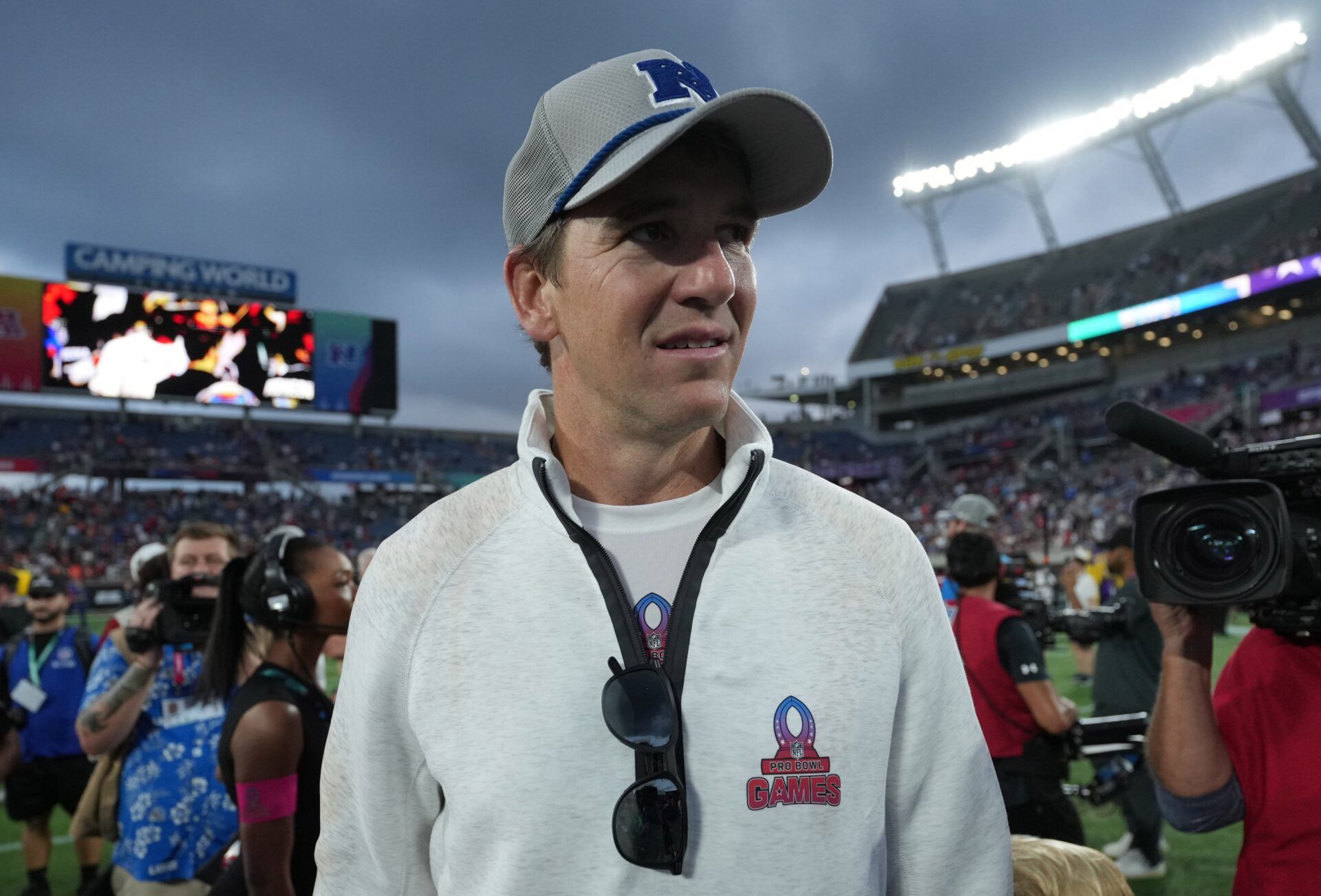
Eli Manning built a Hall of Fame legacy in New York, leading the Giants to two Super Bowl titles and holding every major franchise passing record. But when it comes to owning a piece of the team that made him famous, the former quarterback has officially walked away from the table. The reason? Even for a two-time Super Bowl MVP, the Giants have simply become too expensive to buy into.
Why Did Eli Manning Walk Away From Giants Ownership?
The Giants, currently valued between $7.3 and $7.85 billion, are too expensive for Manning to hold a stake in. The financial reality hit hard when Manning looked at the numbers.
“Basically, it’s too expensive for me,” Manning told CNBC Sport. “These numbers are getting very big. … A 1% stake of something valued at $10 billion — it turns into a very big number.
“I love the Giants, and I think it is deserving of that valuation. There will be people that want to go for it, and I was kind of along for the ride.”
Beyond the sticker shock, Manning faced another major obstacle. His current broadcasting career with ESPN would have created serious conflicts of interest if he became a team owner.
“It really was a matter of some complications with the fact that I’m doing broadcasting; I wouldn’t be able to talk to the players,” he said. “I coach in the Pro Bowl. I do a high school football camp where college guys come.
“There would be a lot of conflicts and it was going to affect my day job, so I kind of had to pull out of the Giants deal.”
How Much Would a Giants Ownership Stake Actually Cost?
The Giants’ ownership structure tells the story of how NFL franchises have exploded in value. When Bob Tisch purchased 50 percent of the team in 1991, he paid $75 million. Today, that same stake would be worth billions.
Currently, 50 percent of the franchise is owned by both the Mara and Tisch families. The team was founded in 1925 for just $500, which equals approximately $9,200 in today’s money.
This February, the Giants announced they would be putting limited 10 percent stakes in ownership of the team up for sale. Even those smaller pieces would cost hundreds of millions of dollars at current valuations.
For Manning, who earned over $250 million during his playing career, the math simply doesn’t work. A 1% stake in a $10 billion franchise means writing a check for $100 million, and that’s before considering the ongoing financial commitments that come with NFL ownership.
Manning’s decision reflects the reality facing many former players who dream of owning their old teams. As franchise values continue to skyrocket, even the most successful athletes find themselves priced out of ownership opportunities. The quarterback who once delivered two of the biggest upsets in Super Bowl history now faces his own David vs. Goliath moment, except this time, the numbers are just too big to overcome.
