
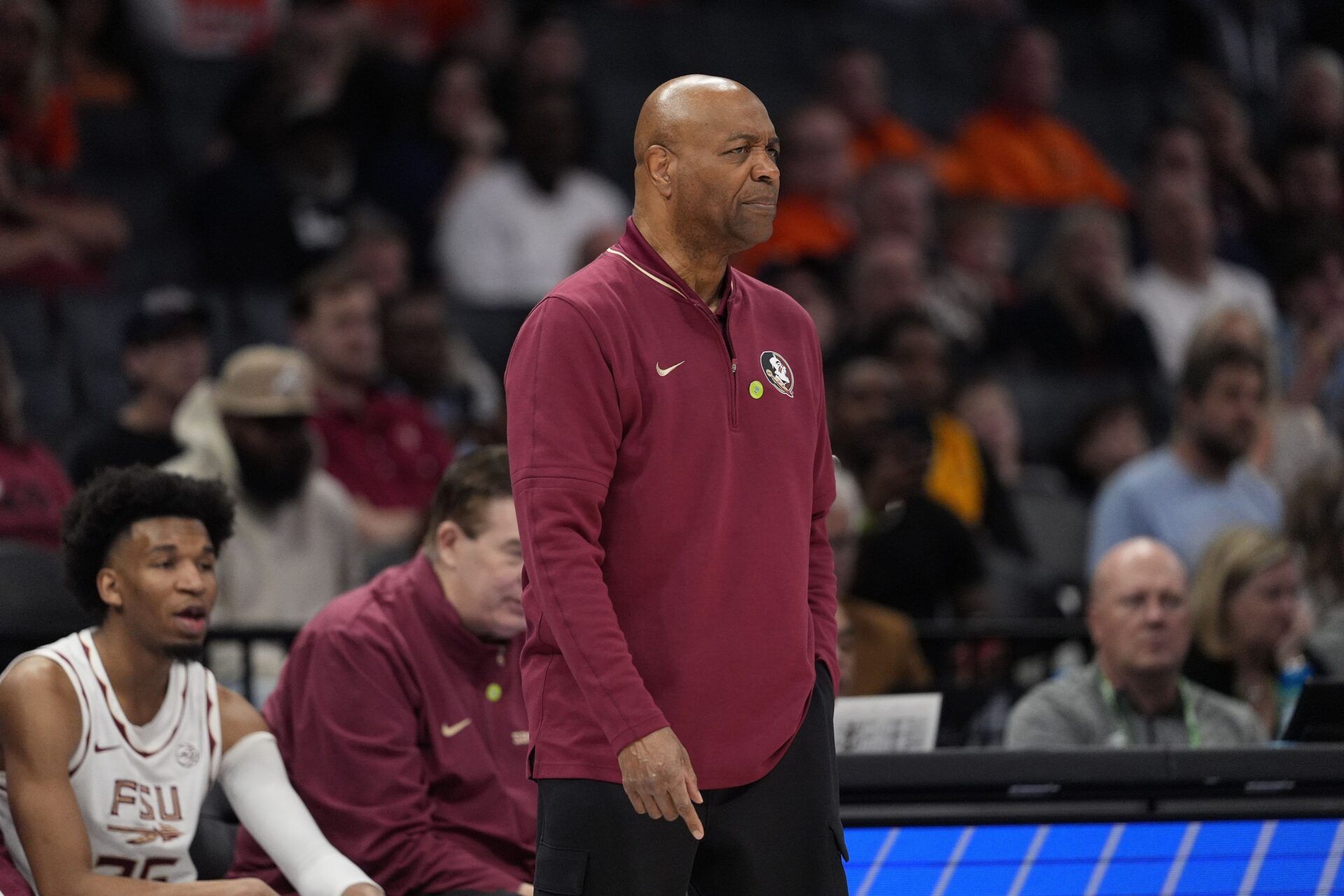
Former Florida State basketball coach Leonard Hamilton’s legal troubles continue after a Leon County Circuit Court judge denied his motion to dismiss a $1.5 million NIL lawsuit. Six former Seminoles players are suing Hamilton over alleged unfulfilled promises of $250,000 each in NIL payments.
The court’s decision keeps the case alive, with a tentative trial date set for August 2026. Hamilton now faces continued scrutiny over his alleged verbal commitments to players during the 2023-24 season. With this case set to move forward, what does this mean for the future of NIL deals in college sports?
What Led to Leonard Hamilton’s NIL Lawsuit Denial?
On Monday, July 7, reporter Matt Baker of The Athletic broke the news on social media, posting that the Leon County judge denied Hamilton’s motion to dismiss the NIL-related lawsuit. The post revealed that fact-finding will occur first, followed by mediation before the tentative August 2026 trial date.
A Leon County judge just denied former Florida State men’s basketball coach Leonard Hamilton’s motion to dismiss an NIL-related lawsuit against him. In the hearing, they set a tentative trial date of August 2026. Some fact-finding happening first, then mediation.
— Matt Baker (@MattBakerCFB) July 7, 2025
The lawsuit centers on allegations from six former Florida State players who competed during the 2023-24 season: Darin Green Jr., De’Ante Green, Cam’Ron Fletcher, Josh Nickelberry, Primo Spears, and Jalen Warley.
Each player claims Hamilton personally promised them $250,000 in NIL payments from his “business partners.”
Hamilton’s defense team argued that the case should be dismissed under Florida’s Statute of Frauds, which typically requires written contracts for agreements exceeding $500. However, the judge’s ruling suggests the oral nature of the alleged promises may not automatically invalidate the players’ claims.
The players’ attorney, Darren Heitner, has presented text messages as evidence of Hamilton’s promises. According to the complaint, Hamilton first made these commitments during an April 2023 team meeting and then repeated them during a February 2024 practice boycott incident when players threatened to skip the Duke game.
Hamilton allegedly promised payments the following week after that confrontation.
Despite these promises, no payments materialized when the 2023-24 season ended in March 2024. Four players entered the transfer portal due to growing frustration over the unfulfilled commitments, and all six players eventually retained attorney Heitner in October 2024.
How Does the NCAA Settlement Impact Hamilton’s Case?
This lawsuit comes as major changes reshape college athletics. The NCAA’s historic $2.8 billion House v. NCAA settlement received final approval in June, creating a new system where schools can directly pay athletes starting July 1.
The settlement allows schools to pay athletes directly up to about $20.5 million each year across all sports. These new rules could change how courts handle NIL disputes from the earlier chaotic period of college sports payments when coaches and boosters operated in a legal gray area.
MORE NIL HEADLINES: NBA Center Moussa Diabaté Voices Concern Over NIL-Fueled Pay Disparity Between College Players and NBA Role-Players
Hamilton resigned in February 2025, ending his 23-year tenure at Florida State. While he cited personal reasons, the timing of the lawsuit raised questions about whether the scandal influenced his decision to step down. Hamilton compiled a 469-280 record with the Seminoles, including 10 NCAA Tournament appearances.
Florida State maintains that its internal review found “no unfulfilled commitments” by the university or its NIL collective, Rising Spear. Additionally, the school has distanced itself from Hamilton’s alleged personal promises, though the players might attempt to add the university as a defendant during the discovery process.
The case serves as a cautionary tale for sports programs navigating NIL challenges. With the discovery phase approaching, more details about verbal agreements and booster conversations may emerge, potentially establishing new precedents for future NIL disputes nationwide. The August 2026 trial date gives both sides nearly a year to prepare their cases and gather evidence.
