The backbone of any great NFL offense is its offensive line. While quarterbacks and skill players dominate the highlight reels, the success of every play starts up front. Their ability to protect the quarterback and open running lanes is a key driver of team performance.
Evaluating offensive line play, however, is more art than science. Unlike positions where individual stats tell the story, line play is deeply contextual and often subjective. That’s why we developed the OL+ metric, which combines pressure and sack rate stats with time-to-throw data to build a profile of an offensive line’s performance in various situations.
We then sprinkle in ESPN’s pass block win rate (PBWR) and run block win rate (RBWR) stats to provide a comprehensive overview of these units’ performance. By combining these elements, OL+ offers a balanced, data-driven ranking that respects the numbers and the nuances of offensive line play.
Here are the 10 highest-graded NFL offensive lines since 2019.
10) 2021 Baltimore Ravens
PFSN OL+ Grade: 88.39 (B+)
The 2021 Baltimore Ravens’ offensive line finished inside the top 10 in OL+ despite having its fair share of ups and downs. The unit, which Kevin Zeitler and Bradley Bozeman anchored, gave Lamar Jackson and the quarterbacks an average time to throw of 3.86 seconds. That mark was better than most teams, but it highlights Jackson’s tendency to extend plays and go off-script.
The line struggled to consistently keep defenders at bay, as evidenced by a quick pressure rate of 12.9% and a sack rate of 8.5%. Pass protection was a persistent concern, as the Ravens allowed 57 sacks, the second-most in the NFL in 2021, trailing only the Chicago Bears.
This inconsistency was partly a result of injuries and frequent lineup changes, but it also highlighted issues with individual pass-blocking matchups. Still, Baltimore ranked in the top 10 in ESPN’s pass block win rate and run block win rate rankings.
On the ground, Baltimore’s offensive line was more effective. The team averaged 4.8 yards per carry, ranking fifth in the NFL, per Pro Football Reference. The Ravens also racked up 2,479 rushing yards, good for third. Their 1.26 adjusted yards before contact per designed rush reflected the line’s ability to create space.
Those aren’t elite numbers, but they show that blockers generated initial push even with a rotating cast of running backs. The Ravens were capable of flashes of dominance in the run game but were hampered by instability and pass protection breakdowns.
9) 2022 Cleveland Browns
PFSN OL+ Grade: 88.45 (B+)
The 2022 Cleveland Browns’ offensive line was central to the team’s offensive identity. Though Cleveland won just seven games that year, they were powered by a front line that included two Pro Bowl guards, Joel Bitonio and Wyatt Teller.
With an average time to throw of 3.99 seconds, quarterbacks Jacoby Brissett and Deshaun Watson had one of the longest pockets in the league, a testament to the line’s ability to hold blocks and allow plays to develop. This extended time, however, came with risk: the unit posted a quick pressure rate of 11.5% and a sack rate of 7.5%.
The Browns allowed 44 sacks over the season in pass protection, tying them for the 11th-most in the NFL. While not among the league’s worst, this total was higher than expected for a group with multiple Pro Bowl-caliber linemen.
The run game remained a clear strength. Cleveland averaged 4.7 yards per carry, ranking them just outside the top 10 in the NFL. Nick Chubb led the way with 1,525 yards, and the team finished with 2,490 rushing yards.
However, their 0.82 adjusted yards before contact per designed rush indicated that while the line opened some holes, much of the yardage was earned after contact.
The overall performance reflected a line that could dominate in stretches but had occasional lapses, especially in pass protection against aggressive defenses.
8) 2022 Tampa Bay Buccaneers
PFSN OL+ Grade: 88.71 (B+)
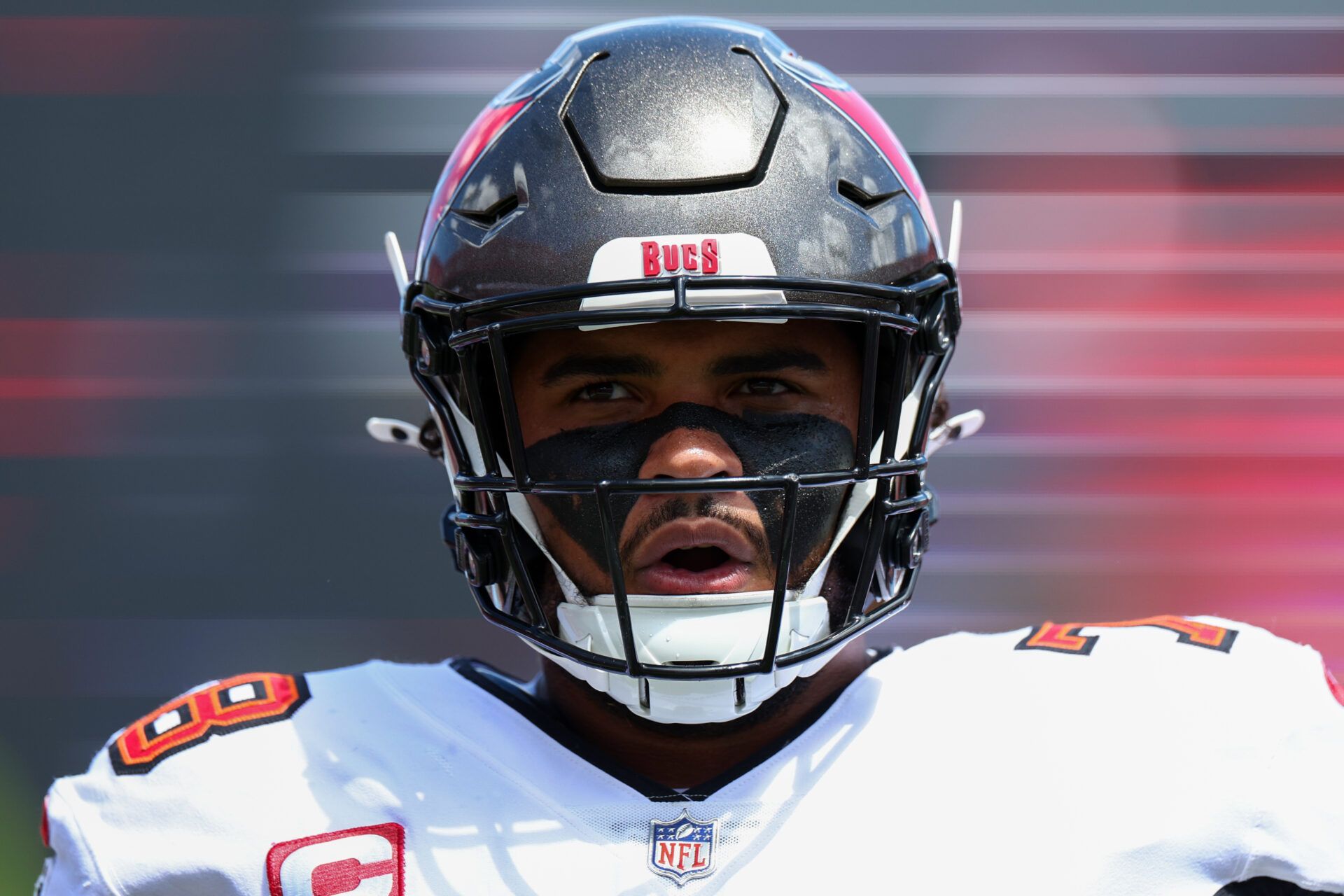
The 2022 Buccaneers offensive line excelled in pass protection, playing a pivotal role in keeping Tom Brady upright throughout the season. Spearheaded by Pro Bowl tackle Tristan Wirfs, this was a cohesive unit.
look at the movement Tristan Wirfs (#78) gets. Moves the defender over a whole gap. pic.twitter.com/IlwYFg8SOl
— Nate Tice (@Nate_Tice) August 27, 2023
With an average time to throw of 3.01 seconds and a quick pressure rate of just 10.3%, Tampa Bay’s blockers consistently neutralized opposing pass rushes. The Buccaneers’ 2.8% sack rate was among the lowest in the league, and they allowed only 22 sacks all year, the fewest of any team, according to NFL.com. They also ranked in the top five in pass block win rate.
Despite their pass-blocking prowess, the Buccaneers struggled to generate movement in the run game. The team averaged just 3.4 yards per rush, ranking last in the NFL, and finished 31st in run block win rate. Their 0.93 adjusted yards before contact per designed rush also indicated limited push at the line of scrimmage.
Tampa Bay’s inability to sustain a consistent ground attack made this offense much less formidable than the group that won the Super Bowl two seasons prior.
7) 2021 Dallas Cowboys
PFSN OL+ Grade: 89.6 (B+)
The 2021 Dallas Cowboys offensive line was a driving force behind one of the league’s most productive offenses. With Mike McCarthy calling plays, Dallas finished first in the NFL in scoring (31.2 PPG) and yards (407.0 YPG).
Anchored by Pro Bowlers Tyron Smith and Zack Martin, the Cowboys’ offensive line averaged 3.44 seconds to throw, giving Dak Prescott ample time to operate and helping the team put up elite offensive numbers.
However, the unit’s quick pressure rate of 15.7% was higher than ideal, indicating that while they excelled at sustaining blocks, they sometimes struggled against faster pass-rush threats. Despite these challenges, the Cowboys allowed just 33 sacks, ranking among the better teams in the league and posting a sack rate of just 4.9%.
FREE: Predict the Upcoming Season With the PFSN NFL Playoff Predictor
The run game also benefited from strong offensive line play. Dallas averaged 4.5 yards per rush, ranking eighth in the NFL, and generated 2,119 rushing yards (9th). The adjusted yards before contact per designed rush was 1.15, highlighting the line’s ability to create space at the point of attack. The Cowboys also finished 6th in run block win rate.
The push up front helped Ezekiel Elliott and Tony Pollard combine for over 1,700 rushing yards.
6) 2020 New Orleans Saints
PFSN OL+ Grade: 89.8 (B+)
The offensive line was a cornerstone of the New Orleans Saints’ high-powered offense, which posted a 12-4 record in 2020. The unit was a formidable group that featured two Pro Bowlers in Terron Armstead and Andrus Peat, as well as Ryan Ramczyk, Erik McCoy, and Cesar Ruiz.
The Saints’ offensive line gave Drew Brees and Taysom Hill ample time in the pocket, with an average time to throw of 3.28 seconds. That stability helped New Orleans finish fifth in scoring (30.1 PPG) that year.
Although New Orleans’ quick pressure rate stood at 14.2%, the unit limited the overall damage, allowing just 29 sacks and a 5.3% sack rate, which was among the league’s best.
In the run game, the Saints averaged 4.6 yards per carry and finished sixth in rushing yards per game (141.6). Their 1.27 adjusted yards before contact per designed rush highlight the line’s ability to consistently create space for Alvin Kamara, Latavius Murray, and Hill.
The unit helped Kamara post a career year, with 1,688 scrimmage yards and an NFL-leading 21 touchdowns.
5) 2024 Atlanta Falcons
PFSN OL+ Grade: 89.99 (A-)
The Atlanta Falcons didn’t make the playoffs in 2024, but their offensive line was undoubtedly among the league’s best. The group featured Pro Bowl guard Chris Lindstrom, center Drew Dalman, and tackle Jake Matthews.
Quarterbacks Kirk Cousins and Michael Penix Jr. did a solid job of keeping the offense on schedule and getting the ball out quickly, but that doesn’t take away from the job the big guys up front did all year. The Falcons finished with a 5.4% sack rate and 32% pressure rate.
Atlanta’s pass-blocking numbers against the blitz were exceptional, ranking fifth in pressure rate (36.1%) and first in sack rate (2.1%). Those numbers were less impressive when opponents weren’t blitzing, as the unit ranked 10th in pressure rate (30.6%) and 18th in sack rate (6.5%).
The run-blocking stats had quite a vast contrast. The Falcons ranked first in the league in yards before contact per rush (1.17) but 20th in run block win rate. It helped to have a dynamic and elusive running back like Bijan Robinson.
4) 2022 Pittsburgh Steelers
PFSN OL+ Grade: 90.02 (A-)
The Pittsburgh Steelers’ offensive line emerged as one of the NFL’s most improved units in 2022, providing a stable foundation for an offense transitioning post-Ben Roethlisberger.
Pittsburgh’s offensive line didn’t have any Pro Bowlers, and it was a young group, with no starters older than 26. However, they were steady, with Dan Moore, Kevin Dotson, Mason Cole, James Daniels, and Chukwuma Okorafor each starting 17 games.
A quarterback group of Kenny Pickett and Mitch Trubisky was hardly exciting, but the front line gave them plenty of room to operate. They finished with an average time to throw of 3.69 seconds and a quick pressure rate of just 10.6%. Still, they had a 6.2% sack rate and allowed 38 sacks, ranking them near the middle of the league.
Run blocking showed steady improvement, with the Steelers averaging 121.9 yards per game and recording 16 rushing touchdowns, ranking 16th and 11th in the league, respectively. The offensive line could generate initial push, but often relied on running backs Najee Harris and Jaylen Warren to create extra yardage after contact.
Overall, the Steelers were a bottom-10 offense, but the offensive line’s performance was a pleasant surprise.
3) 2024 Tampa Bay Buccaneers
PFSN OL+ Grade: 92.45 (A-)
The 2024 Buccaneers offensive line was a dominant, balanced force that helped propel Tampa Bay to its fourth straight NFC South title. This talented group was led by two-time All-Pro Tristan Wirfs, guards Ben Bredeson and Cody Mauch, tackle Luke Goedeke, and 2024 first-rounder Graham Barton.
Tampa Bay’s pressure rate (24.4%) was the lowest in the NFL, with impressive numbers whether facing the blitz or not. Additionally, the Buccaneers averaged 1.05 yards before contact per rush and ranked fifth and sixth, respectively, when it comes to pass and run block win rates.
FREE: Cut Players, Restructure Contracts, and Re-Sign Your Superstars With the NFL Offseason Manager
No offensive tackle graded better in pass protection than Tristan Wirfs in pass block win rate (96%). The offense was predicated on a quick time to throw, which took the strain off the line to block for longer stretches. The Bucs also boasted one of the league’s top rushing attacks, averaging 5.3 yards per carry (3rd in the NFL).
Tampa Bay’s offensive line improved in 2024 and helped Baker Mayfield enjoy the most productive season of his career. Bucky Irving also led all rookies in rushing.
2) 2021 Tampa Bay Buccaneers
PFSN OL+ Grade: 92.98 (A-)
The Buccaneers crack the top 10 again, with their third entry on this list. That’s a testament to the coaching staff and the organization’s ability to find and develop offensive line talent.
Tampa Bay’s 2021 offensive line was a model of consistency and efficiency, playing a crucial role in the team’s 13-4 finish that year. The Buccaneers had one of the NFL’s most potent offenses, ranking second in scoring (30.0 PPG) and yards (405.9 YPG).
With an average time to throw of 2.96 seconds, the line allowed Tom Brady to execute the quick-strike passing game that defined the offense. Their quick pressure rate of 13.3% and a non-blitz pressure rate of 20.6% were among the league’s better marks. Most importantly, the Bucs posted a sack rate of just 3.1%, the lowest in the NFL, and allowed only 23 sacks all season.
Even though Tampa Bay wasn’t a run-heavy team (31st in attempts), run blocking wasn’t necessarily a weakness. The Buccaneers averaged 4.3 yards per rush (15th) and recorded 18 touchdowns on the ground (9th). Getting that push up front was vital in keeping the offense balanced and effective, especially in short-yardage and red zone situations.
The group was headlined by three Pro Bowlers: Wirfs, Ryan Jensen, and Ali Marpet. It also included Donovan Smith and Alex Cappa, who each started every game.
1) 2019 Baltimore Ravens
PFSN OL+ Grade: 98.41 (A+)
The 2019 Ravens offensive line was the engine of one of the most prolific offenses in NFL history. Baltimore posted a 14-2 record, led the league in scoring (33.2 PPG), and finished second in yards (407.5 YPG).
This was the first play from scrimmage of the Ravens’ record-breaking 2019 season: Mark Ingram, running over a Dolphins defender and going for 40 yards.
Told you everything you needed to know about that offense, and about Ingram.pic.twitter.com/jLYfwLCHDN
— Jonas Shaffer (@jonas_shaffer) January 19, 2021
The line’s success was anchored by three Pro Bowlers: left tackle Ronnie Stanley, right tackle Orlando Brown Jr., and legendary right guard Marshal Yanda. The unit’s physicality allowed Baltimore to lead the league in first downs and red zone efficiency.
The Ravens’ offensive line was unmatched in the run game. Baltimore set an NFL record with 3,296 rushing yards, averaging a staggering 5.5 yards per carry and producing 21 rushing touchdowns.
The Ravens didn’t throw the ball nearly as often as they ran it, but Lamar Jackson had plenty of time to throw (3.89 seconds) when they did. The offensive line allowed a solid 12.6% quick pressure rate and 6.0% sack rate.
Jackson put together a historic MVP season in 2019, but as sensational as he was, Baltimore’s offensive line also deserves plenty of praise.