
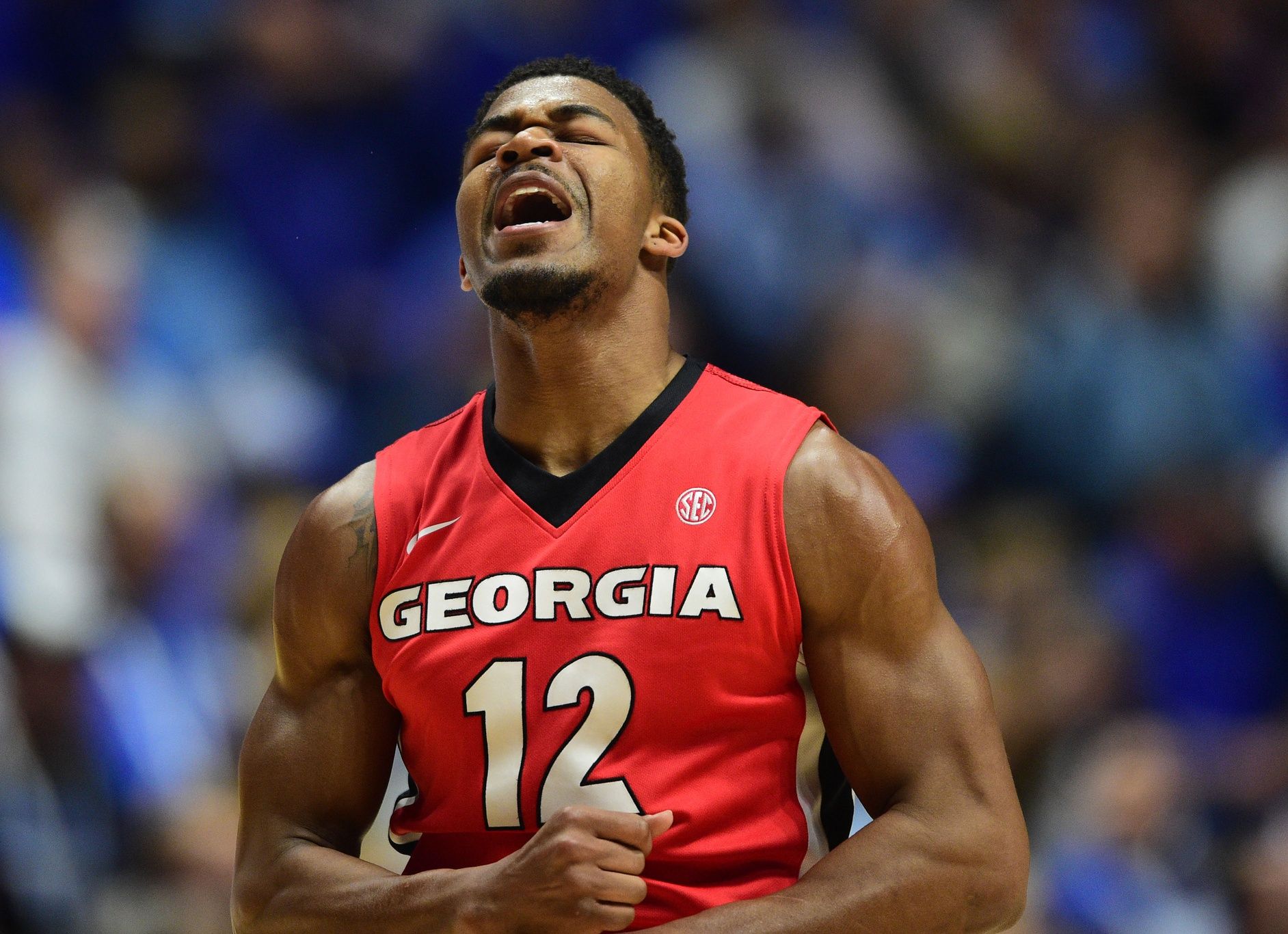
College sports have changed a lot in the last few years. Now, athletes can earn money from their NIL. Former Georgia Bulldogs basketball player Kenny Gaines recently talked about how this new system is not as simple as it seems.
While some players make a lot of money, others face tough choices and new challenges. Understanding these changes helps us see how college sports are different today and why it matters for players, coaches, and fans.
Ex-Georgia Hooper Kenny Gaines Shares Experiences With NIL Changes
Kenny Gaines, who played for the Georgia Bulldogs from 2012-2016, spoke about the big changes in college sports on the “Dawg Talk” podcast. He was joined by former teammates Marcus Thornton, J Mac, Kentavious Caldwell-Pope, and NBA player Jabari Smith Jr.
They talked about how college athletes now must think about making money and building their personal brand, not just playing basketball. Gaines said a coach once told him that today’s NIL world is much different from what it was just a few years ago.
Smith, who started college right when NIL rules changed, said, “You missed the NIL era. Mine was the first year of it, but it wasn’t nowhere [sic] near like this.” Smith explained that when he played, he had a car deal, but the deals now are much bigger and more common.
Smith also pointed out that players need to be good if they want to make money. “If you’re not good, you’re not making no [sic] money,” he said. This means that how well you play and how popular you are both matter a lot now.
Thornton added that players today expect to get six-figure deals even before they prove themselves. “Three hundred thousand is like low. That’s what they asking for… and that’s the water boy.”
This shows how much money some college athletes can get now, even if they are not the top stars. According to ESPN, some top college basketball teams spend over $10 million on NIL deals for their players. Some athletes have earned more than $1 million in a single year, especially at big schools.
During the podcast, the group talked about how some coaches struggle to get their players to promote products. One assistant coach told Gaines she could not get her players to do ads because “they’re getting 300 out the gate.” Gaines was surprised by this, saying, “I was like, say listen, I won’t be here.”
Thornton also said, “An eight-point per game player is getting almost a million dollars in college basketball right now.” While not every player earns that much, it is true that NIL deals have grown quickly, and some players who are not superstars can still get big paydays.
RELATED: How EA Sports College Football 2025 Paved the Way for a New College Basketball Game
For Gaines, these changes were hard to believe. He felt that the loyalty and hard work that used to be important in college basketball have been replaced by players looking for the best money.
“Dude, you my age… but still went to the transfer portal. Who got the bag? That’s what it is,” he said. Many players now choose schools that offer the most money, not just the best fit for them.
Since 2021, when the NCAA allowed NIL deals, the number of players transferring to new schools has gone up a lot. In 2025, more than 2,000 men’s college basketball players entered the transfer portal, which is about 35 percent of all Division I players. Many of them are looking for better deals and more chances to play.
The NIL policy was meant to help student-athletes, but it has also made college sports more competitive and focused on money. For former players like Gaines, the game looks very different now. Players, coaches, and fans all have to adjust to this new world, where talent, popularity, and business are all connected.
