
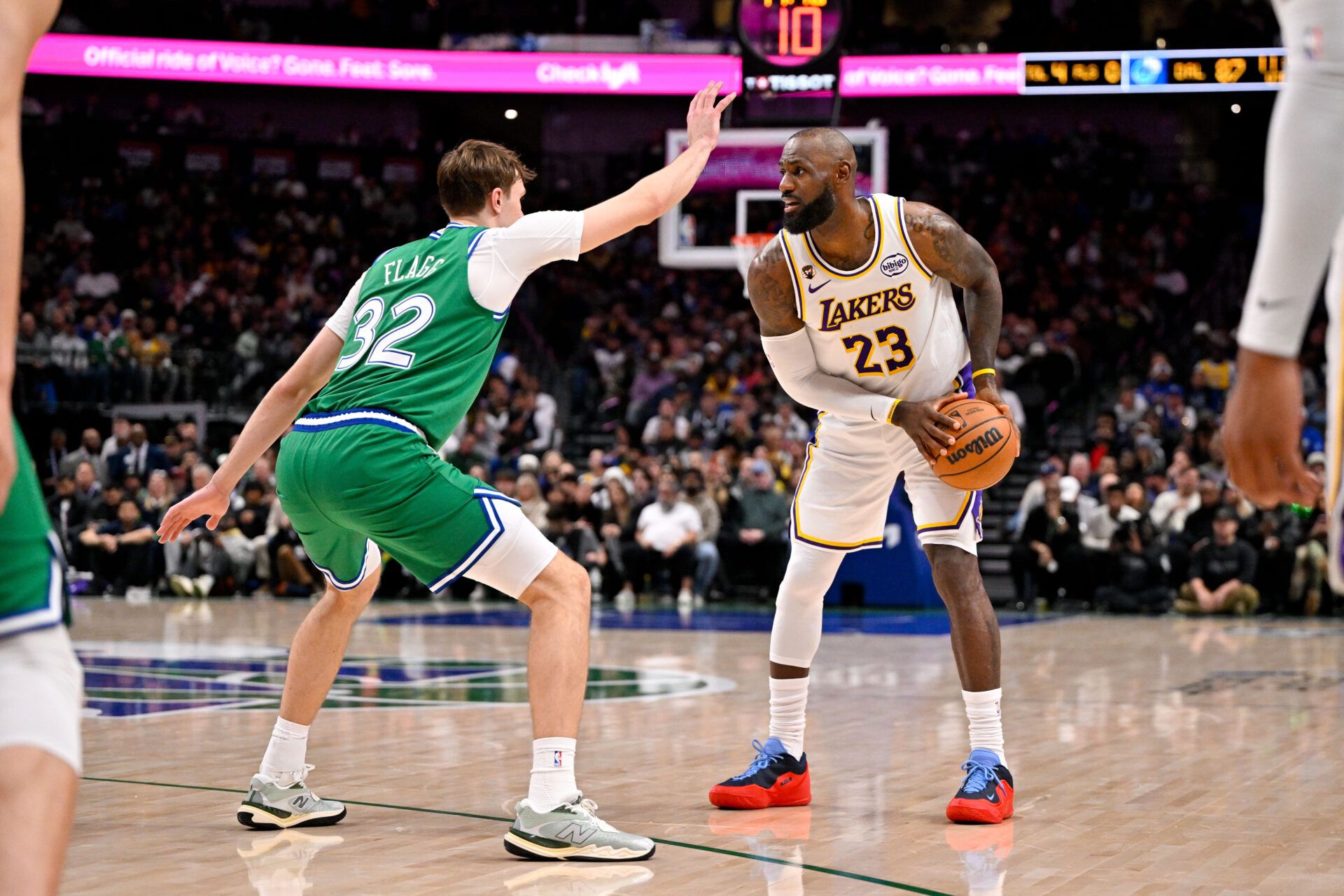
A viral graphic is making the rounds on social media this week, sparking a loaded conversation around the latest rookie sensation, Cooper Flagg. The comparison? None other than LeBron James.
While it’s far too early to place Flagg in the same historical category as one of the greatest players of all time, the statistical parallels through their teenage seasons are difficult to ignore. And that’s exactly why the debate has gained traction.

Cooper Flagg on “The LeBron Test”
So, whenever any new teenage forward enters the league, one name inevitably enters the conversation: Burn James, the King. Earlier, it was Victor Wembanyama, and others before him. This time, it is Cooper Flagg. But this time, the stylistic comparisons are different.
While nobody suggests Flagg is already matching James’ career, it is indeed reckless to think of it. But, in isolation, both their rookie year similarities are too hard to dismiss.
Through his first NBA season at 19, Flagg is averaging:
- 20.4 points
- 6.6 rebounds
- 4.1 assists
- 48% shooting from the field
- 34 minutes per game
For context, James averaged:
- 20.2 points
- 5.5 rebounds
- 5.7 assists
- 40% shooting from the field
- 39.9 minutes per game
The surface-level similarity is obvious: both cleared the 20-point threshold before turning 20. That alone places them in rare territory.
What stands out even more is efficiency. Flagg is scoring at a higher percentage while playing fewer minutes, suggesting a more refined shot profile early in his development.
James immediately carried a massive offensive burden. Flagg’s production has come within a more modern offensive structure, but the end result, i.e., elite teenage scoring, remains comparable.
All-Around Statistical Impact
The parallels extend beyond points.
Flagg is contributing around 6–7 rebounds and over four assists per game. James posted 5.5 rebounds and nearly six assists as a rookie. Both showed the ability to affect multiple phases of the game rather than functioning as pure scorers.
ALSO READ: LeBron James’ Circus Shot Went Viral In Mavs-Lakers Game
Each player demonstrated advanced feel for timing, knowing when to attack, when to move the ball, and when to crash the glass. For teenagers adjusting to NBA speed and physicality, that type of composure is uncommon.
Physical Readiness and Versatility: Cooper Flagg vs. LeBron James
One of the biggest similarities lies in body control and versatility.
James entered the league with an NBA-ready frame and the ability to absorb contact immediately. Flagg, while built differently, has shown comparable physical readiness. He welcomes contact in the paint, finishes through traffic, and defends multiple positions without looking overmatched.
Defensively, both players displayed instincts beyond their age. James was never just an offensive talent; his anticipation and chase-down blocks quickly became part of his identity.
Flagg has shown similar engagement on the defensive end. He can easily switch onto guards, protecting the rim in help situations, and using length to disrupt passing lanes.
Both were handed real responsibility immediately. James was the focal point of Cleveland’s rebuild. Cleveland struggled early in his rookie year before he found rhythm, culminating in a Rookie of the Year campaign that immediately validated the hype.
Flagg, despite playing in a different roster structure, has been trusted with high-leverage minutes and late-game decisions from the start of his career.
James famously improved as his rookie season progressed, becoming more assertive and efficient. Flagg’s growth curve has followed a similar arc, with his production increasing as his role became clearer.
Flagg’s early stretch showed natural adjustment pains. But once Dallas shifted his role off primary initiation duties and allowed him to attack downhill more consistently, his production spiked.
Since that adjustment, Flagg has averaged over 20 points per game while maintaining strong efficiency. He has also demonstrated improved decision-making as a secondary playmaker, rather than forcing offense against set defenses.
So, naturally, what fuels the comparison isn’t just points or stats alone. It is also their individual levels of control on the court.
Flagg has shown the ability to influence both ends of the floor. He is popular for switching defensively, rebounding in traffic, pushing pace, and attacking mismatches without hesitation. That two-way presence is what separated James from typical teenage scorers in 2003.
League observers have noted the same composure in Flagg. He rarely looks overwhelmed. His physical profile allows him to absorb contact, and his defensive instincts keep him engaged even when his shot isn’t falling.
The assist totals differ. James operated more as a primary creator. But the overall impact profile is comparable in scale, especially considering Flagg is playing fewer minutes.
So, What’s the Verdict?
It is critical to maintain perspective here. Matching rookie numbers does not equal matching careers. James evolved into a four-time champion, multiple-time MVP, and generational standard.
Flagg is still building his foundation. While rookie similarities do not guarantee identical outcomes, the viral graphic is not baseless either.
When a 19-year-old averages 20-plus points efficiently while impacting winning possessions, historical comparisons naturally follow. The league doesn’t often see that kind of production from teenagers. That’s why the conversation exists.
