
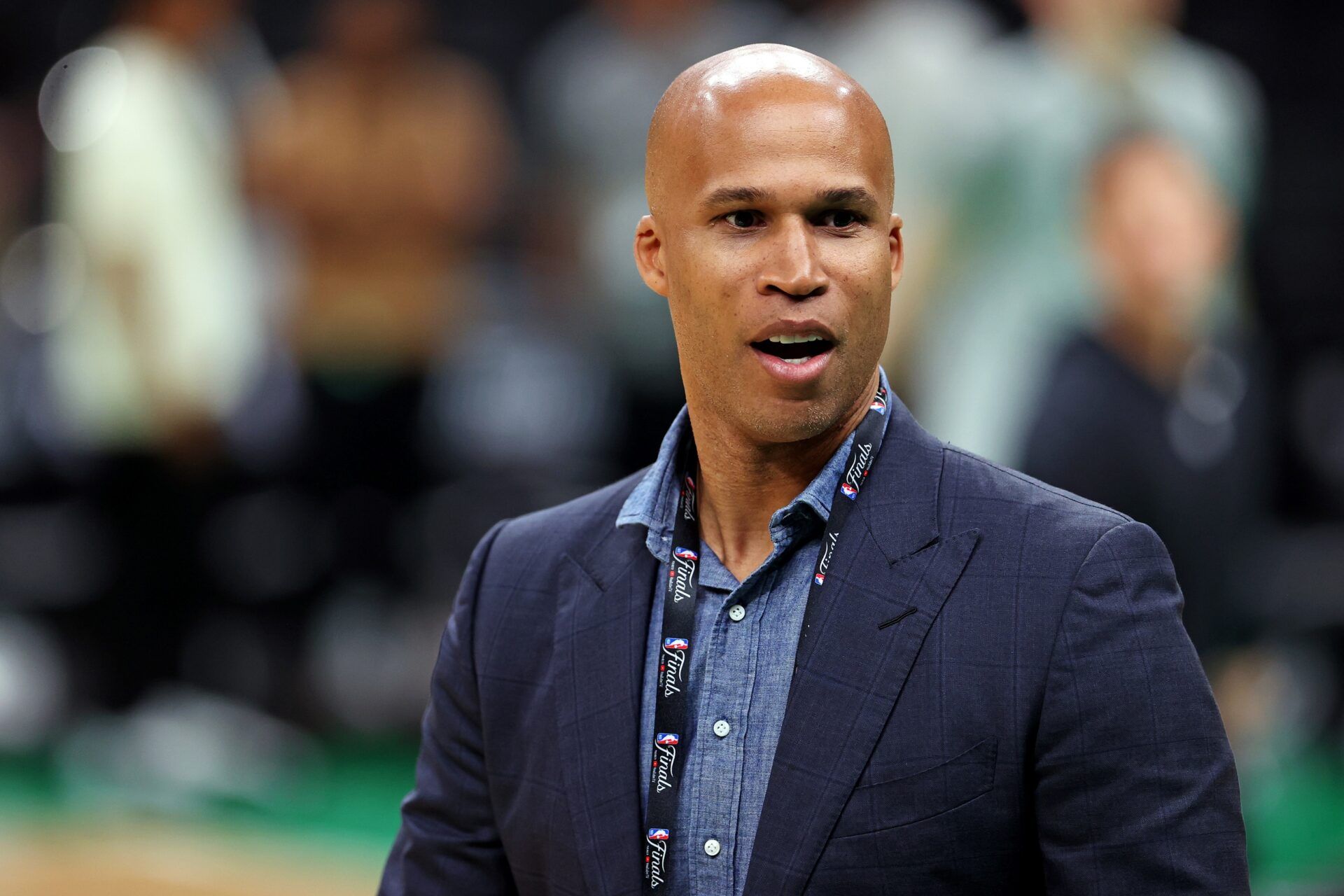
NBA champion-turned-analyst Richard Jefferson recently offered a stark assessment of the league’s financial landscape. He asserts that the new Collective Bargaining Agreement (CBA) is driving owners to sell their franchises.
The latest CBA, agreed upon in April 2023, has introduced stringent financial penalties, particularly for teams exceeding certain salary thresholds, known as the “second apron.”
Richard Jefferson Blames New CBA for NBA Ownership Exodus
While the intention is to promote competitive balance and parity, basketball analyst Richard Jefferson believes it’s creating an untenable situation for owners. Speaking this week on his podcast, “Road Trippin’,” Jefferson didn’t mince words.
“With this CBA, (teams) are screwed,” Jefferson said. “That’s why all the owners are getting out. That’s part of the reason why owners are selling. All the current owners are getting out. That’s part of the conversation. It’s not just owners that want to stack the deck. It’s not just the Lakers and Celtics. Charlotte sold, Portland sold.”
Jefferson’s insights come at a time when the NBA has seen a significant wave of ownership changes.
In just the last two years, several prominent franchises have been sold to new ownership groups, including the Los Angeles Lakers, Boston Celtics, Charlotte Hornets, Portland Trail Blazers, Dallas Mavericks, Phoenix Suns, and Milwaukee Bucks. Jefferson suggests that this trend is not coincidental.
“They’re looking at it like, even if I do a good job and I field a good team, it’s going to cost me so much money to even keep a good team — just the formula of success,” Jefferson explained. He added, “And one can say parity, but the parity is all going to spill down into those [worse] teams.”
Celtics’ Championship Team Forced to Make Difficult Roster Decisions
A prime example of the CBA’s impact can be seen in the recent actions of the Boston Celtics. Only a year removed from winning a championship, the Celtics made headlines by trading key players Jrue Holiday and Kristaps Porzingis.
This move was widely understood as an effort to avoid the dreaded second apron, which would have subjected them to severe financial penalties.
These changes by a championship-contending team highlight a looming reality for the league. In the future, it will likely become a common theme for teams to forgo prolonged success in order to remain in good financial standing.
BE YOUR OWN GM: PLAN YOUR TEAM’S FUTURE WITH THE 2026 NBA MOCK DRAFT SIMULATOR
The new CBA appears to be achieving parity by making it prohibitively expensive for teams to sustain elite, high-spending rosters. This ultimately costs them too much to consistently compete at the highest level.
Teams now face a difficult choice between maintaining championship-caliber talent and avoiding crushing financial penalties that could impact their long-term viability.
The ripple effects extend beyond just player movement. Ownership groups are increasingly viewing NBA franchises as financial liabilities rather than assets when factoring in the new restrictions.
This shift in perspective has accelerated the sale of multiple franchises as current owners seek to exit before the full impact of the CBA takes hold.

Great, just how it is supposed to work. No more Lakers and Boston every year!