
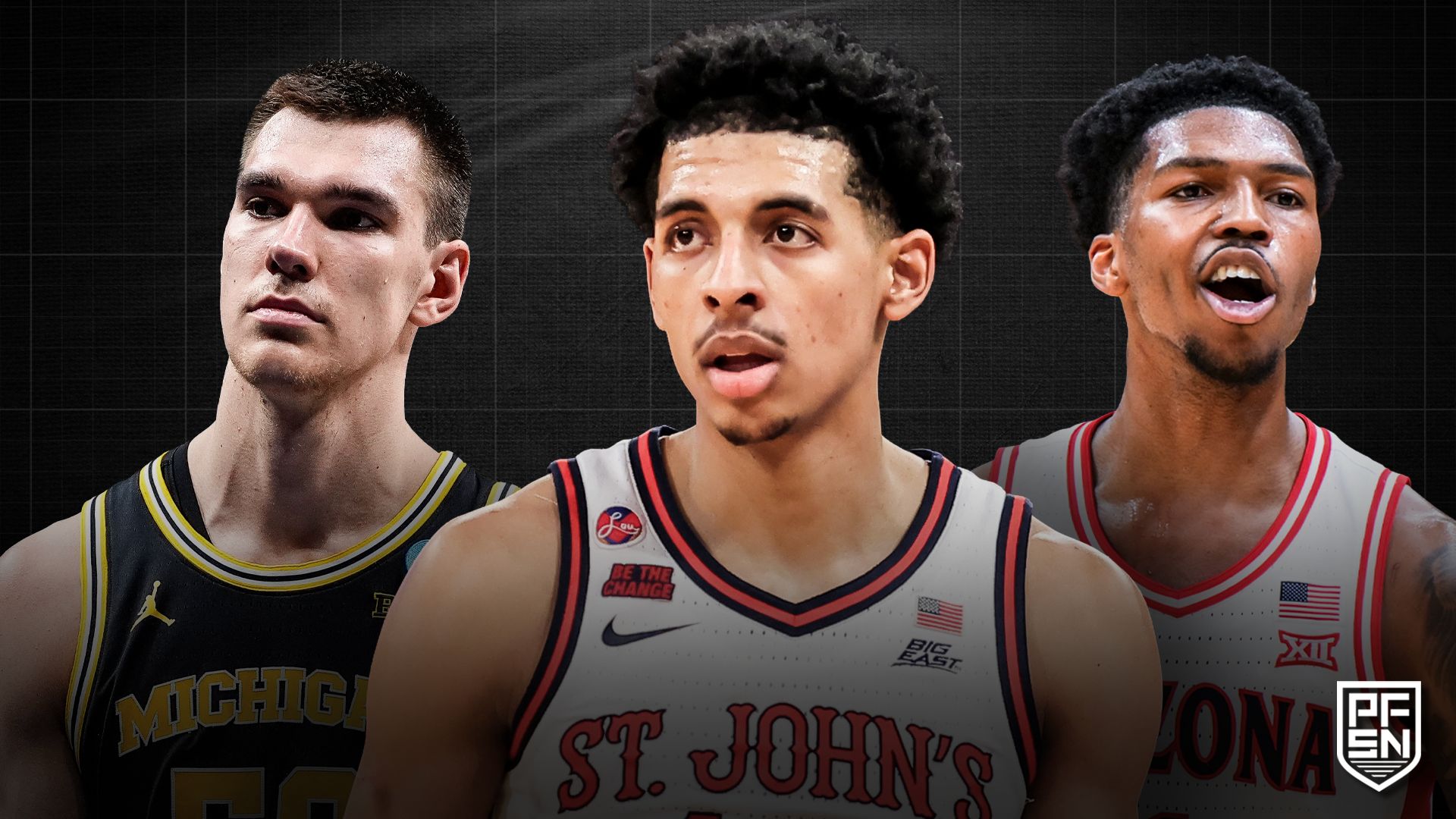
Many basketball players dream of being drafted to the NBA, but only a limited number of picks are available in a given year. For dozens of talented prospects, not hearing their name called isn’t the end of the journey. Instead, it starts a different, often more challenging path.
Each summer, undrafted free agents seize the opportunity to prove themselves, hungry to carve out roles on NBA rosters. The 2025 NBA Draft class is no exception, brimming with overlooked talent ready to make an impact at the next level.
These 10 players may have slipped through the cracks on draft night, but they have the tools to turn heads before the new season tips off.
10) Miles Kelly, Dallas Mavericks
At 6-foot-6, Auburn’s Miles Kelly has an NBA-ready frame. His size and quickness allow him to attack the basket with authority. Over his four collegiate seasons, he averaged 11.2 points, 3.5 rebounds, and 1.2 assists per game, per Sports Reference.
Kelly wasn’t a high-volume scorer but established himself as a reliable shooter. He shot 37.8% from deep and a career-best 90.9% from the free-throw line as a senior at Auburn.
Defensively, Kelly’s athleticism and rebounding instincts make him a versatile guard capable of impacting both ends of the court. He’s not a lockdown defender, but he has a nose for the ball and plays with competitive fire. His growth on both ends of the floor suggests he can develop into a reliable two-way player under the Mavericks’ system.
Kelly has turned heads so far in the Summer League, including in a 17-point performance against the Lakers. His path to making an impact in the NBA lies in embracing a defined role as a 3-and-D contributor, and so far, he’s doing just that.
Dallas has a deep roster, but Kelly is flashing skills that translate at the next level.
9) Eric Dixon, Los Angeles Lakers
Eric Dixon’s unique offensive skill set could secure him a rotational role in the NBA. As Villanova’s all-time leading scorer with 2,314 points, Dixon averaged 23.3 points and 5.1 rebounds per game while shooting 40.7% from 3-point range on a career-high 7.2 attempts.
Dixon’s ability to score from all three levels, particularly his elite perimeter shooting for a 6-foot-8, 260-pound forward, makes him a rare stretch big capable of spacing the floor for a Los Angeles Lakers team that ranked in the middle of the pack in 3-point shooting last season.
However, Dixon’s lack of explosiveness and below-the-rim finishing limit his ability to replicate his college scoring dominance against NBA athleticism. Improving his shot selection and leveraging his catch-and-shoot efficiency could make him a valuable bench scorer in a pace-and-space system.
Defensively, Dixon faces challenges that he must overcome to earn consistent NBA minutes. His size and wingspan allowed him to bully college opponents, but his limited lateral quickness and lack of rim protection raise questions about his ability to guard NBA forwards or centers.
Dixon’s path to impact lies in his ability to adapt his offensive versatility to a complementary role while addressing his defensive shortcomings. He’d be higher up this list, but he’s not expected to suit in the Summer League, leaving his status up in the air.
8) Chucky Hepburn, Toronto Raptors
Chucky Hepburn enjoyed a standout senior season at Louisville, averaging 16.4 points, 5.8 assists, 3.5 rebounds, and 2.4 steals per game. His performance earned him ACC Defensive Player of the Year and First-Team All-ACC honors.
Chucky Hepburn.
This is how you shine as an undrafted player in the NBA to take a spot. pic.twitter.com/beBDEB2OAs
— Brandon Meeks (@MeeksKnowsBall) July 13, 2025
Hepburn’s defensive instincts and low turnover rate make him a strong candidate for a backup point guard role with the Toronto Raptors.
His career 35.3% 3-point shooting suggests potential as a reliable spot-up shooter, though there’s still room for improvement. His career-high 84.4% free-throw shooting at Louisville shows his growth and further supports his shooting foundation.
Hepburn’s ability to run pick-and-roll sets and facilitate without forcing plays positions him as a valuable second-unit contributor. At 6’2”, he’s undersized and lacks elite athleticism, but his high basketball IQ, relentless motor, and defensive mindset stand out.
Hepburn’s two-way contract allows him time to develop his 3-point shooting consistency and adjust to NBA physicality. If he continues to show the defensive hustle and playmaking efficiency he has during the Summer League, he could secure a lasting NBA role.
7) RJ Luis Jr., Utah Jazz
RJ Luis Jr., who signed a two-way contract with the Utah Jazz, possesses the physical tools and competitive mindset to carve out a role as a two-way wing in the NBA.
During his junior season at St. John’s, he averaged 18.2 points, 7.2 rebounds, 2.0 assists, and 1.4 steals per game across 35 games, earning Big East Player of the Year and consensus Second-Team All-American honors.
Luis’ aggressive, downhill attacking style, paired with a 6-foot-7 frame, allows him to thrive in transition and exploit mismatches in the post against smaller defenders. He’s a confident but inefficient scorer, and he must also improve his ball-handling consistency.
Defensively, Luis’ ability to guard multiple positions makes him a valuable asset in the modern NBA. His lateral quickness enables him to stay with guards and battle wings, and he attacks the glass with intensity.
Luis’ defensive versatility and high motor could make him a reliable role player at the next level. The Jazz are a rebuilding team with a young core, so Luis’ relentless energy and versatility could earn him early minutes.
A knee injury has kept him out of Summer League action, but for him to make an impression, he’ll need to find his way on the floor.
6) Dink Pate, New York Knicks
Dink Pate joined the G League Ignite at 17, bypassing college to gain early professional experience, and now he’s on an Exhibit 10 contract with the New York Knicks. In two seasons in the G League, the 6-foot-8 wing showcased his ability to handle the ball and score at three levels, though his efficiency was concerning.
With the Knicks’ robust development system, Pate has a platform to hone his offensive game, particularly his shooting, which could elevate him into a versatile scoring wing.
Pate’s physical tools position him as a potential multi-positional defender, a valuable asset in the modern NBA. His length and mobility enable him to switch across guards and wings.
However, his defensive awareness lags, showing room for growth on that end of the floor.
Still, the Knicks’ investment in Pate reflects their belief in his ability to grow into a two-way contributor with time and coaching.
Pate’s youth and high ceiling make him a long-term project with significant upside. His G League experience, while inconsistent, provided him with early exposure to professional physicality and pace, giving him an edge over traditional college prospects. To make an impact, Pate must improve his decision-making and shooting efficiency.
If New York can be patient with Pate, he could emerge as a rotational wing player.
5) Ryan Nembhard, Dallas Mavericks
Ryan Nembhard brings a polished skill set to the Dallas Mavericks, which could help him carve out an NBA role early in his career. His four-year college career, split between Creighton and Gonzaga, showcased his evolution into one of college basketball’s top passers.
Nembhard, the younger brother of Indiana Pacers guard Andrew Nembhard, took a step forward as a distributor during his senior season at Gonzaga. He averaged a career-high and nation-leading 9.8 assists per game with an impressive 41.5% assist rate.
Nembhard’s strength lies in his old-school point guard instincts. He orchestrates offenses with precision and excels in pick-and-roll situations. His ability to control tempo, read defenses, and deliver pinpoint passes makes him a natural fit for a team needing a floor general off the bench.
Nembhard could be invaluable, given that Kyrie Irving is expected to miss the early portion of next season. He went off in his Summer League debut against the Lakers, dropping 21 points on 57.1% shooting with five assists.
Nembhard’s small frame raises concerns about his defensive ceiling and overall upside, but the Mavericks feature plenty of length, which could help compensate for this. His ability to facilitate, especially on a team coached by Jason Kidd, is enticing.
4) Mark Sears, Milwaukee Bucks
Mark Sears’s game has its limitations, but there’s a place for his skill set in today’s NBA. He signed a two-way contract with the Milwaukee Bucks, and his arrival comes on the heels of the team cutting ties with its starting point guard, Damian Lillard.
Sears’ collegiate career at Alabama cemented his reputation as one of college basketball’s elite scorers. Over three seasons with the Crimson Tide, after transferring from Ohio, he averaged 17.5 points, 4.2 rebounds, and 4.3 assists per game. His scoring and efficiency dipped in his final campaign, but his ability to score from all three levels was evident.
Sears’ shot-creation ability is a cornerstone of his NBA potential. His fearless mentality and ability to deliver in high-pressure moments suggest he can provide instant offense off the bench, a critical need for the Bucks. Milwaukee was an elite 3-point shooting team last season, and the Alabama product could help ensure their marks don’t drastically drop post-Lillard.
Defensively, Sears’ measurable (5’10” height and 6’2” wingspan) present challenges. His size makes him a target against larger, more athletic NBA guards, and his lack of elite burst limits his ability to recover when beaten. However, he compensates with toughness and competitiveness.
Sears has yet to make his Summer League debut due to a calf injury, but all eyes will be on him when he takes the floor.
3) Vladislav Goldin, Miami Heat
The Miami Heat signed Vladislav Goldin to a two-way contract, and he could be just what the doctor ordered. Goldin fits the mold of a traditional center whose size, finishing ability, and defensive presence could translate into a meaningful NBA role.
Goldin’s five-year collegiate career featured stops at Texas Tech, Florida Atlantic, and
Michigan, where he grew into one of college basketball’s premier big men. As a senior at Michigan, he averaged 16.6 points, 7.0 rebounds, and 1.4 blocks per game across 37 starts, shooting an impressive 60.7% from the field.
Goldin’s efficiency near the basket was a hallmark of his game, leveraging soft touch and a variety of post moves. His ability to finish against contact and score off rolls made him a reliable offensive hub. As a rebounder, his knack for securing second-chance opportunities is valuable, as offensive rebounds can extend possessions and punish smaller lineups.
Goldin’s 7-foot-1, 253-pound frame gives him an edge on both ends of the floor. His rim protection is a translatable skill, as he flashes discipline as a shot-blocker who doesn’t rely on elite athleticism. That lack of athleticism and slow foot speed could make him a liability on the perimeter, but he offers intriguing upside as a backup big man.
Fortunately, the Heat aren’t looking for a starter. Erik Spoelstra’s squad features a formidable frontcourt duo of Bam Adebayo and Kel’el Ware, so Goldin’s clear path to impact would be in a reserve role off the bench. His size, interior efficiency, and defensive presence could help solidify Miami’s depth at center.
2) Caleb Love, Portland Trail Blazers
After going undrafted, Caleb Love signed a two-way contract with the Portland Trail Blazers. He brings a compelling mix of scoring flair and defensive potential that could see him find a role in the NBA.
Love’s collegiate career, spanning three seasons at North Carolina and two at Arizona, established him as one of college basketball’s most prolific scorers. Over two seasons at Arizona, he averaged 17.6 points, 4.6 rebounds, and 3.4 assists per game, earning Pac-12 Player of the Year honors in 2023.
Caleb Love (@caleb2love) made a statement in his Summer League debut.
Explosive off the bounce, lethal from deep, and crafty around the rim — he had the full bag on display.
🔹 18 PTS (7-16 FG, 4-7 3PT)
🔹 6 REB | 2 AST | +25 +/- pic.twitter.com/QN05sPwRQW— Just Lobs (@justlobs) July 12, 2025
Love became known for his ability to deliver in high-pressure moments, including during North Carolina’s 2021-22 Final Four run. Offensively, Love’s strength lies in his downhill scoring and shot-creation ability. His quick first step and crafty ball-handling allow him to attack the rim, contorting his body to finish through contact or avoid shot-blockers.
Love’s career 38% field goal percentage and 32.6% 3-point shooting raise concerns about efficiency. He must improve his shot selection and adapt to an off-ball role to succeed in the NBA. He’s shown flashes of his upside in the Summer League, dropping 18 points in back-to-back games.
This offseason, the Trail Blazers moved on from Anfernee Simons and replaced him with Jrue Holiday. Learning from a proven veteran could help Love as he looks to crack a roster spot and prove why he belongs.
1) Hunter Sallis, Philadelphia 76ers
Hunter Sallis was a top-40 prospect on PFSN’s 2025 NBA Draft Big Board, so it was shocking not to hear his name called. However, the Philadelphia 76ers eventually scooped him up and signed him to a two-way contract.
Sallis’ scoring versatility, defensive tenacity, and untapped potential make him a candidate to carve out a niche as a dynamic two-way guard at the next level. A 6-foot-5 guard from Wake Forest, he showcased his ability to score at three levels during his collegiate career. In his final season, he averaged 18.3 points per game, 5.1 rebounds, and 2.8 assists over 32 games.
While he’s primarily a scorer, Sallis has shown unselfish passing instincts, finding teammates when defenses collapse on his drives. This ability to contribute as a secondary playmaker could complement star-driven offenses like Philadelphia’s, where players like Joel Embiid and Tyrese Maxey draw significant defensive attention.
Sallis’ 3-point shooting remains a work in progress (27.7% from deep in 2024). He also has a lean frame. However, his length, lateral quickness, and instincts suggest he can develop into a versatile defender capable of guarding multiple backcourt positions.
Sallis has the potential to develop into a rotation player for the 76ers. They need cost-effective role players who can contribute on both ends without requiring heavy offensive touches. He could earn a roster spot if he improves these core areas throughout the Summer League.