
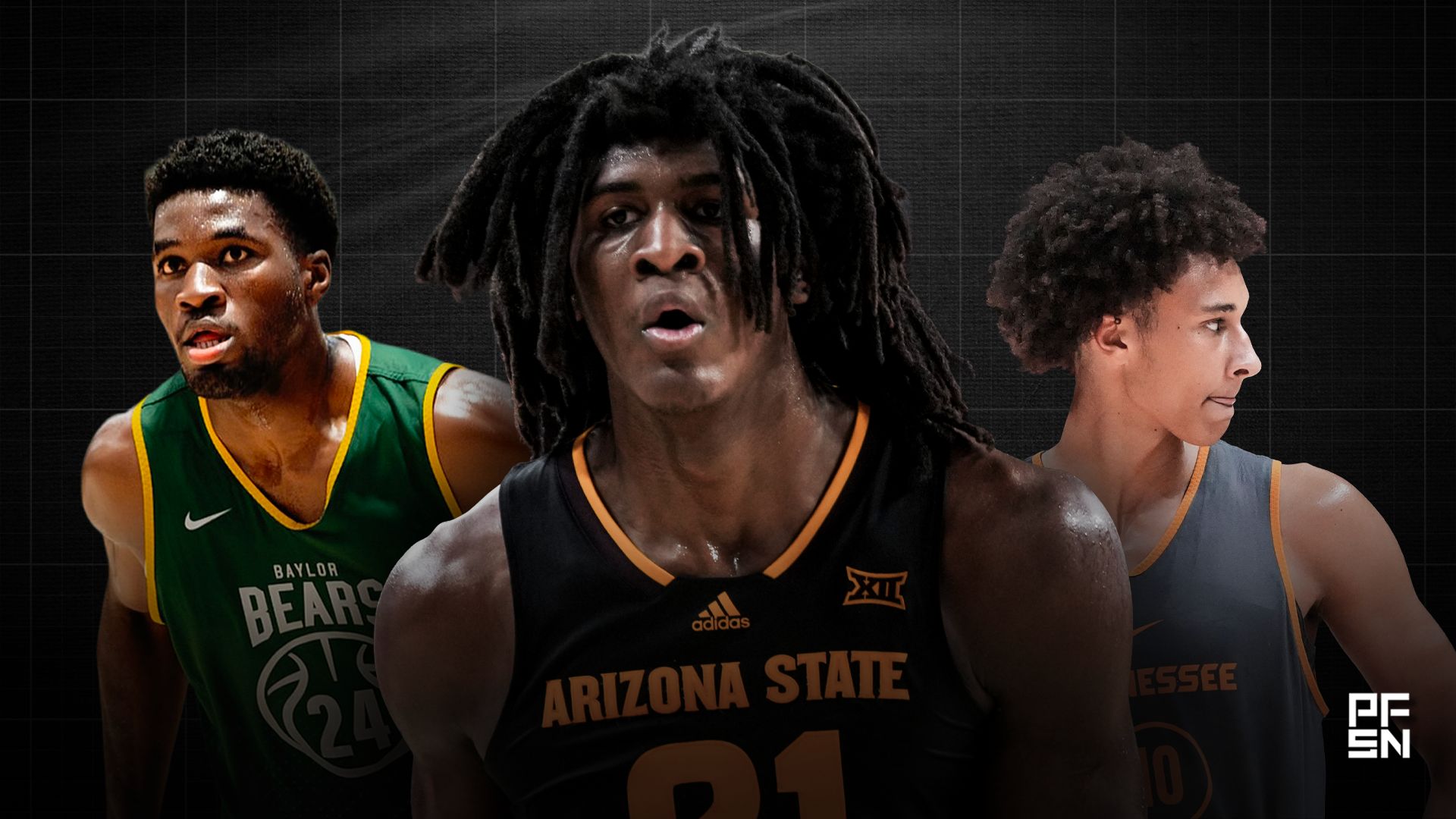
With college basketball returning and the 2025-26 NBA season tipping off, it’s the perfect time to look ahead to the next wave of talent. The 2026 NBA Draft class is already generating buzz as a potentially generational group at the top.
From high-upside college stars to emerging international standouts, this class looks deep with skill, size, and long-term potential. Though it’s still early, excitement continues to build as prospects aim to solidify their draft stock.
Using PFSN’s NBA Mock Draft Simulator, we projected every selection in the next year’s draft. Here’s an early look at how things could play out next June in our latest 2026 NBA Mock Draft.
1) Chicago Bulls
AJ Dybantsa, F, BYU
AJ Dybantsa enters the 2026 NBA Draft as one of the most coveted prospects, ranked in the top two nationally across major recruiting services. At 6’9″, he boasts elite length, explosiveness, and the physical profile of a modern wing capable of taking over games in transition or isolation. His vertical burst, quick first step, and above-the-rim finishing make him an immediate highlight threat while also providing the size the Chicago Bulls need.
Offensively, Dybantsa combines rare scoring versatility with growing playmaking instincts. He can create off the dribble, punish defenses at all three levels, and operate in both the half-court and open floor. His improved 3-point shot keeps defenders honest, while his ability in pick-and-roll settings could add another dimension to the Bulls’ offensive schemes.
RELATED: Shaquille O’Neal’s Agent Clears the Air on His Role in AJ Dybantsa’s Career
On the defensive end, Dybantsa’s energy, switchability, and vocal leadership set him apart. He can guard multiple positions, apply full-court pressure, and disrupt passing lanes with his length. For a Bulls team facing frontcourt depth concerns, his size, skill, and competitive edge offer star-level upside and potential as a long-term anchor on both ends of the floor.
2) Utah Jazz
Darryn Peterson, G, Kansas
Darryn Peterson projects as one of the most NBA-ready prospects in the 2026 Draft, making him an ideal fit for the Utah Jazz’s backcourt. At 6’5″ and 195 pounds, the Kansas standout combines pro-level strength with standout athleticism and polish. His ability to generate offense, create his own shot, and play through contact would give the Jazz a dynamic scoring presence capable of commanding immediate minutes.
Peterson is a true three-level scorer who can fluidly transition between on-ball creation and off-ball spacing, giving the Jazz flexibility alongside their existing playmakers. His advanced shot selection, reliable shooting stroke, and composure in the pick-and-roll suggest star-level upside as a primary offensive option in the near future.
Defensively, Peterson’s size, strength, and attention to detail would be a welcome addition for Utah. He can guard multiple guard spots, control matchups with effort and positioning, and communicate like a veteran. With his maturity, two-way skill, and competitive drive, Peterson offers a high floor and superstar ceiling, qualities the Jazz can build around.
3) Portland Trail Blazers
Cameron Boozer, PF, Duke
Cameron Boozer enters the 2026 NBA Draft as one of its most polished and reliable frontcourt prospects. The son of former All-Star Carlos Boozer, the 6’9″ Duke freshman brings a rare blend of strength, finesse, and basketball IQ, allowing him to contribute from Day 1. His rebounding instincts, soft hands, and advanced footwork give the Portland Trail Blazers a much-needed physical anchor who can control the boards on both ends.
Offensively, Boozer’s versatility stands out. He can score efficiently inside, stretch defenses as a pick-and-pop threat, and facilitate through high-post actions. His unselfish playmaking and patience under pressure elevate teammates while providing dependable shot creation when needed.
On defense, Boozer’s value comes from positioning, strength, and discipline rather than elite athleticism. He defends with awareness, rotates, and provides help without overcommitting. He would be a core piece for the Blazers: a high-floor big with the toughness, adaptability, and maturity to grow alongside their young guards.
4) Philadelphia 76ers
Jayden Quaintance, PF, Kentucky
Jayden Quaintance’s size, athleticism, and defensive instincts make him an intriguing long-term fit for the Philadelphia 76ers. At 6’9″ with elite length and mobility, the 18-year-old Kentucky big man already impacts games through shot-blocking, rebounding, and energy around the rim. His freshman year at Arizona State showcased his two-way potential before injury, earning All-Defense and All-Freshman honors in the Big 12.
Quaintance thrives as a transition finisher and lob target while showing glimpses of a developing face-up game. Though still refining his jumper and half-court reads, his flashes of touch and passing suggest the potential to grow into a more well-rounded scorer. That versatility would complement the 76ers’ core, adding an athletic interior presence who doesn’t need the ball to make an impact.
RELATED: 5 Hardest Schedules on the 2025-2026 NBA Schedule Including Philadelphia 76ers, Denver Nuggets
Defensively, Quaintance projects as a difference-maker. His combination of rim protection, switchability, and timing fits perfectly alongside Joel Embiid. With continued development and improved offensive feel, he could become a two-way force in the Sixers’ frontcourt.
5) Washington Wizards
Nate Ament, F, Tennessee
For a rebuilding Washington Wizards team still searching for a true franchise cornerstone, Nate Ament offers the kind of long-term upside worth investing in. At 6’9″, the versatile forward brings fluid ball-handling, a smooth pull-up jumper, and natural shot creation that projects as three-level scoring potential. His high release point and size allow him to shoot comfortably over defenders, giving the Wizards a dynamic perimeter scoring threat they’ve lacked.
Ament’s shooting touch and floor-spacing ability open driving lanes for teammates, while his improving playmaking and finishing around the rim add to his versatility. Though still developing his consistency and efficiency, Ament’s offensive ceiling gives him the profile of a modern forward capable of becoming a go-to option in time.
Defensively, Ament uses his length and quickness to cover ground and disrupt passing lanes. He has the instincts to switch across multiple positions, though adding strength and consistent physicality will be key to maximizing his potential. With patience and development, his rare combination of size, skill, and two-way versatility could make him an integral building block for the Wizards’ future.
6) Charlotte Hornets
Tounde Yessoufou, G/F, Baylor
The Charlotte Hornets are in rebuild mode and should be aiming to add athleticism and defensive versatility, and Tounde Yessoufou fits the mold perfectly. At 6’5″, the Baylor commit combines elite explosiveness, strength, and relentless energy, traits that translate on both ends of the floor. His pro-ready frame and attacking mentality give Charlotte a physical wing who can immediately contribute in transition and thrive in a more up-tempo system.
Offensively, Yessoufou excels as a downhill driver and finisher, consistently using his burst to overpower defenders. His development as a shooter and ball-handler continues to expand, showing flashes of three-level scoring potential in showcase settings like the Nike Hoop Summit. His ability to create pressure at the rim and embrace contact adds a dynamic layer to the Hornets’ young core.
On defense, Yessoufou guards multiple positions, disrupts plays with anticipation, and competes with relentless effort on every possession. His growing offensive polish combined with elite defensive tools suggests long-term two-way impact.
7) Atlanta Hawks (via Pelicans)
Dash Daniels, G, Melbourne United
Dash Daniels’ defensive versatility, competitiveness, and emerging offensive skills make him an excellent fit for the Atlanta Hawks’ backcourt. At 6’6″, the younger brother of Dyson Daniels mirrors much of his sibling’s defensive tenacity while offering his own evolving playmaking and scoring upside. His length, instincts, and ability to guard multiple positions would give the Hawks another switchable perimeter defender and a high-energy complement alongside Trae Young and the elder Daniels.
Daniels continues to grow as a creator and scorer. He can play on or off the ball, showing flashes of three-level scoring and smooth shot mechanics while improving his consistency from deep. His passing and composure allow him to operate comfortably within a half-court offense, and as his handle sharpens, he projects as a versatile guard who can expand the Hawks’ playmaking options.
MORE: FREE NBA Mock Draft Simulator 2026
On the defensive end, Daniels brings advanced fundamentals, quick hands, and discipline that translate directly to winning basketball. He competes on every possession, rotates intelligently, and uses his athletic frame to neutralize both guards and wings. Pairing the Daniels brothers would establish a foundation defined by defense, versatility, and unselfish guard play.
8) Brooklyn Nets
Chris Cenac Jr., C, Houston
Chris Cenac Jr. offers the kind of size, athleticism, and two-way potential that could elevate the Brooklyn Nets’ frontcourt rotation. At 6’10” with a 7’4″ wingspan, he brings elite length and mobility, allowing him to protect the rim, sprint the floor, and switch across multiple positions. His high motor and defensive instincts make him a natural fit in a developing system.
Cenac’s offensive game continues to expand. He combines soft touch around the rim with face-up skill, emerging shooting range, and flashes of off-the-dribble creation rarely seen from a player his size. His ability to make quick reads and deliver smart passes adds another layer to his upside, giving Brooklyn a potential mismatch weapon capable of impacting the game beyond traditional post play.
While still working on his footwork and shot selection, Cenac’s foundation as a mobile, high-energy big with legitimate perimeter ability makes him a valuable long-term prospect.
9) Toronto Raptors
Caleb Wilson, F, North Carolina
Caleb Wilson’s size, athleticism, and two-way potential make him an excellent fit for the Toronto Raptors’ core. At 6’9″ with a 7-foot wingspan, he brings elite mobility, length, and defensive versatility. His ability to guard multiple positions, contest shots, and disrupt passing lanes gives Toronto a switchable forward capable of making an immediate defensive impact.
Offensively, Wilson thrives as a complementary piece who runs the floor, finishes in transition, and makes smart reads within the flow of an offense. His midrange touch, fluid movement, and improving perimeter game suggest real growth potential as a scorer.
While he’s still developing as a shooter and learning to play with consistent assertiveness, Wilson’s foundation of athleticism, IQ, and effort gives him one of the highest long-term ceilings in the 2026 class.
10) San Antonio Spurs (via Hawks)
Koa Peat, F, Arizona
Koa Peat’s physical maturity, motor, and two-way versatility make him an ideal fit for the San Antonio Spurs’ system. At 6’8″ with a strong frame, advanced footwork, and polished interior instincts, the Arizona commit already plays with the strength and composure of a seasoned pro. He thrives in the mid-post and around the basket, using touch, positioning, and feel to create offense without relying solely on athleticism.
Peat’s offensive game continues to evolve beyond the paint. His reliable midrange jumper and expanding 3-point range complement his ability to facilitate as a secondary playmaker in transition or short-roll actions. His unselfish play and high basketball IQ align seamlessly with the Spurs’ system, which prioritizes ball movement and smart decision-making over isolation-heavy play.
Defensively, Peat can guard power forwards and some centers effectively. He rebounds through contact, rotates with discipline, and uses his strength to anchor the interior. He projects as a high-floor, rotation-ready forward who embodies the Spurs’ identity.
11) Memphis Grizzlies (via Suns)
Karim Lopez, F, NZ Breakers
Karim Lopez’s versatility, maturity, and international experience make him a strong fit for the Memphis Grizzlies. At 6’8″, the 18-year-old forward from Mexico has honed his game through the NBL’s Next Stars program, showing steady growth as a perimeter shooter and efficient offensive contributor. His size, coordination, and pro-level poise align perfectly with the Grizzlies’ desire for versatile, two-way players.
Lopez stands out for his all-around skill set and basketball instincts. He handles the ball comfortably for his size, initiates offense when needed, and defends multiple positions with energy and awareness. His rebounding, motor, and unselfish play style reflect a maturity beyond his years, making him an ideal complement to Ja Morant and Jaren Jackson Jr.
Though Lopez still needs to improve his perimeter shooting consistency and strengthen his frame, his trajectory points toward long-term impact as a two-way forward. He gives the Grizzlies a developmental piece who can contribute early while growing into a reliable, high-IQ rotation player.
12) Dallas Mavericks
Mikel Brown Jr., G, Louisville
Mikel Brown Jr.’s poise, creativity, and shot-making make him a natural fit for a Dallas Mavericks team on the rise. At 6’3″, the Louisville commit flashes elite quickness, a tight handle, and impressive control in pick-and-roll actions. His ability to create off the dribble, hit pull-up jumpers, and read defenses complements Dallas’ need for additional creators.
Offensively, Brown is a fluid, confident scorer with deep range and excellent vision. While he remains a streaky shooter, his mechanics and confidence project well long-term. His maturity as a playmaker allows him to orchestrate sets, attack downhill, and make advanced reads in transition. Learning behind veterans like Kyrie Irving would provide the perfect developmental environment for Brown to improve his decision-making and gain strength against NBA physicality.
On defense, Brown shows steady growth. His engagement, anticipation, and quick hands suggest real two-way potential once his frame fills out. His mentality, floor spacing, and playmaking versatility would reinforce the backcourt depth immediately.
13) Sacramento Kings
Darius Acuff Jr., G, Arkansas
Darius Acuff Jr. would give the Sacramento Kings a young, dynamic guard to help stabilize their backcourt beyond the short-term bridge provided by veterans like Dennis Schröder and Russell Westbrook. At 6’2″, Acuff blends downhill explosiveness, toughness, and playmaking creativity, making him the perfect fit for a team still seeking a long-term replacement for De’Aaron Fox.
The reigning 2025 Allen Iverson Player of the Year and McDonald’s All-American has quickly built a reputation as one of the most assertive and skilled lead guards in his class.
Acuff thrives operating out of pick-and-rolls, showcasing tight ball control, speed, and the ability to finish through contact. His three-level scoring threat forces defenses to stay engaged at all times. While his efficiency and shooting consistency remain areas to improve, his confidence and scoring instincts give him the potential to take over stretches offensively while keeping his teammates involved.
Defensively, Acuff’s strength and competitive edge allow him to handle physical matchups and disrupt opposing guards. His athleticism, toughness, and leadership provide immediate energy and long-term upside.
14) Atlanta Hawks (via Spurs)
Bennett Stirtz, G, Iowa
Bennett Stirtz’s polish, efficiency, and basketball IQ make him an appealing fit for the Hawks. At 6’4″, the Missouri Valley Player of the Year excelled at Drake, averaging 19.2 points and 5.7 assists while shooting nearly 40% from three, according to Sports Reference. His steady rise from Division II to the Big Ten via Drake highlights his adaptability, work ethic, and ability to thrive against tougher competition.
Offensively, Stirtz stands out as a poised creator and off-ball threat. He operates seamlessly in pick-and-rolls, makes quick reads, and balances scoring with smart playmaking decisions. His smooth shooting stroke and patient tempo align well with an Atlanta system driven by floor spacing and high-IQ guard play, giving the Hawks a reliable perimeter piece.
Though not an elite athlete, Stirtz compensates with savvy, control, and efficient shot selection. His decision-making and composure under pressure allow him to anchor second units or blend in effectively next to primary guards. With Trae Young holding a player option after this season, the Hawks may need a guard who can lead the second unit now and grow into a larger role later.
15) Miami Heat
Dame Sarr, G, Duke
Dame Sarr’s size, athleticism, and international experience make him an intriguing developmental fit for the Miami Heat. At 6’6″ with a 7-foot wingspan, the Duke wing brings positional versatility and defensive upside. His EuroLeague background provides valuable experience against high-level competition, and his energy, length, and instincts make him a natural fit for the Heat’s defensive system.
Offensively, Sarr shines in transition and when attacking downhill. His quick first step, vertical explosiveness, and instinct for finishing through contact make him a dynamic slasher, while his passing ability suggests untapped potential as a secondary creator. Though his jumper and shot selection remain inconsistent, he’s shown the ability to get hot from deep and will look to continue refining his shooting mechanics at Duke.
Sarr plays with confidence and aggression. His physical tools and competitive edge could make him an impact two-way player for Miami alongside Tyler Herro and Bam Adebayo.
16) Phoenix Suns
Tahaad Pettiford, G, Auburn
Tahaad Pettiford’s quickness, scoring instincts, and playmaking make him an appealing long-term fit for the Phoenix Suns, who need a lead guard for the future. The 6’0″ Auburn standout averaged 11.6 points and 3.0 assists as a freshman in limited minutes, using his burst, craftiness, and reliable floater to carve up defenses. His speed and ability to pressure the rim would bring a new dynamic to a Suns roster that leans heavily on spacing and perimeter creation.
Pettiford thrives as a shotmaker and creator. He routinely breaks down defenders with his handle, generates clean looks in isolation, and shows the confidence to score at all three levels. While developing as a full-time floor general, he’s flashed advanced reads and poise in pick-and-roll sets. These are encouraging signs for a young guard primed for more responsibility.
On the defensive end, Pettiford competes hard despite his size, using his toughness and quick feet to stay in front of bigger guards. With continued growth as a decision-maker and facilitator, he projects as an explosive, high-energy guard who can complement and eventually lead the Suns’ offense alongside Devin Booker.
17) Detroit Pistons
Isaiah Evans, G, Duke
Isaiah Evans’ perimeter shooting and scoring versatility would bring value to the Detroit Pistons, who continue to search for reliable offensive spacing on the wing. At 6’6″, the Duke sharpshooter brings a quick release, deep shooting range, and confident shot-making both off the catch and off the dribble. With Malik Beasley’s status uncertain, Evans offers an immediate solution as a floor spacer who fits seamlessly alongside Detroit’s young core.
As a freshman, Evans averaged 6.8 points in limited minutes while shooting 41.6% from three, flashing elite efficiency. His ability to create offense off movement, score in transition, and finish through contact gives him the profile of a high-upside scoring wing. With more opportunity in his sophomore season, he’s expected to expand his role as creator and playmaker.
Defensively, Evans uses his length and anticipation to contest shots and disrupt passing lanes, though improving his strength remains a priority at the next level. His shooting prowess, size, and growing two-way ability fit perfectly with a roster built around young talent. Evans gives the Pistons a versatile, perimeter scorer who can contribute early and develop into a valuable two-way weapon.
18) Memphis Grizzlies
Tomislav Ivisic, C, Illinois
Tomislav Ivišić’s interior strength, shooting touch, and passing instincts make him an intriguing fit for the Memphis Grizzlies’ frontcourt rotation. The 6’11” Illinois big man shot 35.7% from three on high volume last season, which is rare production for his size.
He brings legitimate floor-spacing ability to an offense that thrives on pace and ball movement. His ability to stretch defenses, set solid screens, and create opportunities with quick, high-release jumpers aligns perfectly with Memphis’ up-tempo style.
Ivišić adds value beyond shooting with strong post fundamentals and instinctive playmaking. He finishes effectively with both hands, uses finesse to score inside, and consistently makes advanced reads as a passer, giving the Grizzlies another versatile facilitator in the frontcourt. His polished skill set and unselfish play style provide offensive balance next to Memphis’ athletic guards and slashers.
Defensively, Ivišić holds his ground in the paint through positioning and toughness but must continue improving his lateral quickness and recovery speed to limit matchups in space. He projects as a high-impact stretch big who can anchor second units or grow into a starting role.
19) Milwaukee Bucks
Brayden Burries, G, Arizona
Brayden Burries would bring much-needed scoring versatility, physicality, and all-around feel to the Milwaukee Bucks’ evolving backcourt. At 6’4″ and 205 pounds, the Arizona commit offers pro-ready strength and advanced polish for his age. As California’s Gatorade Player of the Year and a McDonald’s All-American, Burries impressed with his ability to score at all three levels.
Offensively, Burries thrives in isolation and ball-screen actions, using balance, body control, and advanced footwork to create space or finish through contact. He’s capable both on and off the ball. His confident shot from deep and efficient midrange game give the Bucks another threat to ease offensive pressure on Giannis Antetokounmpo.
Burries’ strong frame, quick hands, and competitive drive allow him to guard multiple backcourt positions effectively. He rebounds well for his size and brings the kind of two-way motor that coaches value. While not an explosive leaper, his polish, toughness, and basketball IQ make him a promising developmental piece.
20) Golden State Warriors
Flory Bidunga, C, Kansas
Flory Bidunga’s elite athleticism, energy, and interior presence would be a welcome addition to the Golden State Warriors’ frontcourt. At 6’10” with explosive leaping ability and a sturdy frame, the Kansas big man plays with constant intensity. He runs the floor, finishes above the rim, and forcefully protects the paint.
With Kevon Looney’s exit and Draymond Green aging, Bidunga’s combination of rim-running, rebounding, and defensive upside fills a massive need for Golden State.
Bidunga showcases a soft touch around the basket, a smooth lefty hook, and growing confidence from midrange. While his 3-point range remains a work in progress, his willingness to expand his game suggests long-term spacing potential. He’s also flashed open-court potential, allowing him to grab rebounds and initiate fast breaks.
On defense, Bidunga’s timing, mobility, and strength already translate into strong rim protection and switchable coverage in space. His relentless motor and commitment to playing through contact mirror the kind of grit teams value. Bidunga could energize the Warriors’ defense and thrive alongside their shooters in a fast-paced system.
21) Minnesota Timberwolves
Boogie Fland, G, Florida
Boogie Fland’s quickness, creativity, and playmaking instincts could fit nicely with a Minnesota Timberwolves team still searching for its long-term answer at point guard.
With Mike Conley nearing the end of his career and Rob Dillingham still developing, Fland’s ability to create offense, control tempo, and push transition pace would add necessary energy and versatility to Minnesota’s backcourt. His shiftiness and advanced pick-and-roll feel give the Wolves a dynamic creator capable of igniting their second unit and complementing their stars.
At 6’2″, Fland plays with flair and confidence, using his elite handle and first step to penetrate defenses and generate shots for himself or teammates. His smooth pull-up jumper and evolving off-the-dribble touch point toward long-term scoring upside. He still needs to become a more consistent finisher at the rim and add strength to handle physical defenders, but his offensive creativity would fit well in Chris Finch’s offense.
Defensively, Fland competes with energy and quick hands but must improve positioning and strength to hold up against NBA guards. Still, his combination of speed, vision, and poise gives him clear developmental value for a team seeking backcourt depth.
22) Los Angeles Lakers
Isiah Harwell, G/F, Houston
The Los Angeles Lakers continue to search for reliable, high-IQ guard depth, and Isiah Harwell’s polished offensive game and defensive versatility could be an ideal fit. At 6’6″, the Houston commit is one of the most pro-ready two-way prospects in the 2026 class, combining advanced scoring skill with mature decision-making.
Harwell’s smooth shooting stroke, excellent footwork, and three-level scoring ability would immediately complement the Lakers’ stars while adding long-term stability in the backcourt. He excels as both a creator and an off-ball weapon. His jumper is lethal from midrange or beyond the arc, while his cutting and off-ball awareness make him a seamless fit in movement-based sets. He finishes through contact, plays with control, and limits wasted motion.
On the other end, Harwell’s strength, anticipation, and discipline allow him to guard multiple positions effectively. He competes on the glass and brings consistent effort, projecting as the type of 3-and-D guard who can make an immediate impact.
23) Indiana Pacers
Magoon Gwath, C, San Diego State
After letting Myles Turner walk in free agency, the Indiana Pacers should consider taking a big man in 2026. Magoon Gwath’s size, mobility, and shot-blocking instincts make him an exciting developmental fit. At 7’0″ and 205 pounds, the San Diego State standout impressed as a true rim protector during his freshman year, averaging 2.6 blocks per game while using his agility and timing to contest shots all over the floor.
Gwath remains a work in progress offensively but flashes significant promise as a stretch big. His shooting mechanics and touch hint at future 3-point potential, which could unlock tremendous lineup versatility for the Pacers. While he’ll need to continue adding strength and improving his footwork, his ability to rebound out of position and finish around the rim shows translatable traits for NBA development.
Gwath already demonstrates strong defensive instincts and discipline beyond his years. He alters shots without fouling, moves fluidly in space, and has the foundation to become a high-level interior anchor. With time to grow physically and develop his offensive game, Gwath projects as the type of long-term big man Indiana could mold into a valuable two-way contributor.
24) Oklahoma City Thunder
Yaxel Lendeborg, F, Michigan
Yaxel Lendeborg’s versatility, strength, and all-around production make him a natural fit for the Oklahoma City Thunder’s system, built on length, switchability, and basketball IQ. At 6’9″ and 240 pounds, the forward dominated at UAB last season, averaging 17.7 points, 11.4 rebounds, 4.2 assists, 1.8 blocks, and 1.7 steals per game while shooting efficiently from the field and beyond the arc.
Lendeborg’s impact extends across every facet of the game. He rebounds at an elite rate, facilitates offense from the high post, and can stretch defenses with his improved perimeter shot. His ability to attack mismatches, move without the ball, and create for teammates gives the Thunder another dynamic frontcourt option capable of fitting alongside Chet Holmgren and Jalen Williams.
Few forwards of his size bring such a balanced attack of scoring touch, intelligent passing, and defensive presence.
On defense, Lendeborg anchors possessions with his strength, anticipation, and rim protection while also switching effectively onto perimeter players. After transferring to Michigan to prove his production against stronger competition, he’ll look to continue to showcase why he belongs.
25) Denver Nuggets
Cayden Boozer, G, Duke
Cayden Boozer’s playmaking IQ, positional strength, and leadership would complement the Denver Nuggets’ championship culture and roster needs.
At just under 6’4″ and 205 pounds, the son of Carlos Boozer is a well-built combo guard who uses his frame to create passing angles, see over defenders, and orchestrate offense with poise. He thrives as a facilitator, controls tempo, and consistently makes smart decisions, offering Denver a stabilizing backcourt presence behind Jamal Murray.
Though not an elite leaper, Boozer scores efficiently through creativity and touch, particularly with his floater in the lane and strength as a driver. His 3-point shooting continues to improve, and further development in this area could add important versatility to the Nuggets’ offense. With strong finishing ability and a knack for impacting games beyond scoring, Boozer brings unselfishness and advanced feel to any rotation.
Defensively, Boozer compensates for average explosiveness with anticipation, active hands, and assignment discipline. He’s a pesky defender capable of guarding both guard spots, contributing toughness and reliability. His high basketball IQ and winning pedigree make him an ideal fit as a multi-positional, plug-and-play contributor who could grow into a key part of the Nuggets’ future backcourt.
26) New York Knicks
JT Toppin, F, Texas Tech
JT Toppin’s elite athleticism, defensive presence, and high motor make him a strong fit for the New York Knicks, especially given their frontcourt uncertainty with Mitchell Robinson’s health.
At 6’9″ with a 7’0.5″ wingspan, the Texas Tech star averaged 18.2 points, 9.4 rebounds, and 1.5 blocks per game last season, earning Big 12 Player of the Year and All-American honors. His length, mobility, and energy are traits the Knicks need to anchor their interior.
Toppin excels as a shot-blocker and rebounder, using timing and positioning to alter shots and dominate the paint. He plays with relentless effort, frequently cleaning up possessions through second-chance rebounds and rim protection. He would give New York an athletic frontcourt piece capable of complementing Robinson or playing minutes as a small-ball center.
Offensively, Toppin thrives as a roll man and finisher with soft touch and coordination around the rim. Though his perimeter shot and right-hand finishing remain works in progress, his efficiency and screens make him a valuable asset in pick-and-roll actions. Toppin could grow into the versatile, high-energy big man the Knicks covet.
27) Oklahoma City Thunder
Alex Condon, C, Florida
Alex Condon brings an enticing mix of size, mobility, and developing skill. The Thunder could soon be looking to reinforce their frontcourt if Isaiah Hartenstein departs after the 2025 season.
The 6’11” Florida standout was a key contributor to the Gators’ 2025 national title run, showcasing energy, versatility, and a high motor. His ability to space the floor, rebound, and finish through contact gives Oklahoma City another modern big capable of thriving in an up-tempo system.
Condon excels as a pick-and-pop threat who consistently makes smart reads and keeps the offense fluid. Averaging 2.2 assists per game, he’s comfortable facilitating from the high post, hitting cutters, or stretching defenses with his jumper. He rebounds instinctively, runs the floor hard, and provides reliable interior scoring while continuing to work on his ball-handling and outside consistency.
On the defensive end, Condon moves well laterally and uses his length to alter shots and cover space, though he still needs to cut down on fouls and add strength. His mobility allows him to switch onto wings and function in the Thunder’s defensive rotations alongside young bigs like Chet Holmgren and Thomas Sorber.
28) Boston Celtics
Nikolas Khamenia, F, Duke
The Boston Celtics are facing questions surrounding their frontcourt depth. With Jayson Tatum’s injury timeline unknown and the departures of Luke Kornet and Al Horford, Boston could use a polished forward capable of contributing right away. At 6’8″ and 215 pounds, Nikolas Khamenia combines court vision, strength, and shooting touch.
The Duke commit’s passing ability distinguishes him among forward prospects. He processes the game quickly, facilitates offense from the perimeter or post, and makes sharp reads that keep possessions flowing. Able to play as a secondary creator or point-forward, he stretches defenses with reliable shooting from deep and midrange.
Khamenia relies on instincts, communication, and positioning to compensate for average lateral quickness on the defensive end. His effort and awareness allow him to guard multiple positions and contribute to team defense even without elite athleticism. As the Celtics look to strengthen their bench and maintain flexibility, Khamenia offers both immediate rotational value and long-term upside.
29) Cleveland Cavaliers
Karter Knox, F, Arkansas
Karter Knox’s athleticism, scoring versatility, and long-term upside could make him the perfect developmental fit for the Cleveland Cavaliers. The 6’6″ Arkansas wing flashed steady growth throughout his freshman year, averaging 8.3 points on 46.2% shooting and 35% from three, with increased production down the stretch.
His ability to explode in transition, score at all three levels, and generate offense off the dribble and off movement would give Cleveland a dynamic wing option behind their established core.
Knox attacks downhill with power and precision. His quick first step and body control make him dangerous driving to the rim, while his midrange touch and improving perimeter shot hint at expanded scoring potential. He’s also a capable open-court finisher who thrives in transition. As his handle and catch-and-shoot consistency improve, Knox projects as a three-level scorer capable of taking pressure off primary shot creators.
Knox has the size, quickness, and energy to guard multiple positions effectively. When fully engaged, he displays strong instincts and disruptive potential as both a point-of-attack defender and help-side presence. With continued development, Knox has the upside of becoming a versatile rotation wing for the Cavaliers.
30) Philadelphia 76ers
Thomas Haugh, F, Florida
At 6’9″, Thomas Haugh was a key contributor to the Gators’ 2025 national title run. He showed the ability to defend multiple positions, run the floor, and make smart, timely plays. His high motor, rebounding instincts, and unselfish mentality align perfectly with the 76ers’ emphasis on role players who complement star talent.
Haugh provides efficient production on the offensive end without forcing the issue. He spaces the floor with a clean shooting stroke, attacks closeouts decisively, and shows good instincts as a passer. His ability to finish around the rim, hit trail threes in transition, and make quick reads would pair well with Philadelphia’s offense and Joel Embiid’s inside-out game. While not a go-to scorer, Haugh thrives as a reliable glue guy who elevates lineups with smart positioning and consistent effort.
MORE: Try PFSN’s NBA Player Guessing Game
Haugh’s agility and defensive discipline make him well-suited for switch-heavy schemes. He uses his length and mobility to guard across the frontcourt, help protect the rim, and chase down rebounds. Continued progress as a consistent perimeter shooter and physical interior presence will define his ceiling. Still, his foundation as a high-energy, high-IQ forward could make him a first-round pick.
2026 NBA Mock Draft | Round 2
31) San Antonio Spurs
Patrick Ngongba II, C, Duke
32) Washington Wizards
Donnie Freeman, F, Syracuse
33) Sacramento Kings
Alex Karaban, F, UConn
34) Boston Celtics
Henry Veesaar, C, North Carolina
35) Phoenix Suns
Zuby Ejiofor, F, St. John’s
36) Brooklyn Nets
Meleek Thomas, G, Arkansas
37) Toronto Raptors
Labaron Philon, G, Alabama
38) Minnesota Timberwolves
Kanon Catchings, F, BYU
39) Washington Wizards
Silas Demary Jr., G, UConn
40) San Antonio Spurs
Joson Sanon, G, St. John’s
41) Oklahoma City Thunder
Braylon Mullins, G, UConn
42) Washington Wizards
Malachi Moreno, C, Kentucky
43) Sacramento Kings
Hugo Facorat, F, France
44) Brooklyn Nets
Kingston Flemings, G, Houston
45) Memphis Grizzlies
Otega Oweh, G, Kentucky
46) Boston Celtics
Hannes Steinback, PF, Washington
47) Orlando Magic
Neoklis Avdalas, F, Virginia Tech
48) Portland Trail Blazers
Baye Ndongo, F, Georgia Tech
49) New York Knicks
Noa Kouakou-Heugue, F, France
50) New Orleans Pelicans
Johann Grunloh, PF/C, Virginia Tech
51) Washington Wizards
Ian Jackson, F, St. John’s
52) Toronto Raptors
Mouhamed Faye, PF/C, Senegal
53) Indiana Pacers
Coen Carr, F, Michigan State
54) Brooklyn Nets
Jalen Haralson, F, Notre Dame
55) Minnesota Timberwolves
Bryson Tiller, F, Kansas
56) New York Knicks
Sidi Gueye, C, Arizona
57) Houston Rockets
Miles Byrd, G, San Diego State
58) Atlanta Hawks
PJ Haggerty, G, Kansas State
59) Cleveland Cavaliers
Billy Richmond, G, Arkansas

Zero thought went into this mock draft if you think the Boston Celtics are going 3rd best record in the league. You clearly took last years standings with some minor tweaks to make it look like you tried.