
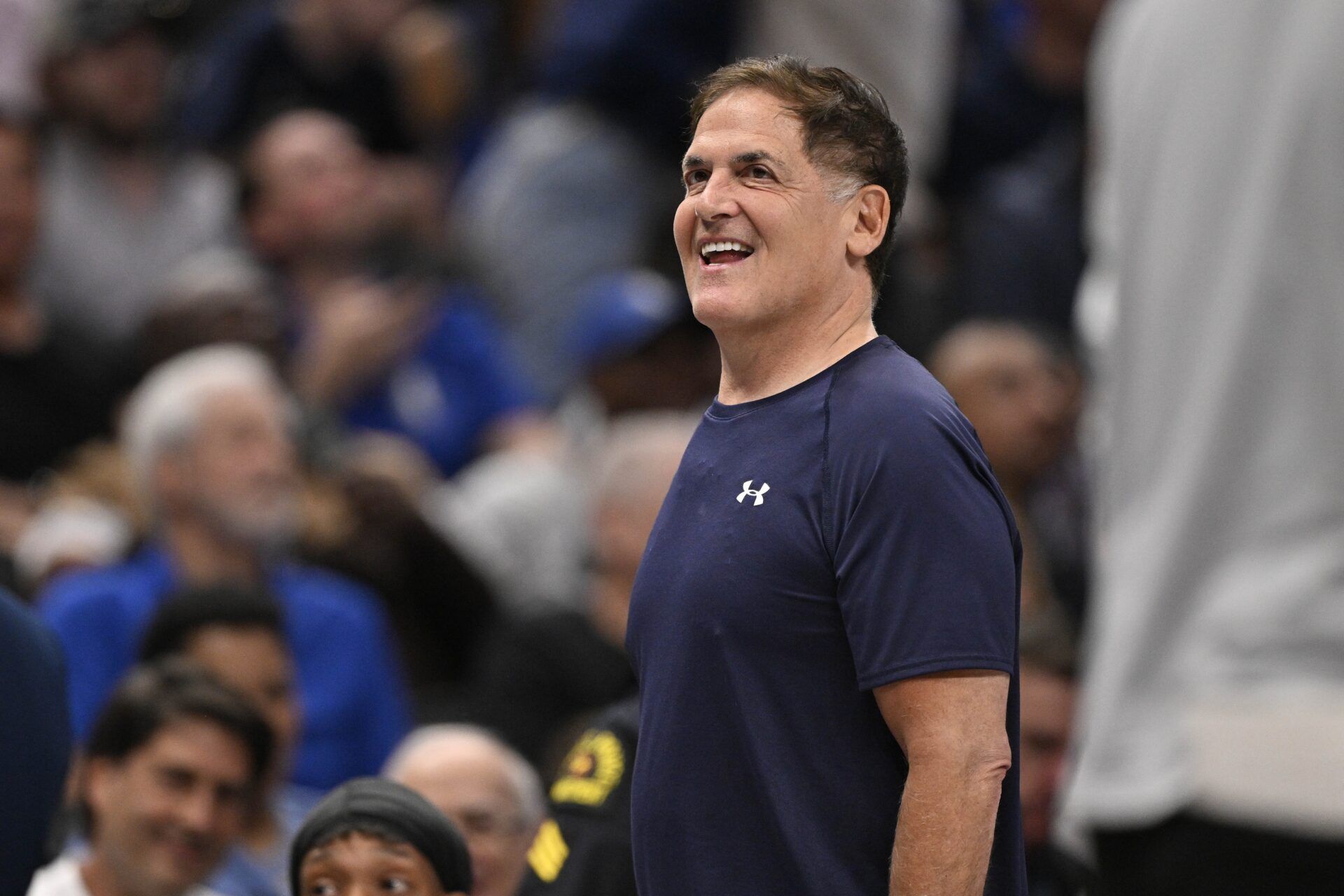
Mark Cuban may no longer be the governor of the Dallas Mavericks, but he remains a minority owner in the franchise. Stepping down in that regard means fewer responsibilities for the well-known billionaire.
That has become an even bigger issue ever since the Mavericks traded Luka Dončić to the Los Angeles Lakers. While it was not Cuban’s decision, many have wondered if the move would have happened had he still been the majority owner.

Mark Cuban Discusses the Toughest Part About Being Minority Owner With Mavericks
During his appearance on “The Arena,” Cuban was asked what the hardest part of his transition has been. He answered succinctly.
“Not making the final personnel decisions, right?”
He then referenced the Dončić trade while elaborating.
“You know, oh yeah, let’s trade one of the top three players in the NBA, right? I wouldn’t have done it, but it’s done. And so, you know, sometimes the basketball gods smile on you and you get Cooper Flagg and the No. 1 pick, right? But yeah, that’s been the toughest part: just not being the final decision maker when it comes to on-court decisions,” Cuban said.
Cuban was among the most proactive owners in the NBA, and his constant criticism of officials drew numerous fines. Still, he was undoubtedly passionate about the team. He wanted what was best for the Mavericks and did what he could to build a title contender around Dončić and Dirk Nowitzki when he was calling the shots.
The Mavericks reached new heights after Cuban became the majority owner. Now, as a minority owner, the franchise has found itself in hot water over the past several months.
When Cuban finalized the sale of the Mavericks to the Adelson and Dumont families, expectations were that he would remain active in basketball operations. But after the transaction went through, that involvement never materialized. The arrangement, he said, was simply a “handshake” and was never included in formal documents. Had Cuban retained control of basketball decisions, he has said repeatedly that the Dončić deal “wouldn’t have happened.”
To be fair, it is difficult to imagine any majority owner approving what the Mavericks did in February. As Cuban alluded to, the move worked out because the team landed Flagg, but that does not mean the ends justify the means. Cuban still has a role with the team, but not the influential one he once held — and the consequences are clear.
